Caucasian wingnut
Pterocarya fraxinifolia · Accepted scientific name
Scientific literature: Very Sparse (11 studies) · ★☆☆☆☆
Caucasian wingnut, scientifically known as Pterocarya fraxinifolia, is a rare, deciduous tree native to the Caucasus region. Renowned for its striking, large pinnate leaves, it holds significant ethnobotanical value. Historically, various parts of the plant have been utilized in traditional medicine to treat inflammation and support overall wellness.
- Family
- Juglandaceae
- Native range
- Europe
- Parts used
- Leaf
- Common names
- Caucasian Wingnut · Caucasian Walnut
- Scientific synonyms
- Pterocarya Spachiana · Pterocarya Caucasica · 6 more
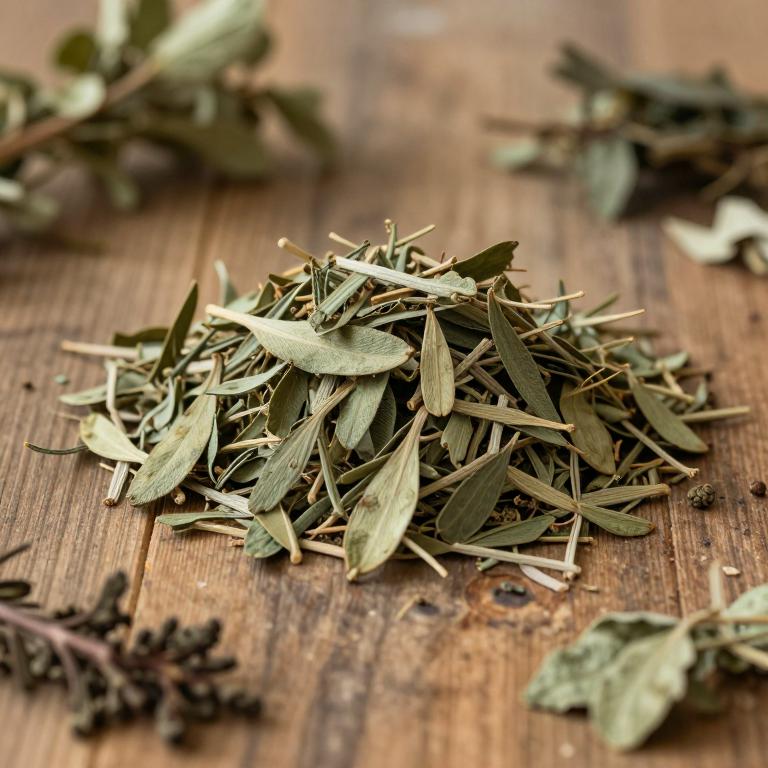
Names and Synonyms
Common Names
- Caucasian Wingnut
- Caucasian Walnut
Scientific Names
Accepted name
Pterocarya fraxinifoliaSynonyms
- Pterocarya spachiana
- Pterocarya caucasica
- Wallia fraxinifolia
- Pterocarya pterocarpa
- Pterocarya caucasica var. dumosa
- Pterocarya fraxinifolia var. dumosa
- Rhus obscura
- Juglans fraxinifolia
Regional and Traditional Names
Spanish:
- Pterocaria del Cáucaso
- Pterocaria del Cáucaso
German:
- Kaukasische Flügelnuss
- Kaukasische Flügelnuss
- Kaukasische Fluegelnuss
- Eschenblättrige Flügelnuss
French:
- Ptérocaryer du Caucase
- Noyer du Caucase
- Noyer aile du Caucase
- Ptérocaryer du Caucase
Sources: Wikidata, Catalogue of Life
Taxonomical Classification
This plant belongs to the kingdom Plantae and the phylum Streptophyta, specifically categorized under the class Equisetopsida and subclass Magnoliidae. Within the order Fagales and the family Juglandaceae, it is classified under the genus Pterocarya.
| Rank | Classification |
|---|---|
| Kingdom | Plantae |
| Phylum | Streptophyta |
| Class | Equisetopsida |
| Subclass | Magnoliidae |
| Order | Fagales |
| Family | Juglandaceae |
| Genus | Pterocarya |
Sources: The World Checklist of Vascular Plants (WCVP)
Distribution
This plant exhibits a specific geographical distribution across several European regions. In Northern Europe, its presence can be found within the territories of Finland, Sweden, and Great Britain. Moving toward the center of the continent, it is also documented in Middle Europe. Specifically, the species is located within the borders of Belgium. Finally, its range extends into Germany, marking its presence in Middle Europe.
| Region | Area |
|---|---|
| Northern Europe | Finland |
| Northern Europe | Great Britain |
| Northern Europe | Sweden |
| Middle Europe | Belgium |
| Middle Europe | Germany |
| Middle Europe | Hungary |
| Middle Europe | Poland |
| Southwestern Europe | France |
| Southeastern Europe | Italy |
| Central Asia | Tadzhikistan |
Sources: The World Checklist of Vascular Plants (WCVP)
Botanical Identification
Ecology
The ecology of Pterocarya fraxinifolia is characterized by its preference for highly specific, moisture-rich environments, typically occurring in boggy or inundated places within mixed woods situated near rivers. While it is frequently found integrated into diverse forest compositions, it is a distinctive component of these riparian zones, occasionally forming small, pure stands where conditions are optimal. This preference for saturated soils and proximity to flowing water suggests a niche dependency on high water tables and the specific hydrological dynamics found in alluvial or wetland forest ecosystems.
- Habitat :
- Boggy or inundated places in mixed woods near rivers, rarely forming small pure stands
Morphology
The morphology of Pterocarya fraxinifolia is characterized by its robust growth form as a woody tree. It typically reaches a significant stature, with a plant height ranging from a minimum of 25 meters to a maximum of 30 meters.
- Growth form :
- tree
- Plant height max:
- 30 m
- Plant height min:
- 25 m
- Woodiness :
- woody
Physiology
The physiology of Pterocarya fraxinifolia is characterized by a metabolic framework centered on the C3 photosynthetic pathway, which dictates its carbon fixation processes and gas exchange mechanisms. Under this C3 pathway, the plant utilizes the enzyme Ribulose-1,5-bisphosphate carboxylase/oxygenase (RuBisCO) to fix atmospheric carbon dioxide directly into three-carbon compounds during the Calvin cycle. This physiological strategy makes the plant particularly sensitive to photorespiration, especially under high-temperature or water-limiting conditions, where the oxygenase activity of RuBisCO may increase. Consequently, its physiological efficiency is closely tied to its ability to manage transpiration rates and maintain leaf water potential to optimize the balance between CO2 uptake and moisture loss. The metabolic regulation of this species involves complex enzymatic activities that support its growth patterns and seasonal adaptations within its natural riparian habitats.
- Photosynthetic pathway :
- C3
Reproduction
The reproduction of Pterocarya fraxinifolia is characterized by a specific seasonal flowering window and a specialized seed dispersal mechanism. The flowering process typically commences in April and reaches its conclusion in May, though the timing can be variable across different environmental conditions. Following pollination, the plant produces seeds with a very consistent and lightweight profile; the seed mass remains constant with a mean, maximum, and minimum value of 0.05 g. To ensure the spread of its offspring, the species employs an anemochorous dispersal syndrome, relying on wind currents to transport its light seeds away from the parent plant.
- Dispersal syndrome :
- anemochorous
- Flowering time :
- Apr
- Flowering time :
- May
- Seed mass mean:
- 0.05 g
Sources: Global Inventory of Floras and Traits (GIFT)
Plant Parts
Pterocarya fraxinifolia has 1 reported plant parts identified across 1 scientific publications and several other databases that are studied for medicinal purposes. The most consistently reported plant part include leaf.
| Plant part | Supporting sources | Consensus |
|---|---|---|
| Leaf | 1 supporting sources | ★☆☆☆☆ |
Leaf
- Pakistan journal of biological sciences : PJBS
Chemicals
Pterocarya fraxinifolia has 5 reported phytochemicals identified across 1 scientific publications and several other databases. The most consistently reported chemicals include Bisabolol oxide A, Flavonoid, Monoterpenes, Sesquiterpenes, juglone.
| Chemical | Supporting sources | Consensus |
|---|---|---|
| Bisabolol oxide A | 1 supporting sources | ★☆☆☆☆ |
| Flavonoid | 1 supporting sources | ★☆☆☆☆ |
| Monoterpenes | 1 supporting sources | ★☆☆☆☆ |
| Sesquiterpenes | 1 supporting sources | ★☆☆☆☆ |
| juglone | 1 supporting sources | ★☆☆☆☆ |
Bisabolol oxide A
- Pakistan journal of biological sciences : PJBS
Flavonoid
- Pakistan journal of biological sciences : PJBS
Monoterpenes
- Pakistan journal of biological sciences : PJBS
Sesquiterpenes
- Pakistan journal of biological sciences : PJBS
juglone
- Anti-inflammatory & anti-allergy agents in medicinal chemistry
Activities
Pterocarya fraxinifolia has 2 reported activities identified across 1 scientific publications and several other databases. The most consistently reported activities include Antimicrobial, Antioxidant.
| Activity | Supporting sources | Consensus |
|---|---|---|
| Antimicrobial | 1 supporting sources | ★☆☆☆☆ |
| Antioxidant | 1 supporting sources | ★☆☆☆☆ |
Antimicrobial
- Anti-inflammatory & anti-allergy agents in medicinal chemistry
Antioxidant
- Anti-inflammatory & anti-allergy agents in medicinal chemistry
Conditions
Pterocarya fraxinifolia has 2 reported investigations on conditions identified across 1 scientific publications and several other databases. The most consistently reported conditions include Inflammatory Bowel Disease, colitis.
| Condition | Supporting sources | Consensus |
|---|---|---|
| Inflammatory bowel disease | 1 supporting sources | ★☆☆☆☆ |
| Colitis | 1 supporting sources | ★☆☆☆☆ |
Inflammatory bowel disease
- Anti-inflammatory & anti-allergy agents in medicinal chemistry
Colitis
- Anti-inflammatory & anti-allergy agents in medicinal chemistry
Preparations
Pterocarya fraxinifolia has 1 reported preparations identified across 1 scientific publications and several other databases. The most consistently reported preparations include maceration method.
| Preparation | Supporting sources | Consensus |
|---|---|---|
| Maceration method | 1 supporting sources | ★☆☆☆☆ |
Maceration method
- Anti-inflammatory & anti-allergy agents in medicinal chemistry