White Padouk
Pterocarpus mildbraedii · Accepted scientific name
Scientific literature: Very Sparse (9 studies) · ★☆☆☆☆
White Padouk, scientifically known as Pterocarpus mildbraedii, is a versatile medicinal plant native to tropical African regions. Renowned for its therapeutic properties, various parts of the tree are utilized in traditional medicine to treat ailments ranging from skin infections to inflammatory conditions, offering significant potential for modern pharmacological research.
- Family
- Fabaceae
- Native range
- Africa
- Parts used
- Leaf
- Common names
- White Padouk · Oha Leaf
- Scientific synonyms
- Pterocarpus Mildbraedii Subsp. Usambarensis · Pterocarpus Usambarensis
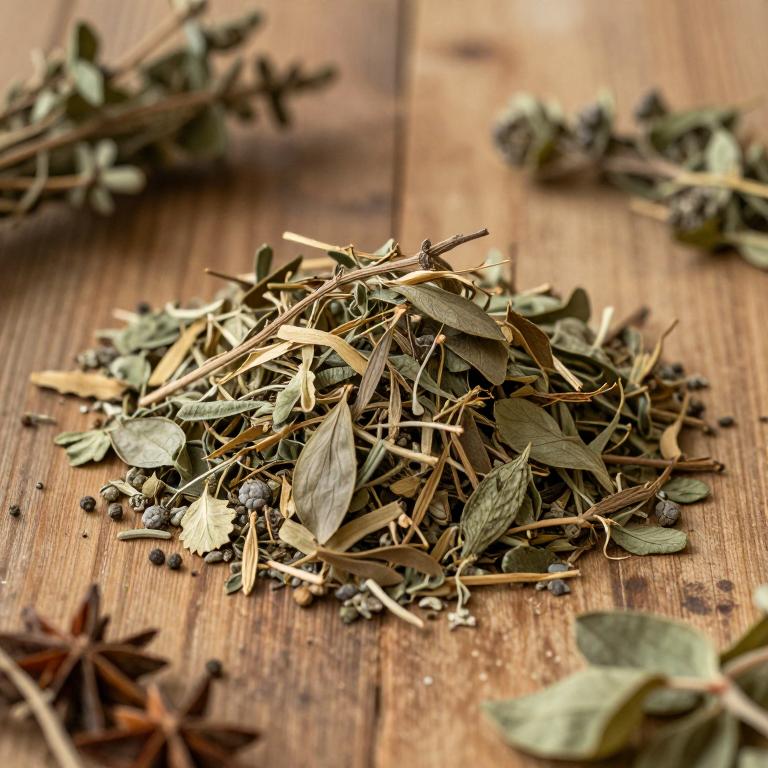
Names and Synonyms
Common Names
- White Padouk
- oha leaf
Scientific Names
Accepted name
Pterocarpus mildbraediiSynonyms
- Pterocarpus mildbraedii subsp. usambarensis
- Pterocarpus usambarensis
Regional and Traditional Names
French:
- padouk blanc
Sources: Wikidata, Catalogue of Life
Taxonomical Classification
This plant belongs to the kingdom Plantae and is classified under the phylum Streptophyta and class Equisetopsida. Within the subclass Magnoliidae, it falls under the order Fabales and the family Fabaceae. Ultimately, its taxonomic identity is defined by its placement in the genus Pterocarpus.
| Rank | Classification |
|---|---|
| Kingdom | Plantae |
| Phylum | Streptophyta |
| Class | Equisetopsida |
| Subclass | Magnoliidae |
| Order | Fabales |
| Family | Fabaceae |
| Genus | Pterocarpus |
Sources: The World Checklist of Vascular Plants (WCVP)
Distribution
This plant, Pterocarpus mildbraedii, is primarily found across the West Tropical Africa region. Its natural habitat extends through several distinct countries within this tropical belt. Specifically, it can be located in the territories of Benin and Ghana. The species also thrives within the borders of Guinea and the Ivory Coast. Finally, its geographical range includes the nation of Liberia.
| Region | Area |
|---|---|
| West Tropical Africa | Benin |
| West Tropical Africa | Ghana |
| West Tropical Africa | Guinea |
| West Tropical Africa | Ivory Coast |
| West Tropical Africa | Liberia |
| West Tropical Africa | Nigeria |
| West Tropical Africa | Sierra Leone |
| West Tropical Africa | Togo |
| West-Central Tropical Africa | Central African Republic |
| West-Central Tropical Africa | Cameroon |
Sources: The World Checklist of Vascular Plants (WCVP)
Botanical Identification
Life history
The life history of Pterocarpus mildbraedii is characterized by its status as a perennial species, allowing it to persist in its environment through multiple growing seasons. Throughout its development, the plant maintains an evergreen habit, ensuring that its foliage remains functional and present year-round rather than undergoing seasonal shedding.
- Deciduousness :
- evergreen
- Lifecycle :
- perennial
Morphology
The morphology of Pterocarpus mildbraedii is characterized by a woody growth form, specifically categorized as a tree. This plant exhibits a self-supporting structure, functioning as a liana, vine, or self-supporting organism, with its climbing habit described as being both obligatory and facultative. In terms of stature, the plant reaches various heights, with a documented minimum height of approximately 12.19 meters, a maximum height of roughly 15.24 meters, and an average plant height of approximately 20 meters.
- Climber :
- self-supporting
- Growth form :
- tree
- Plant height max:
- 15.24018532 m
- Plant height mean:
- 20 m
- Plant height min:
- 12.19214826 m
- Woodiness :
- woody
Physiology
The physiology of Pterocarpus mildbraedii is characterized by its specialized metabolic capabilities, most notably its role as a nitrogen fixer. Through a symbiotic relationship with diazotrophic bacteria located within root nodules, the plant facilitates the biological nitrogen fixation process, converting atmospheric nitrogen into bioavailable forms such as ammonia. This nitrogen fixation trait is a fundamental physiological mechanism that allows the species to enhance soil fertility and sustain robust growth even in nutrient-poor environments. By integrating this nitrogen-fixing capacity into its metabolic framework, the plant optimizes its protein synthesis and enzymatic functions, ensuring efficient nutrient cycling and contributing to the overall ecological stability of its habitat.
- Nitrogen fixer :
- yes
Reproduction
The reproduction of Pterocarpus mildbraedii is driven by biotic mechanisms, specifically relying on biological agents rather than abiotic factors to facilitate its life cycle. The pollination syndrome of this species is characterized by biotic interactions, with a primary reliance on insect vectors for the transfer of pollen. Within this entomophilous process, various insects play a crucial role in ensuring successful fertilization, indicating a complex relationship between the plant's reproductive structures and its local fauna.
- Pollination syndrome :
- insect
- Pollination syndrome :
- biotic
Sources: Global Inventory of Floras and Traits (GIFT)
Plant Parts
Pterocarpus mildbraedii has 1 reported plant parts identified across 2 scientific publications and several other databases that are studied for medicinal purposes. The most consistently reported plant part include leaf.
| Plant part | Supporting sources | Consensus |
|---|---|---|
| Leaf | 2 supporting sources | ★☆☆☆☆ |
Leaf
- Journal of food biochemistry
- Chemistry & biodiversity
Chemicals
Pterocarpus mildbraedii has 2 reported phytochemicals identified across 2 scientific publications and several other databases. The most consistently reported chemicals include Flavonoids, polyphenols.
| Chemical | Supporting sources | Consensus |
|---|---|---|
| Flavonoids | 1 supporting sources | ★☆☆☆☆ |
| polyphenols | 1 supporting sources | ★☆☆☆☆ |
Flavonoids
- Journal of food biochemistry
polyphenols
- Journal of food biochemistry
Activities
Pterocarpus mildbraedii has 1 reported activities identified across 2 scientific publications and several other databases. The most consistently reported activities include Cardioprotective.
| Activity | Supporting sources | Consensus |
|---|---|---|
| Cardioprotective | 1 supporting sources | ★☆☆☆☆ |
Cardioprotective
- Fitoterapia
Conditions
Pterocarpus mildbraedii has 3 reported investigations on conditions identified across 2 scientific publications and several other databases. The most consistently reported conditions include cardiovascular disease, hepatic cancer, inflammation.
| Condition | Supporting sources | Consensus |
|---|---|---|
| Cardiovascular disease | 1 supporting sources | ★☆☆☆☆ |
| Hepatic cancer | 1 supporting sources | ★☆☆☆☆ |
| Inflammation | 1 supporting sources | ★☆☆☆☆ |
Cardiovascular disease
- Fitoterapia
Hepatic cancer
- Chemistry & biodiversity
Inflammation
- Journal of food biochemistry
Preparations
Pterocarpus mildbraedii has 3 reported preparations identified across 2 scientific publications and several other databases. The most consistently reported preparations include extract, leaves, water extract.
| Preparation | Supporting sources | Consensus |
|---|---|---|
| Extract | 1 supporting sources | ★☆☆☆☆ |
| Leaves | 1 supporting sources | ★☆☆☆☆ |
| Water extract | 1 supporting sources | ★☆☆☆☆ |
Extract
- Journal of food biochemistry
Leaves
- Chemistry & biodiversity
Water extract
- Fitoterapia