Australian brake
Pteris tremula · Accepted scientific name
Scientific literature: Very Sparse (1 studies) · ★☆☆☆☆
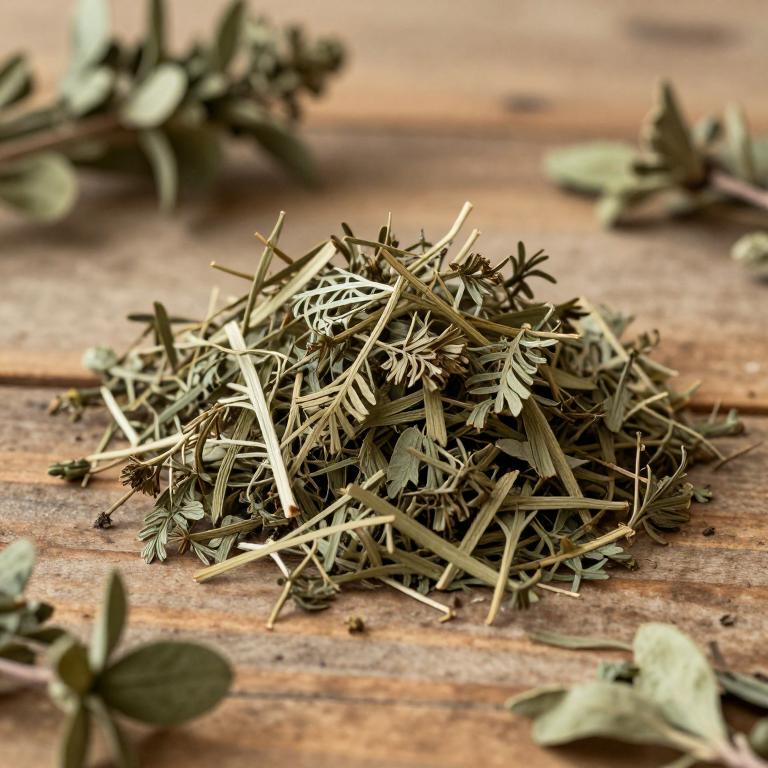
Australian brake, scientifically known as Pteris tremula, is a delicate fern native to various regions across Australia. Characterized by its fine, feathery fronds, this plant thrives in shaded, moist environments. It is valued in traditional herbal practices for its potential medicinal properties and serves as an important ecological component.
Names and Synonyms
Common Names
- Australian bracken
- Australian brake
- poor-man's-cibotium
- shaking brake
- tender brake fern
- trembling brake
- Tender Bracken Fern
- Turawera
Scientific Names
Accepted name
Pteris tremulaSynonyms
- Pteris affinis
- Pteris tremula var. pectinata
- Pteris tenuis
- Pteris baueriana
- Pteris tremula var. caudata
- Pteris tremula var. minor
- Pteris arguta var. tremula
- Pteris tremula smithiana
- Pteris tremula var. foliosa
Regional and Traditional Names
French:
- Ptéris tremblant
Sources: Wikidata, Catalogue of Life
Taxonomical Classification
This plant belongs to the kingdom Plantae and the phylum Streptophyta. Within the class Equisetopsida and subclass Polypodiinae, it is categorized under the order Polypodiales. Finally, its taxonomic classification concludes within the family Pteridaceae and the genus Pteris.
| Rank | Classification |
|---|---|
| Kingdom | Plantae |
| Phylum | Streptophyta |
| Class | Equisetopsida |
| Subclass | Polypodiinae |
| Order | Polypodiales |
| Family | Pteridaceae |
| Genus | Pteris |
Sources: The World Checklist of Vascular Plants (WCVP)
Distribution
This plant exhibits a wide-ranging geographical distribution that spans across two distinct major regions. Within the Macaronesian islands, it can be found growing in the Azores, Madeira, and the Canary Islands. Moving toward the African continent, its presence extends into the southern reaches of the territory. Specifically, it is located within the Cape Provinces of Southern Africa. Additionally, the species inhabits the coastal regions of KwaZulu-Natal.
| Region | Area |
|---|---|
| Macaronesia | Azores |
| Macaronesia | Canary Is. |
| Macaronesia | Madeira |
| Southern Africa | Cape Provinces |
| Southern Africa | KwaZulu-Natal |
| Indian Subcontinent | India |
| Australia | Norfolk Is. |
| Australia | New South Wales |
| Australia | Northern Territory |
| Australia | Queensland |
Sources: The World Checklist of Vascular Plants (WCVP)
Botanical Identification
Ecology
The ecology of Pteris tremula is characterized by its adaptation to low-lying environments, as it inhabits an elevational range spanning from 0 m to a maximum of 350 m AMSL. This distribution suggests a preference for lowland or coastal regions where the plant can thrive within specific altitudinal constraints. By occupying these lower elevations, the species typically interacts with warmer, more stable climatic zones compared to high-altitude flora, positioning it within ecosystems that support its specific physiological and reproductive requirements.
- Elevational range max:
- 350 m AMSL
- Elevational range min:
- 0 m AMSL
Life history
The life history of Pteris tremula is characterized by a perennial lifecycle, allowing the plant to persist through multiple growing seasons. Its structural adaptation is defined by its classification as a cryptophyte, a life form where the perennating buds are located underground to protect them from adverse environmental conditions. Furthermore, it functions as a geophyte, relying on underground storage organs to survive dormancy periods and facilitate regrowth, ensuring its long-term stability within its ecological niche.
- Life form :
- geophyte
- Life form :
- cryptophyte
- Lifecycle :
- perennial
Morphology
The morphology of Pteris tremula is characterized by its growth form as a non-woody herb, specifically classified as a forb. This self-supporting plant exhibits a terrestrial habit, functioning as an independent organism rather than a parasite or epiphyte. In terms of dimensions, it typically reaches a plant height ranging from a minimum of 0.3 m to a maximum of 2 m, with its shoots reaching a maximum length of 100 cm. The plant does not exhibit climbing behaviors, such as lianas or vines, maintaining a self-supporting structure throughout its development.
- Aquatic :
- terrestrial
- Climber :
- self-supporting
- Epiphyte :
- terrestrial
- Growth form :
- herb
- Growth form :
- forb
- Parasite :
- independent
- Plant height max:
- 2 m
- Plant height min:
- 0.3 m
- Shoot length max:
- 100 cm
- Woodiness :
- non-woody
Physiology
The physiological structure of Pteris tremula is characterized by a robust foliar architecture designed for efficient light interception and gas exchange. The leaves exhibit an elliptic form, a morphological adaptation that optimizes surface area relative to structural integrity. In terms of dimension, the leaf length varies significantly, ranging from a minimum of 25 cm to a maximum of 200 cm. This longitudinal expansion is complemented by a corresponding width that spans from a minimum of 10 cm to a maximum of 40 cm, providing a substantial photosynthetic surface area necessary for the plant's metabolic requirements.
- Leaf form :
- elliptic
- Leaf length max:
- 200 cm
- Leaf length min:
- 25 cm
- Leaf width max:
- 40 cm
- Leaf width min:
- 10 cm
Reproduction
The reproduction of Pteris tremula is characterized by a specific seasonal cycle related to its reproductive phases. The flowering period for this species is seasonally dependent, with the flowering process typically commencing in April. This reproductive stage continues through the warmer months, eventually reaching its conclusion in August.
- Flowering time :
- Apr
- Flowering time :
- Aug
Sources: Global Inventory of Floras and Traits (GIFT)
Chemicals
Pteris tremula has 1 reported phytochemicals identified across 0 scientific publications and several other databases. The most consistently reported chemicals include Prunetin.
| Chemical | Supporting sources | Consensus |
|---|---|---|
| Prunetin | 1 supporting sources | ★☆☆☆☆ |
Prunetin
- Drug metabolism and bioanalysis letters