Southern bracken fern
Pteridium caudatum · Accepted scientific name
Scientific literature: Very Sparse (2 studies) · ★☆☆☆☆
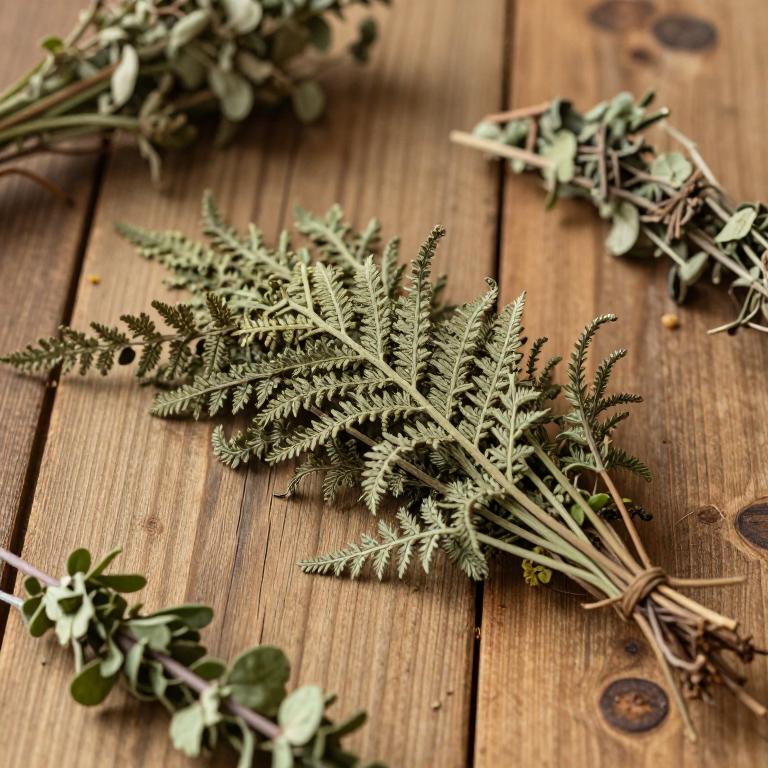
Southern bracken fern, scientifically known as Pteridium caudatum, is a distinctive fern native to parts of Australia and New Zealand. Characterized by its delicate, finely divided fronds and creeping rhizomes, this plant thrives in moist, shaded environments, playing a vital role in forest ecosystems and traditional ecological knowledge.
- Family
- Dennstaedtiaceae
- Native range
- Northern America
- Parts used
- Not available
- Common names
- Southern Bracken Fern · Lacy Bracken
- Scientific synonyms
- Pteridium Aquilinum F. Glabrata · Pteridium Aquilinum Var. Africanum · 8 more
Names and Synonyms
Common Names
- Southern bracken fern
- Lacy Bracken
Scientific Names
Accepted name
Pteridium caudatumSynonyms
- Pteridium aquilinum f. glabrata
- Pteridium aquilinum var. africanum
- Cincinalis caudata
- Filix-foemina aquilina var. caudata
- Pteris aquilina var. caudata
- Pteridium aquilinum subsp. caudatum
- Pteris caudata
- Allosorus caudatus
- Ornithopteris caudata
- Pteridium aquilinum var. caudatum
Regional and Traditional Names
Spanish:
- crespililla de cola
Sources: Wikidata, Catalogue of Life
Taxonomical Classification
This plant belongs to the kingdom Plantae and the phylum Streptophyta, falling under the class Equisetopsida and subclass Polypodiinae. Within the order Polypodiales, it is classified under the family Dennstaedtiaceae and the genus Pteridium.
| Rank | Classification |
|---|---|
| Kingdom | Plantae |
| Phylum | Streptophyta |
| Class | Equisetopsida |
| Subclass | Polypodiinae |
| Order | Polypodiales |
| Family | Dennstaedtiaceae |
| Genus | Pteridium |
Sources: The World Checklist of Vascular Plants (WCVP)
Distribution
This plant exhibits a diverse geographical range that spans across parts of North America and Mexico. In the Southeastern United States, its presence is specifically noted within the state of Florida. Moving into Mexico, the species can be found throughout the Central and Northeastern regions of the country. It also occupies territories along the Mexican Gulf coast. Additionally, its distribution extends to the various islands located within the Mexican Pacific.
| Region | Area |
|---|---|
| Southeastern U.S.A. | Florida |
| Mexico | Mexico Central |
| Mexico | Mexico Northeast |
| Mexico | Mexico Gulf |
| Mexico | Mexican Pacific Is. |
| Mexico | Mexico Northwest |
| Mexico | Mexico Southwest |
| Mexico | Mexico Southeast |
| Central America | Belize |
| Central America | El Salvador |
Sources: The World Checklist of Vascular Plants (WCVP)
Botanical Identification
Ecology
The ecology of Pteridium caudatum is characterized by a broad altitudinal distribution, ranging from sea level (0 m AMSL) up to an elevation of 3000 m AMSL. This species exhibits significant ecological plasticity, allowing it to inhabit diverse environments including anthropized areas (Área Antrópica), campinarana ecosystems, and the Amazonian savanna (Savana Amazônica).
- Elevational range max:
- 3000 m AMSL
- Elevational range min:
- 0 m AMSL
- Habitat :
- Área Antrópica, Campinarana, Savana Amazônica
Life history
The life history of Pteridium caudatum is characterized by its status as a perennial species, meaning it maintains its existence over many years through continuous growth cycles. Unlike annuals that complete their life cycle in a single season or biennials that require two, this plant establishes long-term presence in its habitat, often spreading through rhizomatous structures that allow it to persist through varying environmental conditions. This perennial nature enables the plant to undergo seasonal fluctuations while maintaining a stable root or rhizome system, ensuring its survival and eventual regeneration in subsequent growing seasons.
- Lifecycle :
- perennial
Morphology
The morphology of Pteridium caudatum is characterized by its growth form as a non-woody herb, specifically categorized as a forb. It functions as an independent organism, lacking any parasitic relationship with host plants. In terms of its habitat and ecological positioning, the plant is terrestrial rather than aquatic or epiphytic, maintaining a self-supporting structure. It does not exhibit climbing tendencies, such as being a vine or liana, but instead remains a self-supporting, non-climbing species within its natural environment.
- Aquatic :
- terrestrial
- Climber :
- self-supporting
- Epiphyte :
- terrestrial
- Growth form :
- herb
- Growth form :
- forb
- Parasite :
- independent
- Woodiness :
- non-woody
Sources: Global Inventory of Floras and Traits (GIFT)
Chemicals
Pteridium caudatum has 2 reported phytochemicals identified across 0 scientific publications and several other databases. The most consistently reported chemicals include PTAQUILOSIDE, Ptaquiloside Z.
| Chemical | Supporting sources | Consensus |
|---|---|---|
| PTAQUILOSIDE | 1 supporting sources | ★☆☆☆☆ |
| Ptaquiloside Z | 1 supporting sources | ★☆☆☆☆ |
PTAQUILOSIDE
- Bioorganic & medicinal chemistry
Ptaquiloside Z
- Bioorganic & medicinal chemistry
Preparations
Pteridium caudatum has 1 reported preparations identified across 0 scientific publications and several other databases. The most consistently reported preparations include aqueous extract.
| Preparation | Supporting sources | Consensus |
|---|---|---|
| Aqueous extract | 1 supporting sources | ★☆☆☆☆ |
Aqueous extract
- Bioorganic & medicinal chemistry