common bracken
Pteridium aquilinum · Accepted scientific name
Scientific literature: Very Extensive (446 studies) · ★★★★★
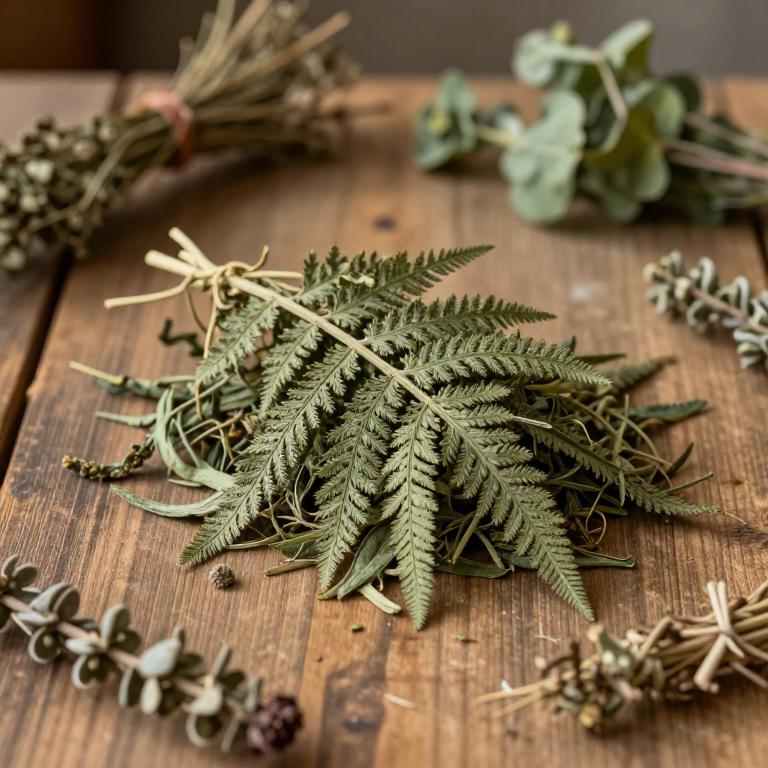
Common bracken, scientifically known as Pteridium aquilinum, is a widespread, perennial fern found across various global climates. While historically used in folk medicine for its purported anti-inflammatory properties, it contains thiaminase and ptaquiloside. Consequently, modern scientific caution is advised due to its potential toxicity and carcinogenic risks.
Names and Synonyms
Common Names
- bracken fern
- Bracken
- Bracken / Fern
- Brake
- northern bracken fern
Scientific Names
Accepted name
Pteridium aquilinumSynonyms
- Eupteris aquilina
- Filix aquilina
- Cincinalis aquilina
- Paesia aquilina
- Asplenium aquilinum
- Filix-foemina aquilina
- Pteris foemina var. minor
- Pteris aquilina
- Pteris brevipes
- Pteris heredia
- Pteris aquilina f. transcaucasica
- Onychium capense
- Cincinalis lanuginosa
- Pteridium ceheginense
- Pteridium pinetorum subsp. sajanense
- Pteridium pinetorum subsp. sibiricum
- Ornithopteris aquilina
- Pteridium aquilinum subsp. atlanticum
- Pteridium aquilinum subsp. fulvum
- Pteridium aquilinum subsp. brevipes
- Allosorus aquilinus
- Pteridium aquilinum subsp. heredia
- Pteridium heredia
- Pteridium aquilinum var. osmundaceum
- Pteridium pinetorum subsp. osmundaceum
- Pteridium tauricum
- Pteridium aquilinum subsp. osmundaceum
- Pteris aquilina var. glabra
- Dryopteris austriaca
- Polypodium austriacum
- Pteridium aquilinum var. glabrum
Regional and Traditional Names
German:
- Adlerfarn
- Adlerfarn
- Gewöhnlicher Adlerfarn
French:
- Pteris aquilina
- Fougere aigle
- Grande fougère
- Fougère Aigle
- Pteridium aquilina
- fougère-aigle
- fougère-aigle
- fougère-aigle commune
- grande fougère
- ptéridie d'aigle
- ptéridium des aigles
- fougère des aigles
- Fougere aigle
Sources: Wikidata, Catalogue of Life
Taxonomical Classification
This plant belongs to the kingdom Plantae and is classified under the phylum Streptophyta. Within the class Equisetopsida and subclass Polypodiinae, it falls under the order Polypodiales. Finally, it is a member of the family Dennstaedtiaceae and is identified by the genus Pteridium.
| Rank | Classification |
|---|---|
| Kingdom | Plantae |
| Phylum | Streptophyta |
| Class | Equisetopsida |
| Subclass | Polypodiinae |
| Order | Polypodiales |
| Family | Dennstaedtiaceae |
| Genus | Pteridium |
Sources: The World Checklist of Vascular Plants (WCVP)
Distribution
This plant is distributed across several key regions within Northern Europe. Specifically, it can be found growing in the landscapes of Denmark. Its presence also extends to the territories of Finland and Norway. Furthermore, the species is documented within the borders of Great Britain. Finally, its geographical range includes the island of Ireland.
| Region | Area |
|---|---|
| Northern Europe | Denmark |
| Northern Europe | Finland |
| Northern Europe | Great Britain |
| Northern Europe | Ireland |
| Northern Europe | Norway |
| Northern Europe | Sweden |
| Middle Europe | Austria |
| Middle Europe | Belgium |
| Middle Europe | Czechia-Slovakia |
| Middle Europe | Germany |
Sources: The World Checklist of Vascular Plants (WCVP)
Botanical Identification
Ecology
The ecology of Pteridium aquilinum is characterized by its broad adaptability to diverse environmental conditions, spanning a significant altitudinal gradient from sea level (0 m AMSL) up to an elevation of 1500 m AMSL. This species is commonly found inhabiting forest ecosystems, where it can integrate into various woodland structures, as well as sandy substrates, demonstrating a preference for well-drained or specific soil compositions within those environments.
- Elevational range max:
- 1500 m AMSL
- Elevational range min:
- 0 m AMSL
- Habitat :
- forest, sand
Life history
The life history of Pteridium aquilinum is characterized by a perennial lifecycle, allowing the plant to persist in its environment over many years through robust underground structures. It functions as a cryptophyte, specifically utilizing a geophyte life form where the vital organs are protected beneath the soil surface. This growth strategy enables the plant to exhibit deciduous behavior, shedding its fronds during unfavorable seasons and regenerating from its subterranean rhizomes when conditions become more favorable.
- Deciduousness :
- deciduous
- Life form :
- geophyte
- Life form :
- cryptophyte
- Lifecycle :
- perennial
Morphology
The morphology of Pteridium aquilinum is characterized by its growth form as a non-woody herb, specifically classified as a forb. This plant is a self-supporting species, lacking any climbing or vining tendencies, and functions as an independent organism rather than a parasite or epiphyte, maintaining a primarily terrestrial habit. In terms of stature, it exhibits significant variation in plant height, with individuals ranging from a minimum of 0.3 m to a maximum of 3 m, resulting in an average plant height of approximately 1.39 m.
- Aquatic :
- terrestrial
- Climber :
- self-supporting
- Epiphyte :
- terrestrial
- Growth form :
- herb
- Growth form :
- forb
- Parasite :
- independent
- Plant height max:
- 3 m
- Plant height mean:
- 1.39166666666667 m
- Plant height min:
- 0.3 m
- Woodiness :
- non-woody
Physiology
The physiology of Pteridium aquilinum is characterized by a C3 photosynthetic pathway, which dictates its metabolic processes and carbon fixation strategies. Its leaf morphology is defined by a pinnatifid form featuring toothed margins, though it lacks structural defenses such as leaf thorns or leaf spines. The plant is non-carnivorous and does not function as a nitrogen fixer, relying instead on external nutrient availability. Furthermore, it exhibits a Specific Leaf Area (SLA) with a mean value of 184.46 cm²/g, reflecting its leaf mass per area and its strategy for light interception and resource management.
- Carnivory :
- non-carnivorous
- Leaf form :
- pinnatifid
- Leaf margin :
- toothed
- Leaf spines :
- no
- Leaf thorns :
- no
- Nitrogen fixer :
- no
- Photosynthetic pathway :
- C3
- Specific Leaf Area (SLA) mean:
- 184.46 cm²/g
Reproduction
The reproduction of Pteridium aquilinum is characterized by an abiotic pollination syndrome, primarily driven by the wind. The reproductive cycle follows a seasonal timeline, with the flowering period typically starting in July and concluding in September. Unlike flowering plants that produce seeds within distinct fruits like berries or capsules, this species possesses a fruit type classified as "other," consistent with the spore-producing nature of ferns. Its dispersal strategy is considered unspecialized, lacking highly specific mechanisms such as anemochory or zoochory, which allows for a broad distribution. Furthermore, asexual reproduction is noted as absent in the context of this specific reproductive profile.
- Dispersal syndrome :
- unspecialized
- Flowering time :
- Jul
- Flowering time :
- Sep
- Fruit type :
- other
- Pollination syndrome :
- wind
- Pollination syndrome :
- abiotic
- Reproduction asexual :
- absent
Sources: Global Inventory of Floras and Traits (GIFT)
Plant Parts
Pteridium aquilinum has 1 reported plant parts identified across 1 scientific publications and several other databases that are studied for medicinal purposes. The most consistently reported plant part include leaf.
| Plant part | Supporting sources | Consensus |
|---|---|---|
| Leaf | 1 supporting sources | ★☆☆☆☆ |
Leaf
- International journal of molecular sciences
Chemicals
Pteridium aquilinum has 58 reported phytochemicals identified across 1 scientific publications and several other databases. The most consistently reported chemicals include Pterosin B, Aquilide A, Flavonoids, PTAQUILOSIDE, PTEROSINS.
| Chemical | Supporting sources | Consensus |
|---|---|---|
| Pterosin B | 3 supporting sources | ★★☆☆☆ |
| Aquilide A | 2 supporting sources | ★☆☆☆☆ |
| Flavonoids | 2 supporting sources | ★☆☆☆☆ |
| PTAQUILOSIDE | 2 supporting sources | ★☆☆☆☆ |
| PTEROSINS | 2 supporting sources | ★☆☆☆☆ |
| Prunasin | 2 supporting sources | ★☆☆☆☆ |
| RUTIN | 2 supporting sources | ★☆☆☆☆ |
| 20-HYDROXYECDYSONE | 1 supporting sources | ★☆☆☆☆ |
| 5-O-Caffeoylshikimic acid | 1 supporting sources | ★☆☆☆☆ |
| Ash | 1 supporting sources | ★☆☆☆☆ |
Pterosin B
- Nature communications
- Biochemical and biophysical research communications
- Plants (Basel, Switzerland)
Aquilide A
- Dr. Duke
- Princess Takamatsu symposia
Flavonoids
- Recent patents on biotechnology
- Plants (Basel, Switzerland)
PTAQUILOSIDE
- Dr. Duke
- Plants (Basel, Switzerland)
PTEROSINS
- Dr. Duke
- Plants (Basel, Switzerland)
Prunasin
- Dr. Duke
- Plants (Basel, Switzerland)
RUTIN
- Dr. Duke
- International journal of molecular sciences
20-HYDROXYECDYSONE
- Dr. Duke
5-O-Caffeoylshikimic acid
- Dr. Duke
Ash
- Dr. Duke
Activities
Pteridium aquilinum has 366 reported activities identified across 1 scientific publications and several other databases. The most consistently reported activities include 11B-HSD-Inhibitor, 5-HT-Inhibitor, 5-Lipoxygenase-Inhibitor, ACE-Inhibitor, ATPase-Inhibitor.
| Activity | Supporting sources | Consensus |
|---|---|---|
| 11B-HSD-Inhibitor | 1 supporting sources | ★☆☆☆☆ |
| 5-HT-Inhibitor | 1 supporting sources | ★☆☆☆☆ |
| 5-Lipoxygenase-Inhibitor | 1 supporting sources | ★☆☆☆☆ |
| ACE-Inhibitor | 1 supporting sources | ★☆☆☆☆ |
| ATPase-Inhibitor | 1 supporting sources | ★☆☆☆☆ |
| Absorbent | 1 supporting sources | ★☆☆☆☆ |
| Acetylcholinergic | 1 supporting sources | ★☆☆☆☆ |
| Acidulant | 1 supporting sources | ★☆☆☆☆ |
| Acnegenic | 1 supporting sources | ★☆☆☆☆ |
| Additive | 1 supporting sources | ★☆☆☆☆ |
11B-HSD-Inhibitor
- Dr. Duke
5-HT-Inhibitor
- Dr. Duke
5-Lipoxygenase-Inhibitor
- Dr. Duke
ACE-Inhibitor
- Dr. Duke
ATPase-Inhibitor
- Dr. Duke
Absorbent
- Dr. Duke
Acetylcholinergic
- Dr. Duke
Acidulant
- Dr. Duke
Acnegenic
- Dr. Duke
Additive
- Dr. Duke
Conditions
Pteridium aquilinum has 6 reported investigations on conditions identified across 1 scientific publications and several other databases. The most consistently reported conditions include osteoarthritis, Alzheimer's disease, cancer, carcinogenesis, lymphoproliferative disorders.
| Condition | Supporting sources | Consensus |
|---|---|---|
| Osteoarthritis | 2 supporting sources | ★☆☆☆☆ |
| Alzheimer's disease | 1 supporting sources | ★☆☆☆☆ |
| Cancer | 1 supporting sources | ★☆☆☆☆ |
| Carcinogenesis | 1 supporting sources | ★☆☆☆☆ |
| Lymphoproliferative disorders | 1 supporting sources | ★☆☆☆☆ |
| Oral candidiasis | 1 supporting sources | ★☆☆☆☆ |
Osteoarthritis
- Nature communications
- Plants (Basel, Switzerland)
Alzheimer's disease
- Plants (Basel, Switzerland)
Cancer
- Plants (Basel, Switzerland)
Carcinogenesis
- Plants (Basel, Switzerland)
Lymphoproliferative disorders
- Plants (Basel, Switzerland)
Oral candidiasis
- Journal of ethnopharmacology
Preparations
Pteridium aquilinum has 2 reported preparations identified across 1 scientific publications and several other databases. The most consistently reported preparations include extracts, green vegetables.
| Preparation | Supporting sources | Consensus |
|---|---|---|
| Extracts | 1 supporting sources | ★☆☆☆☆ |
| Green vegetables | 1 supporting sources | ★☆☆☆☆ |
Extracts
- Food & function
Green vegetables
- International journal of molecular sciences