Ptaeroxylon obliquum
Ptaeroxylon obliquum · Accepted scientific name
Scientific literature: Very Sparse (19 studies) · ★☆☆☆☆
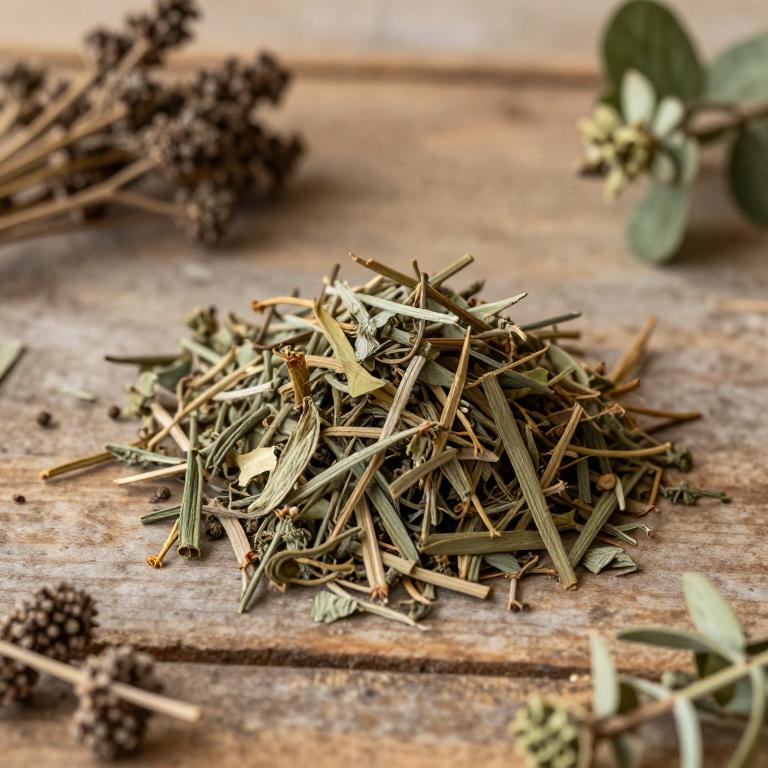
Ptaeroxylon obliquum, scientifically known as Ptaeroxylon obliquum, is a remarkable medicinal plant prized for its therapeutic properties. Found in specific tropical regions, this species is traditionally utilized in various folk remedies to address diverse health concerns, offering a rich source of bioactive compounds essential for natural healing processes.
- Family
- Rutaceae
- Native range
- Africa
- Parts used
- Leaf
- Common names
- Not available
- Scientific synonyms
- Harrisonia Lentiscoides · Rhus Obliqua · 3 more
Names and Synonyms
Scientific Names
Accepted name
Ptaeroxylon obliquumSynonyms
- Harrisonia lentiscoides
- Rhus obliqua
- Ptaeroxylon utile
- Ptaeroxylon utile f. robustum
- Kirkia lentiscoides
Regional and Traditional Names
Spanish:
- Rhus obliqua
- Ptaeroxylon utile
German:
- Niessholz
Sources: Wikidata, Catalogue of Life
Taxonomical Classification
This plant belongs to the kingdom Plantae and the phylum Streptophyta, falling under the class Equisetopsida and subclass Magnoliidae. Within the order Sapindales, it is classified under the family Rutaaceae and is identified by the genus Ptaeroxylon.
| Rank | Classification |
|---|---|
| Kingdom | Plantae |
| Phylum | Streptophyta |
| Class | Equisetopsida |
| Subclass | Magnoliidae |
| Order | Sapindales |
| Family | Rutaceae |
| Genus | Ptaeroxylon |
Sources: The World Checklist of Vascular Plants (WCVP)
Distribution
This plant exhibits a diverse geographical range across several regions of the African continent. In East Tropical Africa, its presence is noted within the borders of Tanzania. Moving toward the southern reaches, it can be found in the South Tropical African nations of Angola and Mozambique. Additionally, the species is distributed throughout Zimbabwe. Finally, its range extends into the Southern African nation of Botswana.
| Region | Area |
|---|---|
| East Tropical Africa | Tanzania |
| South Tropical Africa | Angola |
| South Tropical Africa | Mozambique |
| South Tropical Africa | Zimbabwe |
| Southern Africa | Botswana |
| Southern Africa | Cape Provinces |
| Southern Africa | Namibia |
| Southern Africa | KwaZulu-Natal |
| Southern Africa | Eswatini |
| Southern Africa | Northern Provinces |
Sources: The World Checklist of Vascular Plants (WCVP)
Botanical Identification
Ecology
The ecology of Ptaeroxylon obliquum is characterized by its ability to thrive across a broad altitudinal gradient, reflecting a versatile adaptability to varying environmental conditions. This species is found distributed within an elevational range that begins at a low altitude of 30 m AMSL and extends up to a maximum elevation of 1370 m AMSL. This significant vertical span suggests that the plant can inhabit diverse ecological niches, ranging from lowland tropical or subtropical environments to higher-altitude montane zones, where it likely encounters varying levels of precipitation, temperature fluctuations, and soil compositions.
- Elevational range max:
- 1370 m AMSL
- Elevational range min:
- 30 m AMSL
Life history
The life history of Ptaeroxylon obliquum is characterized by its status as a perennial species, allowing it to persist in its environment through multiple growing seasons. Throughout its developmental stages, the plant exhibits a deciduous nature, shedding its foliage periodically as part of its seasonal biological cycle.
- Deciduousness :
- deciduous
- Lifecycle :
- perennial
Morphology
The morphology of Ptaeroxylon obliquum is characterized by its growth form as a woody tree. It is a self-supporting, independent species that grows in terrestrial environments, rather than being aquatic, an epiphyte, or a parasite. The plant exhibits significant variability in stature, with heights ranging from a minimum of 0.1 m to a maximum of 30 m, maintaining an average height of approximately 15 m.
- Aquatic :
- terrestrial
- Climber :
- self-supporting
- Epiphyte :
- terrestrial
- Growth form :
- tree
- Parasite :
- independent
- Plant height max:
- 30 m
- Plant height mean:
- 15 m
- Plant height min:
- 0.1 m
- Woodiness :
- woody
Physiology
The physiology of Ptaeroxylon obliquum is characterized by a standard C3 photosynthetic pathway, utilizing the Calvin cycle for carbon fixation without the specialized adaptations found in C4 or CAM plants. In terms of its nutrient cycling and metabolic capabilities, the species is not a nitrogen fixer, meaning it lacks the specialized symbiotic relationships with diazotrophic bacteria required to convert atmospheric nitrogen into bioavailable forms.
- Nitrogen fixer :
- no
- Photosynthetic pathway :
- C3
Reproduction
Reproduction in Ptaeroxylon obliquum is characterized by a specialized flowering process that relies on cross-pollination rather than internal mechanisms. A key biological trait of this species is that self-fertilization is absent, meaning the plant requires the transfer of pollen from a different individual to achieve successful fertilization and subsequent seed production. This reliance on outcrossing promotes genetic diversity within the population, as the reproductive cycle is dependent on external agents—such as wind or insects—to facilitate the movement of pollen between distinct flowers. Consequently, the absence of self-fertilization ensures that the resulting progeny possess unique genetic combinations, which is a fundamental aspect of its life cycle and evolutionary strategy.
- Self fertilization :
- absent
Sources: Global Inventory of Floras and Traits (GIFT)
Plant Parts
Ptaeroxylon obliquum has 1 reported plant parts identified across 1 scientific publications and several other databases that are studied for medicinal purposes. The most consistently reported plant part include leaf.
| Plant part | Supporting sources | Consensus |
|---|---|---|
| Leaf | 1 supporting sources | ★☆☆☆☆ |
Leaf
- Journal of ethnopharmacology
Chemicals
Ptaeroxylon obliquum has 3 reported phytochemicals identified across 1 scientific publications and several other databases. The most consistently reported chemicals include Chromones, Coumarins, Lupeol.
| Chemical | Supporting sources | Consensus |
|---|---|---|
| Chromones | 1 supporting sources | ★☆☆☆☆ |
| Coumarins | 1 supporting sources | ★☆☆☆☆ |
| Lupeol | 1 supporting sources | ★☆☆☆☆ |
Chromones
- Plants (Basel, Switzerland)
Coumarins
- Plants (Basel, Switzerland)
Lupeol
- Journal of ethnopharmacology
Activities
Ptaeroxylon obliquum has 6 reported activities identified across 1 scientific publications and several other databases. The most consistently reported activities include Antifungal, Anthelmintic, Antibacterial, Antiparasitic, Antiproliferative.
| Activity | Supporting sources | Consensus |
|---|---|---|
| Antifungal | 2 supporting sources | ★☆☆☆☆ |
| Anthelmintic | 1 supporting sources | ★☆☆☆☆ |
| Antibacterial | 1 supporting sources | ★☆☆☆☆ |
| Antiparasitic | 1 supporting sources | ★☆☆☆☆ |
| Antiproliferative | 1 supporting sources | ★☆☆☆☆ |
| Cytotoxic | 1 supporting sources | ★☆☆☆☆ |
Antifungal
- Journal of ethnopharmacology
- Plants (Basel, Switzerland)
Anthelmintic
- Journal of ethnopharmacology
Antibacterial
- Plants (Basel, Switzerland)
Antiparasitic
- Plants (Basel, Switzerland)
Antiproliferative
- Plants (Basel, Switzerland)
Cytotoxic
- Journal of ethnopharmacology
Conditions
Ptaeroxylon obliquum has 7 reported investigations on conditions identified across 1 scientific publications and several other databases. The most consistently reported conditions include anaplasmosis, babesiosis, ehrlichiosis, inflammation, rheumatoid arthritis.
| Condition | Supporting sources | Consensus |
|---|---|---|
| Anaplasmosis | 1 supporting sources | ★☆☆☆☆ |
| Babesiosis | 1 supporting sources | ★☆☆☆☆ |
| Ehrlichiosis | 1 supporting sources | ★☆☆☆☆ |
| Inflammation | 1 supporting sources | ★☆☆☆☆ |
| Rheumatoid arthritis | 1 supporting sources | ★☆☆☆☆ |
| Tuberculosis | 1 supporting sources | ★☆☆☆☆ |
| Wounds | 1 supporting sources | ★☆☆☆☆ |
Anaplasmosis
- Tropical animal health and production
Babesiosis
- Tropical animal health and production
Ehrlichiosis
- Tropical animal health and production
Inflammation
- Inflammopharmacology
Rheumatoid arthritis
- Inflammopharmacology
Tuberculosis
- Plants (Basel, Switzerland)
Wounds
- Tropical animal health and production
Preparations
Ptaeroxylon obliquum has 3 reported preparations identified across 1 scientific publications and several other databases. The most consistently reported preparations include Methanol and water extracts, acetone leaf extracts, bark.
| Preparation | Supporting sources | Consensus |
|---|---|---|
| Methanol and water extracts | 1 supporting sources | ★☆☆☆☆ |
| Acetone leaf extracts | 1 supporting sources | ★☆☆☆☆ |
| Bark | 1 supporting sources | ★☆☆☆☆ |
Methanol and water extracts
- Inflammopharmacology
Acetone leaf extracts
- Journal of ethnopharmacology
Bark
- Tropical animal health and production