chacruna
Psychotria viridis · Accepted scientific name
Scientific literature: Very Sparse (22 studies) · ★☆☆☆☆
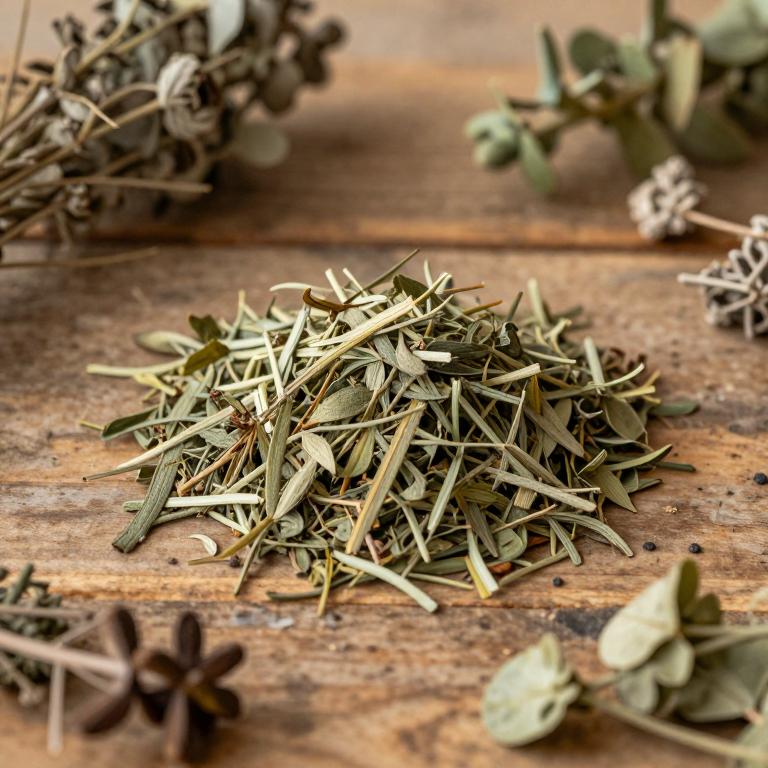
Chacruna, scientifically known as Psychotria viridis, is a perennial shrub native to the Amazon rainforest. Renowned for its high concentration of N,N-Dimethyltryptamine (DMT), it serves as a vital component in traditional Ayahuasca brews. This sacred plant holds profound spiritual and medicinal significance within indigenous Amazonian shamanic practices.
- Family
- Rubiaceae
- Native range
- Northern America
- Parts used
- Leaf · Root
- Common names
- Not available
- Scientific synonyms
- Uragoga Microdesmia · Uragoga Glomerata · 6 more
Names and Synonyms
Scientific Names
Accepted name
Psychotria viridisSynonyms
- Uragoga microdesmia
- Uragoga glomerata
- Uragoga viridis
- Palicourea viridis
- Psychotria microdesmia
- Psychotria glomerata
- Uragoga trispicata
- Psychotria trispicata
Regional and Traditional Names
Spanish:
- Psychotria trispicata
- Uragoga viridis
- Uragoga trispicata
- Psychotria microdesmia
- Uragoga glomerata
- Uragoga microdesmia
- Palicourea viridis
- Psychotria glomerata
German:
- Chacruna
Sources: Wikidata
Taxonomical Classification
This plant belongs to the kingdom Plantae and is classified under the phylum Streptophyta and class Equisetopsida. Within the subclass Magnoliidae, it is ordered under Gentianaales and falls into the family Rubiaceae. Finally, it is categorized under the genus Psychotria, specifically as the species Psychotria viridis.
| Rank | Classification |
|---|---|
| Kingdom | Plantae |
| Phylum | Streptophyta |
| Class | Equisetopsida |
| Subclass | Magnoliidae |
| Order | Gentianales |
| Family | Rubiaceae |
| Genus | Psychotria |
Sources: The World Checklist of Vascular Plants (WCVP)
Distribution
This plant exhibits a broad distribution across several regions of the Americas. In Mexico, its presence is specifically noted within the southeastern portion of the country. Moving into Central America, the species can be found growing in Belize and Guatemala. It is also documented within the borders of Nicaragua. Finally, the geographical range extends further south to include Costa Rica.
| Region | Area |
|---|---|
| Mexico | Mexico Southeast |
| Central America | Belize |
| Central America | Costa Rica |
| Central America | Guatemala |
| Central America | Nicaragua |
| Central America | Panamá |
| Caribbean | Cuba |
| Caribbean | Dominican Republic |
| Caribbean | Haiti |
| Northern South America | Venezuela |
Sources: The World Checklist of Vascular Plants (WCVP)
Botanical Identification
Ecology
The ecology of Psychotria viridis is characterized by its preference for high-moisture, densely forested environments, typically occurring within Floresta Ciliar ou Galeria (riparian or gallery forests), Floresta de Várzea (floodplain forests), or Floresta Ombrófila (rainforests). This species thrives in these humid, tropical ecosystems where consistent moisture and shade are available. Its distribution spans a wide altitudinal gradient, ranging from sea level (0 m AMSL) up to a maximum elevation of 1040 m AMSL, allowing it to inhabit various lowland and sub-montane forest strata.
- Elevational range max:
- 1040 m AMSL
- Elevational range min:
- 0 m AMSL
- Habitat :
- Floresta Ciliar ou Galeria, Floresta de Várzea, Floresta Ombrófila (= Floresta Pluvial)
Life history
The life history of Psychotria viridis is characterized by its classification as a perennial plant, ensuring its presence in the ecosystem over multiple growing seasons. As a phanerophyte, its regenerative buds are located on aerial shoots well above the ground, facilitating its growth as a woody shrub. Additionally, it can be categorized under the life form of nanophanerophyte, reflecting its specific stature and structural development within its habitat. The plant maintains an evergreen deciduousness, meaning it retains its foliage throughout the year without undergoing a seasonal shedding period.
- Deciduousness :
- evergreen
- Life form :
- nanophanerophyte
- Life form :
- phanerophyte
- Lifecycle :
- perennial
Morphology
The morphology of Psychotria viridis is characterized by a woody growth habit that can manifest as either a shrub or a tree, reaching a mean height of approximately 3 m, though individual specimens can attain a maximum height of up to 12 m. As a terrestrial plant, it does not exhibit aquatic or semiaquatic tendencies, nor does it function as an epiphyte, remaining firmly grounded in its environment. It is an independent organism that does not act as a parasite, maintaining its own nutritional requirements. While it possesses a self-supporting structure rather than functioning as an obligatory or facultative climber, liana, or vine, its robust woody composition allows it to maintain its stature within its natural habitat.
- Aquatic :
- terrestrial
- Climber :
- self-supporting
- Epiphyte :
- terrestrial
- Growth form :
- tree
- Growth form :
- shrub
- Parasite :
- independent
- Plant height max:
- 12 m
- Plant height mean:
- 3 m
- Woodiness :
- woody
Physiology
The physiology of Psychotria viridis is characterized by complex metabolic processes centered on the biosynthesis of tryptamine alkaloids, most notably N,N-Dimethyltryptamine (DMT), through the decarboxylation and subsequent N-methylation of L-tryptophan. The plant utilizes specialized enzymatic pathways within its vegetative and leaf tissues to synthesize these secondary metabolites, which serve as chemical defense mechanisms against herbivory. Regarding its nutrient acquisition and metabolic interactions, Psychotria viridis does not function as a nitrogen fixer; it lacks the symbiotic relationship with diazotrophic bacteria, such as Rhizobium, required to convert atmospheric nitrogen into bioavailable forms. Consequently, its physiological growth and nitrogen assimilation are entirely dependent on the uptake of nitrates and ammonium from the soil through its root system. The plant's photosynthetic efficiency and overall vigor are closely tied to the availability of these soil nutrients and the management of its internal carbon-to-nitrogen ratios to support both primary growth and the energetically costly production of its alkaloid constituents.
- Nitrogen fixer :
- no
Sources: Global Inventory of Floras and Traits (GIFT)
Plant Parts
Psychotria viridis has 2 reported plant parts identified across 3 scientific publications and several other databases that are studied for medicinal purposes. The most consistently reported plant part include leaf, root.
| Plant part | Supporting sources | Consensus |
|---|---|---|
| Leaf | 2 supporting sources | ★☆☆☆☆ |
| Root | 1 supporting sources | ★☆☆☆☆ |
Leaf
- Pharmaceuticals (Basel, Switzerland)
- Journal of ethnopharmacology
Root
- Revista de neurologia
Chemicals
Psychotria viridis has 3 reported phytochemicals identified across 3 scientific publications and several other databases. The most consistently reported chemicals include N,N-DIMETHYLTRYPTAMINE, DIMETHYLTRYPTAMINE, DMT.
| Chemical | Supporting sources | Consensus |
|---|---|---|
| N,N-DIMETHYLTRYPTAMINE | 3 supporting sources | ★★☆☆☆ |
| DIMETHYLTRYPTAMINE | 2 supporting sources | ★☆☆☆☆ |
| DMT | 2 supporting sources | ★☆☆☆☆ |
N,N-DIMETHYLTRYPTAMINE
- ACS omega
- Journal of ethnopharmacology
- Journal of clinical psychopharmacology
DIMETHYLTRYPTAMINE
- Case reports in emergency medicine
- The International journal on drug policy
DMT
- Journal of ethnopharmacology
- Journal of clinical psychopharmacology
Activities
Psychotria viridis has 4 reported activities identified across 3 scientific publications and several other databases. The most consistently reported activities include Hallucinogenic, Hallucinogen, Psychoactive, Psychotropic.
| Activity | Supporting sources | Consensus |
|---|---|---|
| Hallucinogenic | 2 supporting sources | ★☆☆☆☆ |
| Hallucinogen | 1 supporting sources | ★☆☆☆☆ |
| Psychoactive | 1 supporting sources | ★☆☆☆☆ |
| Psychotropic | 1 supporting sources | ★☆☆☆☆ |
Hallucinogenic
- Journal of ethnopharmacology
- Drug and alcohol dependence
Hallucinogen
- Journal of ethnopharmacology
Psychoactive
- Revista de neurologia
Psychotropic
- Journal of clinical psychopharmacology
Conditions
Psychotria viridis has 4 reported investigations on conditions identified across 3 scientific publications and several other databases. The most consistently reported conditions include anxiety, anxiety disorders, depression, substance dependence.
| Condition | Supporting sources | Consensus |
|---|---|---|
| Anxiety | 1 supporting sources | ★☆☆☆☆ |
| Anxiety disorders | 1 supporting sources | ★☆☆☆☆ |
| Depression | 1 supporting sources | ★☆☆☆☆ |
| Substance dependence | 1 supporting sources | ★☆☆☆☆ |
Anxiety
- Pharmaceuticals (Basel, Switzerland)
Anxiety disorders
- CNS drugs
Depression
- Pharmaceuticals (Basel, Switzerland)
Substance dependence
- Journal of psychoactive drugs
Preparations
Psychotria viridis has 9 reported preparations identified across 3 scientific publications and several other databases. The most consistently reported preparations include tea, ayahuasca, Ayahuasca, Infusions of ayahuasca, N,N-dimethyltryptamine (DMT).
| Preparation | Supporting sources | Consensus |
|---|---|---|
| Tea | 3 supporting sources | ★★☆☆☆ |
| Ayahuasca | 2 supporting sources | ★☆☆☆☆ |
| Ayahuasca | 1 supporting sources | ★☆☆☆☆ |
| Infusions of ayahuasca | 1 supporting sources | ★☆☆☆☆ |
| N,n-dimethyltryptamine (dmt) | 1 supporting sources | ★☆☆☆☆ |
| Admixture | 1 supporting sources | ★☆☆☆☆ |
| Aqueous concoction | 1 supporting sources | ★☆☆☆☆ |
| Boiling in water | 1 supporting sources | ★☆☆☆☆ |
| Psychedelic plant brew | 1 supporting sources | ★☆☆☆☆ |
Tea
- Case reports in emergency medicine
- The International journal on drug policy
- Journal of clinical psychopharmacology
Ayahuasca
- Journal of ethnopharmacology
- Frontiers in pharmacology
Ayahuasca
- Journal of ethnopharmacology
Infusions of ayahuasca
- Revista de neurologia
N,n-dimethyltryptamine (dmt)
- PloS one
Admixture
- Journal of psychoactive drugs
Aqueous concoction
- Pharmaceuticals (Basel, Switzerland)
Boiling in water
- ACS omega
Psychedelic plant brew
- PCN reports : psychiatry and clinical neurosciences