Psychotria insularum
Psychotria insularum · Accepted scientific name
Scientific literature: Very Sparse (9 studies) · ★☆☆☆☆
Psychotria insularum, scientifically known as Psychotria insularum, is a remarkable medicinal plant native to tropical ecosystems. Renowned for its unique phytochemical properties, this species holds significant potential in ethnobotanical studies. Researchers explore its bioactive compounds for developing novel therapeutic applications, particularly in addressing various inflammatory and neurological conditions.
- Family
- Rubiaceae
- Native range
- Pacific
- Parts used
- Leaf
- Common names
- Not available
- Scientific synonyms
- Uragoga Insularum · Psychotria Tutuilensis · 4 more
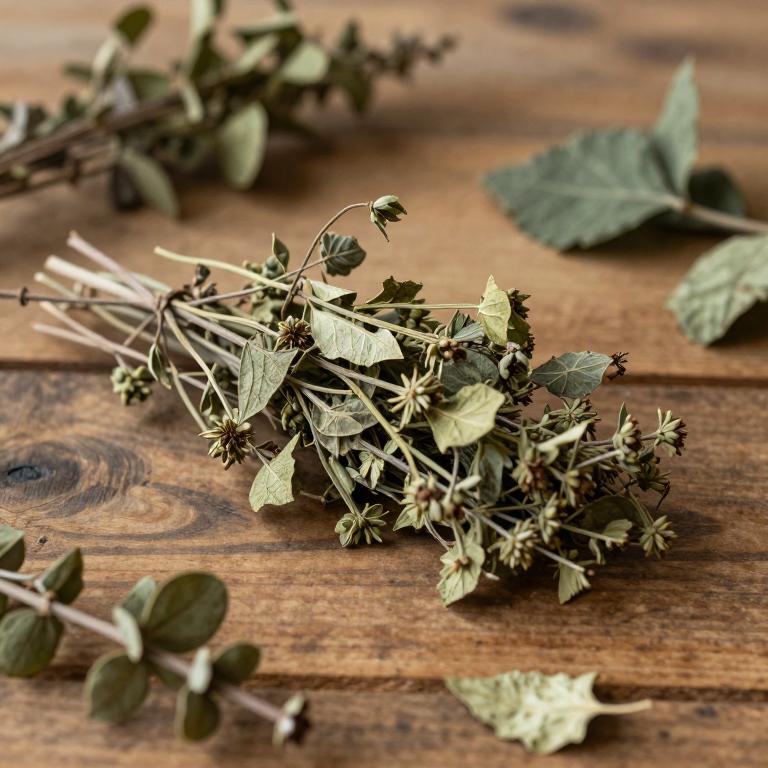
Names and Synonyms
Scientific Names
Accepted name
Psychotria insularumSynonyms
- Uragoga insularum
- Psychotria tutuilensis
- Psychotria insularum var. montanum
- Psychotria insularum var. aprica
- Psychotria insularum var. paradisii
- Psychotria atroviridescens
Sources: Wikidata, Catalogue of Life
Taxonomical Classification
This plant, Psychotria insularum, belongs to the kingdom Plantae and the phylum Streptophyta. Within the class Equisetopsida and subclass Magnoliidae, it is classified under the order Gentianaales. Finally, it is a member of the family Rubiaceae and the genus Psychotria.
| Rank | Classification |
|---|---|
| Kingdom | Plantae |
| Phylum | Streptophyta |
| Class | Equisetopsida |
| Subclass | Magnoliidae |
| Order | Gentianales |
| Family | Rubiaceae |
| Genus | Psychotria |
Sources: The World Checklist of Vascular Plants (WCVP)
Distribution
This plant exhibits a specific range across several island groups within the Pacific Ocean. In the Southwestern Pacific region, its presence is documented in Niue, Samoa, and Tonga. It can also be found throughout the Wallis-Futuna Islands. Furthermore, its distribution extends into the South-Central Pacific. Specifically, the species is known to inhabit the Society Islands.
| Region | Area |
|---|---|
| Southwestern Pacific | Niue |
| Southwestern Pacific | Samoa |
| Southwestern Pacific | Tonga |
| Southwestern Pacific | Wallis-Futuna Is. |
| South-Central Pacific | Society Is. |
Sources: The World Checklist of Vascular Plants (WCVP)
Botanical Identification
Life history
The life history of Psychotria insularum is characterized by its structural development and survival strategies within its specific ecological niche, manifesting primarily through its growth forms. As a member of the Rubiaceae family, its biological presence is defined by a dual potential in its life stages or environmental adaptations, categorized by the life forms of phanerophyte and nanophanerophyte. As a phanerophyte, the plant maintains its buds well above the soil surface, allowing it to develop into a woody, perennial structure capable of enduring seasonal variations by protecting its meristematic tissues. Complementing this, its classification as a nanophanerophyte indicates a life history where the plant may also exist in a more compact, low-growing state, with stems or buds held just above the ground level. This combination of life forms suggests a resilient life cycle that allows the species to occupy diverse vertical strata, transitioning between more robust woody growth and more condensed, low-lying forms depending on environmental stability and resource availability.
- Life form :
- nanophanerophyte
- Life form :
- phanerophyte
Morphology
The morphology of Psychotria insularum is characterized by a woody structure that defines its robust physical presence. It exhibits a growth form categorized as a tree, presenting a substantial and permanent vegetative architecture. In terms of its climbing habits, the plant displays a self-supporting nature, functioning as a liana, vine, or self-supporting climber through both obligatory and facultative mechanisms. As an independent organism, it does not function as a parasite, maintaining its own nutritional autonomy. Furthermore, its ecological positioning is strictly terrestrial, as it grows in the soil rather than functioning as an epiphyte.
- Climber :
- self-supporting
- Epiphyte :
- terrestrial
- Growth form :
- tree
- Parasite :
- independent
- Woodiness :
- woody
Physiology
The physiology of Psychotria insularum is characterized by metabolic processes adapted to its specific ecological niche, primarily focusing on efficient resource acquisition and water management. A key physiological distinction of this species is its lack of specialized water-storage tissues, as indicated by its status regarding succulence; specifically, it does not exhibit succulence (trait_1: no), meaning it lacks the thickened, fleshy leaves or stems typically used for long-term moisture retention in arid-adapted plants. Instead, its physiological framework relies on standard transpiration rates and moisture uptake through a functional root system to maintain turgor pressure. The plant's metabolic pathways are geared toward supporting vegetative growth and secondary metabolite production, which are essential for its chemical profile, while its hydraulic conductance is tuned to environments where water availability is more consistent rather than intermittent, precluding the need for the specialized succulent adaptations found in xerophytic species.
- Succulence :
- no
Reproduction
The reproduction of Psychotria insularum is characterized by specific dispersal mechanisms that facilitate its propagation within its ecosystem. The plant exhibits a dispersal syndrome that is primarily zoochorous, meaning it relies on animals for the movement of its seeds. More specifically, its reproductive strategy is defined as endozoochorous, indicating that the seeds are ingested by animals and subsequently dispersed through their digestive tracts. This process allows the seeds to be transported away from the parent plant, often accompanied by natural fertilization, which aids in colonizing new habitats.
- Dispersal syndrome :
- zoochorous
- Dispersal syndrome :
- endozoochorous
Sources: Global Inventory of Floras and Traits (GIFT)
Plant Parts
Psychotria insularum has 1 reported plant parts identified across 1 scientific publications and several other databases that are studied for medicinal purposes. The most consistently reported plant part include leaf.
| Plant part | Supporting sources | Consensus |
|---|---|---|
| Leaf | 1 supporting sources | ★☆☆☆☆ |
Leaf
- Proceedings of the National Academy of Sciences of the United States of America
Chemicals
Psychotria insularum has 2 reported phytochemicals identified across 1 scientific publications and several other databases. The most consistently reported chemicals include Nicotiflorin, RUTIN.
| Chemical | Supporting sources | Consensus |
|---|---|---|
| Nicotiflorin | 1 supporting sources | ★☆☆☆☆ |
| RUTIN | 1 supporting sources | ★☆☆☆☆ |
Nicotiflorin
- Proceedings of the National Academy of Sciences of the United States of America
RUTIN
- Proceedings of the National Academy of Sciences of the United States of America
Conditions
Psychotria insularum has 5 reported investigations on conditions identified across 1 scientific publications and several other databases. The most consistently reported conditions include wounds, burns, elephantiasis, respiratory infections, vomiting.
| Condition | Supporting sources | Consensus |
|---|---|---|
| Wounds | 2 supporting sources | ★☆☆☆☆ |
| Burns | 1 supporting sources | ★☆☆☆☆ |
| Elephantiasis | 1 supporting sources | ★☆☆☆☆ |
| Respiratory infections | 1 supporting sources | ★☆☆☆☆ |
| Vomiting | 1 supporting sources | ★☆☆☆☆ |
Wounds
- Journal of ethnopharmacology
- Proceedings of the National Academy of Sciences of the United States of America
Burns
- Journal of ethnopharmacology
Elephantiasis
- Proceedings of the National Academy of Sciences of the United States of America
Respiratory infections
- Proceedings of the National Academy of Sciences of the United States of America
Vomiting
- Proceedings of the National Academy of Sciences of the United States of America
Preparations
Psychotria insularum has 2 reported preparations identified across 1 scientific publications and several other databases. The most consistently reported preparations include ethanol extracts, leaf homogenate.
| Preparation | Supporting sources | Consensus |
|---|---|---|
| Ethanol extracts | 1 supporting sources | ★☆☆☆☆ |
| Leaf homogenate | 1 supporting sources | ★☆☆☆☆ |
Ethanol extracts
- Journal of ethnopharmacology
Leaf homogenate
- Proceedings of the National Academy of Sciences of the United States of America