Psorospermum senegalense
Psorospermum senegalense · Accepted scientific name
Scientific literature: Very Sparse (3 studies) · ★☆☆☆☆
, scientifically known as Psorospermum senegalense, is a significant medicinal shrub widely utilized in African traditional medicine. Renowned for its diverse therapeutic properties, this plant is frequently employed to treat various ailments, including skin infections, digestive issues, and inflammation, offering valuable phytochemical compounds for pharmacological research and natural healing.
- Family
- Hypericaceae
- Native range
- Africa
- Parts used
- Leaf
- Common names
- Not available
- Scientific synonyms
- Not available
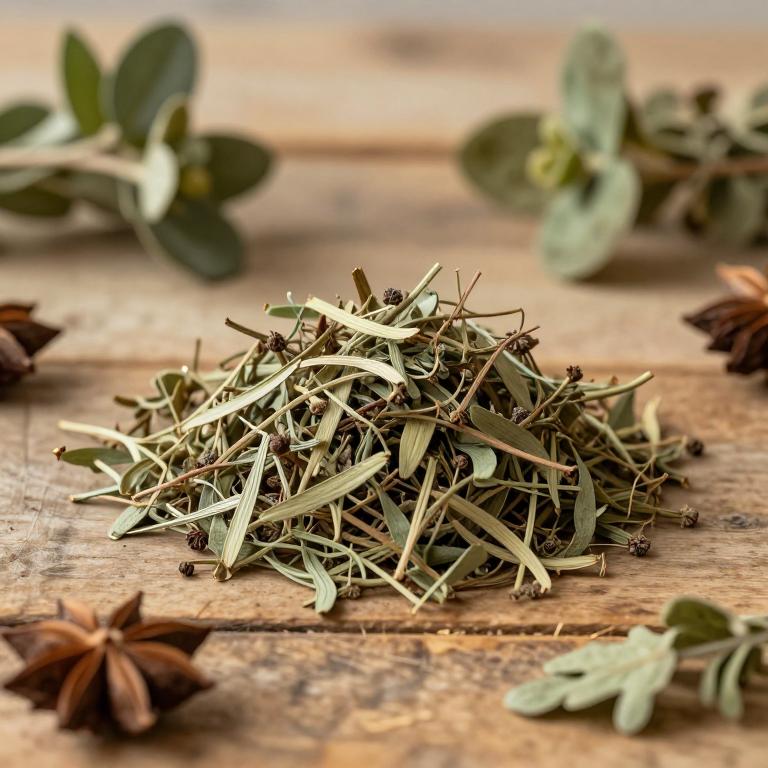
Names and Synonyms
Scientific Names
Accepted name
Psorospermum senegalenseSources: Wikidata
Taxonomical Classification
This plant belongs to the kingdom Plantae and is classified under the phylum Streptophyta and class Equisetopsida. Within the subclass Magnoliidae, it is positioned in the order Malpighiales and the family Hypericaceae. Finally, it is identified by the genus Psorospermum, specifically as the species Psorospermum senegalense.
| Rank | Classification |
|---|---|
| Kingdom | Plantae |
| Phylum | Streptophyta |
| Class | Equisetopsida |
| Subclass | Magnoliidae |
| Order | Malpighiales |
| Family | Hypericaceae |
| Genus | Psorospermum |
Sources: The World Checklist of Vascular Plants (WCVP)
Distribution
This plant is primarily distributed across the West Tropical Africa region. Within this area, it can be found growing in the nation of Burkina. Its range also extends to the coastal and inland territories of Gambia. Furthermore, the species is documented to inhabit Guinea and Guinea-Bissau. Finally, its geographical presence includes the vast landscapes of Mali.
| Region | Area |
|---|---|
| West Tropical Africa | Burkina |
| West Tropical Africa | Gambia |
| West Tropical Africa | Guinea-Bissau |
| West Tropical Africa | Guinea |
| West Tropical Africa | Mali |
| West Tropical Africa | Senegal |
| West Tropical Africa | Sierra Leone |
| West-Central Tropical Africa | DR Congo |
| Northeast Tropical Africa | Chad |
Sources: The World Checklist of Vascular Plants (WCVP)
Botanical Identification
Life history
The life history of Psorospermum senegalense is characterized by a perennial lifecycle, allowing the individual to persist through multiple growing seasons within its ecosystem. In terms of its structural life form, the species is classified as a phanerophyte, specifically exhibiting traits consistent with both phanerophyte and nanophanerophyte classifications, meaning its perennating buds are located high above the ground on woody stems or branches.
- Life form :
- phanerophyte
- Lifecycle :
- perennial
Morphology
The morphology of Psorospermum senegalense is characterized by its growth form as a woody shrub, exhibiting a self-supporting structure that does not require climbing mechanisms. As an independent organism, it functions without parasitic or epiphytic dependencies, maintaining a primarily terrestrial existence rather than an aquatic or semiaquatic habit. The plant's physical architecture is defined by its woodiness, which supports its development as a robust, shrubby species within its natural habitat.
- Aquatic :
- terrestrial
- Climber :
- self-supporting
- Epiphyte :
- terrestrial
- Growth form :
- shrub
- Parasite :
- independent
- Woodiness :
- woody
Sources: Global Inventory of Floras and Traits (GIFT)
Plant Parts
Psorospermum senegalense has 1 reported plant parts identified across 1 scientific publications and several other databases that are studied for medicinal purposes. The most consistently reported plant part include leaf.
| Plant part | Supporting sources | Consensus |
|---|---|---|
| Leaf | 1 supporting sources | ★☆☆☆☆ |
Leaf
- Journal of ethnopharmacology
Activities
Psorospermum senegalense has 1 reported activities identified across 1 scientific publications and several other databases. The most consistently reported activities include Antiepileptic.
| Activity | Supporting sources | Consensus |
|---|---|---|
| Antiepileptic | 1 supporting sources | ★☆☆☆☆ |
Antiepileptic
- Journal of ethnopharmacology
Conditions
Psorospermum senegalense has 1 reported investigations on conditions identified across 1 scientific publications and several other databases. The most consistently reported conditions include malaria.
| Condition | Supporting sources | Consensus |
|---|---|---|
| Malaria | 1 supporting sources | ★☆☆☆☆ |
Malaria
- Journal of ethnopharmacology
Preparations
Psorospermum senegalense has 2 reported preparations identified across 1 scientific publications and several other databases. The most consistently reported preparations include ethanolic extracts, leaves.
| Preparation | Supporting sources | Consensus |
|---|---|---|
| Ethanolic extracts | 1 supporting sources | ★☆☆☆☆ |
| Leaves | 1 supporting sources | ★☆☆☆☆ |
Ethanolic extracts
- Journal of ethnopharmacology
Leaves
- Journal of ethnopharmacology