Psittacanthus calyculatus
Psittacanthus calyculatus · Accepted scientific name
Scientific literature: Very Sparse (3 studies) · ★☆☆☆☆
Psittacanthus calyculatus, scientifically known as Psittacanthus calyculatus, is a remarkable mistletoe species valued in traditional medicine. Primarily found in tropical regions, this hemiparasitic plant contains bioactive compounds used to treat various ailments. Its therapeutic potential continues to fascinate researchers studying natural remedies for inflammatory and systemic conditions.
- Family
- Loranthaceae
- Native range
- Northern America
- Parts used
- Not available
- Common names
- Not available
- Scientific synonyms
- Chatinia Calyculata · Hyphipus Trigona · 6 more
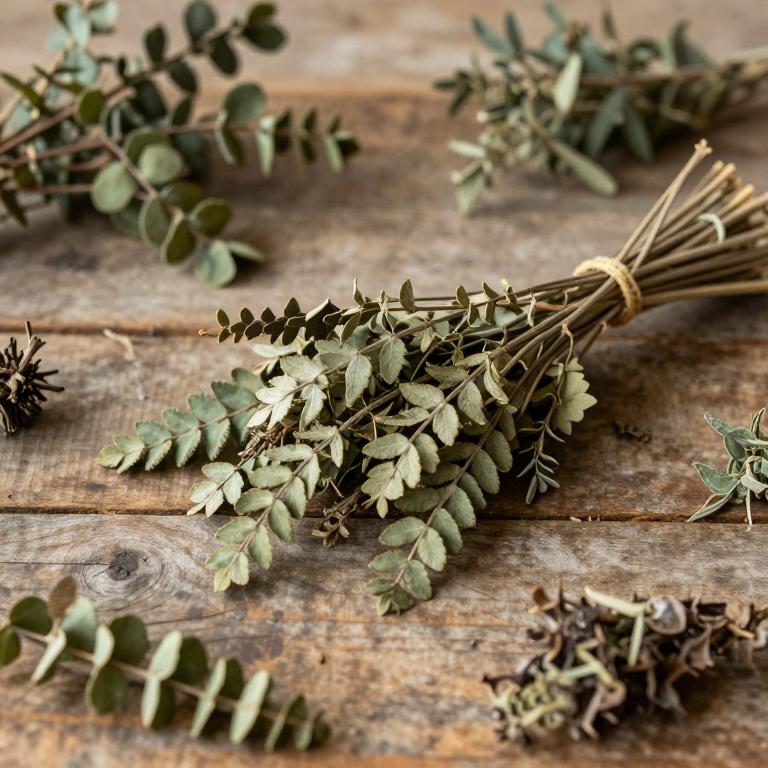
Names and Synonyms
Scientific Names
Accepted name
Psittacanthus calyculatusSynonyms
- Chatinia calyculata
- Hyphipus trigona
- Psittacanthus jacquinii
- Psittacanthus scalpratus
- Psittacanthus plumieri
- Loranthus calyculatus
- Loranthus plumieri
- Loranthus pedunculatus
Regional and Traditional Names
Spanish:
- Injerto de huizache
Sources: Wikidata, Catalogue of Life
Taxonomical Classification
This plant, known as Psittacanthus calyculatus, belongs to the kingdom Plantae and the phylum Streptophyta. Within the class Equisetopsida and subclass Magnoliidae, it is classified under the order Santalales and the family Loranthaceae. It is further categorized under the genus Psittacantus.
| Rank | Classification |
|---|---|
| Kingdom | Plantae |
| Phylum | Streptophyta |
| Class | Equisetopsida |
| Subclass | Magnoliidae |
| Order | Santalales |
| Family | Loranthaceae |
| Genus | Psittacanthus |
Sources: The World Checklist of Vascular Plants (WCVP)
Distribution
This plant is widely distributed across several key regions throughout the country of Mexico. Specifically, its presence is documented within the central part of the nation in Mexico Central. It also extends into the northeastern territories of Mexico Northeast. Furthermore, the species can be found thriving in the coastal areas of Mexico Gulf. Finally, its geographical range encompasses the diverse landscapes of both Mexico Northwest and Mexico Southwest.
| Region | Area |
|---|---|
| Mexico | Mexico Central |
| Mexico | Mexico Northeast |
| Mexico | Mexico Gulf |
| Mexico | Mexico Northwest |
| Mexico | Mexico Southwest |
| Mexico | Mexico Southeast |
| Central America | El Salvador |
| Central America | Guatemala |
| Northern South America | Venezuela |
| Western South America | Colombia |
Sources: The World Checklist of Vascular Plants (WCVP)
Botanical Identification
Ecology
The ecology of Psittacanthus calyculatus is characterized by its specialized niche as a hemiparasitic plant, typically inhabiting tropical and subtropical environments where it relies on host trees for water and mineral nutrients. It thrives in diverse habitats ranging from forest edges to more open woodland structures, where light availability and host proximity are critical for its survival. This species is primarily found at low-lying coastal or lowland regions, occupying an elevational range that extends from sea level up to higher reaches, with a documented elevational range mean of 50 m AMSL. Its distribution and growth patterns are closely tied to the phenology and structural complexity of its host species, which dictates the microclimatic conditions, such as humidity and temperature, that the plant experiences throughout its lifecycle.
- Elevational range mean:
- 50 m AMSL
Life history
The life history of Psittacanthus calyculatus is characterized by a perennial lifecycle, allowing the plant to persist in its environment over multiple years. As a hemiparasitic species, its development is intrinsically tied to the availability of host plants, which provide the necessary water and mineral nutrients required for its long-term survival. Throughout its life, it establishes itself by attaching its specialized roots, known as haustoria, to the branches of a host, ensuring a continuous supply of resources that supports its multi-year existence. This perennial nature enables the plant to undergo repeated cycles of vegetative growth and flowering, contributing to its stability within its ecological niche.
- Lifecycle :
- perennial
Morphology
The morphology of Psittacanthus calyculatus is characterized by a non-woody growth form, functioning primarily as a self-supporting herb in its structural development. Although it exhibits characteristics found in various ecological niches, its primary habit is terrestrial rather than aquatic or semiaquatic. As a plant that does not rely on climbing mechanisms such as lianas or vines, it remains self-supporting in both its obligatory and facultative growth stages. Furthermore, it is categorized as a terrestrial species rather than an epiphyte, meaning it does not function as a holoepiphyte, hemiepiphyte, or any other epiphytic form. Regarding its nutritional strategy, the plant is an obligatory parasite, relying on its host for survival while maintaining its specific morphological identity.
- Aquatic :
- terrestrial
- Climber :
- self-supporting
- Epiphyte :
- terrestrial
- Growth form :
- herb
- Parasite :
- obligatory
- Woodiness :
- non-woody
Physiology
The physiology of Psittacanthus calyculatus is characterized by its specialized lifestyle as a hemiparasitic mistletoe, which dictates its metabolic and nutrient acquisition processes. Unlike autotrophic plants, its physiological framework is centered on the development of a haustorium, a specialized organ that penetrates the host tissue to establish a physiological bridge for the extraction of water, minerals, and organic solutes. While the plant possesses chlorophyll and is capable of performing photosynthesis to generate its own carbohydrates, it remains heavily dependent on the host's xylem for hydraulic stability and nutrient transport. Regarding its interaction with soil chemistry and symbiotic microbial relationships, the plant is not a nitrogen fixer, meaning it lacks the physiological mechanisms and symbiotic associations with diazotrophic bacteria required to convert atmospheric nitrogen into usable forms. Consequently, its nitrogen requirements are met entirely through the absorption of nitrogenous compounds directly from the host's vascular system.
- Nitrogen fixer :
- no
Reproduction
The reproduction of Psittacanthus calyculatus is characterized by the development of specific fruit and seed structures designed for dispersal. The plant produces fruit that can be described as having a fleshy texture, transitioning between dry and fleshy states depending on maturity. Within these fruits, the seeds are produced with highly consistent dimensions; the seed volume is precisely measured at a mean of 280 mm³, with both the minimum and maximum recorded volumes remaining constant at 280 mm³. This uniformity in seed volume suggests a stabilized reproductive strategy within the species.
- Fruit dryness :
- fleshy
- Seed volume max:
- 280 mm³
Sources: Global Inventory of Floras and Traits (GIFT)
Chemicals
Psittacanthus calyculatus has 2 reported phytochemicals identified across 0 scientific publications and several other databases. The most consistently reported chemicals include Gallic acid, N-methyl-trans-4-hydroxy-L-proline.
| Chemical | Supporting sources | Consensus |
|---|---|---|
| Gallic acid | 1 supporting sources | ★☆☆☆☆ |
| N-methyl-trans-4-hydroxy-L-proline | 1 supporting sources | ★☆☆☆☆ |
Gallic acid
- Molecules (Basel, Switzerland)
N-methyl-trans-4-hydroxy-L-proline
- Molecules (Basel, Switzerland)
Activities
Psittacanthus calyculatus has 1 reported activities identified across 0 scientific publications and several other databases. The most consistently reported activities include Antimicrobial.
| Activity | Supporting sources | Consensus |
|---|---|---|
| Antimicrobial | 1 supporting sources | ★☆☆☆☆ |
Antimicrobial
- Natural product communications
Preparations
Psittacanthus calyculatus has 1 reported preparations identified across 0 scientific publications and several other databases. The most consistently reported preparations include aqueous extract.
| Preparation | Supporting sources | Consensus |
|---|---|---|
| Aqueous extract | 1 supporting sources | ★☆☆☆☆ |
Aqueous extract
- Molecules (Basel, Switzerland)