Brazilian Guava
Psidium guineense · Accepted scientific name
Scientific literature: Very Sparse (7 studies) · ★☆☆☆☆
Brazilian Guava, scientifically known as Psidium guineense, is a versatile medicinal shrub native to tropical regions. Renowned for its potent antioxidant and antimicrobial properties, its leaves and fruits are traditionally used to treat digestive ailments, skin infections, and inflammation, offering a rich natural resource for holistic healthcare practices.
- Family
- Myrtaceae
- Native range
- Africa
- Parts used
- Fruit
- Common names
- Brazilian Guava · Guinea Guava
- Scientific synonyms
- Campomanesia Multiflora · Guajava Ypanemensis · 46 more
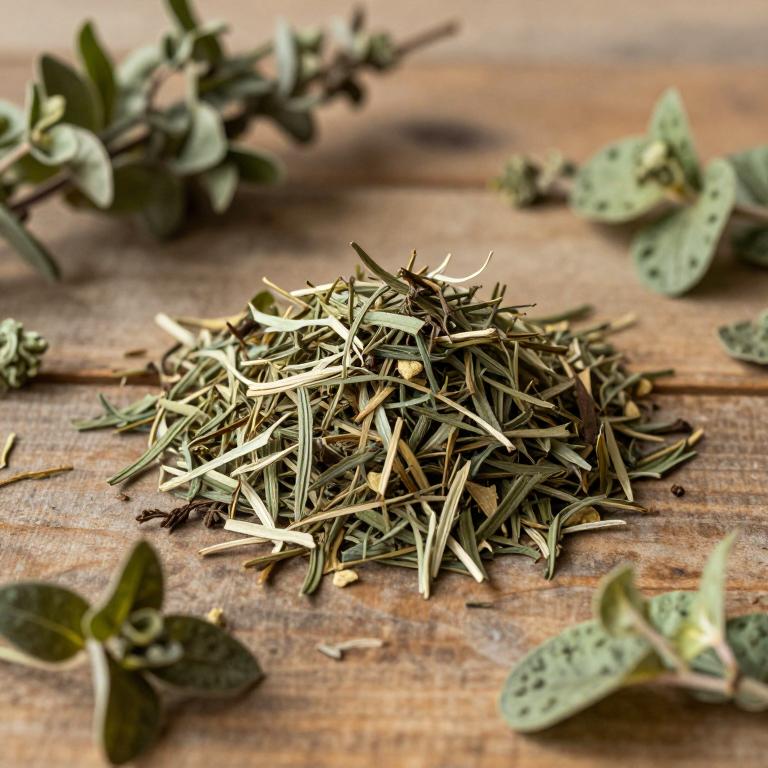
Names and Synonyms
Common Names
- Brazilian Guava
- Guinea guava
Scientific Names
Accepted name
Psidium guineenseSynonyms
- Campomanesia multiflora
- Guajava ypanemensis
- Mosiera guineensis
- Myrtus guineensis
- Guajava schiedeana
- Eugenia hauthalii
- Myrtus hauthalii
- Campomanesia tomentosa
- Psidium hasslerianum
- Guajava mollis
- Guajava ooidea
- Guajava polycarpos
- Psidium dichotomum
- Psidium costaricense
- Psidium benthamianum
- Psidium molle var. gracile
- Guajava costaricensis
- Psidium araca
- Psidium molle var. robustum
- Guajava albida
- Psidium monticola var. gracile
- Psidium hians
- Guajava benthamiana
- Psidium laurifolium
- Psidium monticola var. robustum
- Psidium lehmannii
- Guajava laurifolia
- Psidium jollyanum
- Psidium ooideum var. grandifolium
- Psidium polycarpon
- Guajava multiflora
- Psidium ooideum
- Psidium ooideum var. intermedium
- Psidium ooideum var. longipedunculatum
- Guajava hians
- Psidium ooideum var. parvifolium
- Psidium monticola
- Guajava guineensis
- Psidium molle
- Psidium hians var. cuneatum
- Psidium multiflorum
- Psidium ypanemense
- Psidium hians var. truncatum
- Psidium rufinervum
- Psidium sericiflorum
- Psidium schiedeanum
- Psidium schippii
- Psidium rotundifolium
Regional and Traditional Names
Spanish:
- Guayabo Sabanero
- guayaba ágria
- Choba
- Güísaro
- guayabo cimarrón
German:
- Stachelbeerguave
French:
- goyavier du Brésil
Sources: Wikidata, Catalogue of Life
Taxonomical Classification
This plant belongs to the kingdom Plantae and is classified under the phylum Streptophyta and the class Equisetopsida. Within the subclass Magnoliidae, it is further categorized under the order Myrtales and the family Myrtaceae. Ultimately, its scientific designation is placed within the genus Psidium.
| Rank | Classification |
|---|---|
| Kingdom | Plantae |
| Phylum | Streptophyta |
| Class | Equisetopsida |
| Subclass | Magnoliidae |
| Order | Myrtales |
| Family | Myrtaceae |
| Genus | Psidium |
Sources: The World Checklist of Vascular Plants (WCVP)
Distribution
This plant exhibits a broad geographical distribution spanning several key regions across the African continent. In West Tropical Africa, it can be found specifically within the Ivory Coast. Moving into West-Central Tropical Africa, the species is well-established in Congo, Gabon, and the Democratic Republic of the Congo. Its range further extends southward into the South Tropical Africa region, specifically in Angola. Collectively, these locations highlight the diverse ecological niches that Psidium guineense inhabits.
| Region | Area |
|---|---|
| West Tropical Africa | Ivory Coast |
| West-Central Tropical Africa | Congo |
| West-Central Tropical Africa | Gabon |
| West-Central Tropical Africa | DR Congo |
| South Tropical Africa | Angola |
| Indian Subcontinent | Bangladesh |
| Indian Subcontinent | India |
| Southwestern Pacific | New Caledonia |
| South-Central Pacific | Marquesas |
| South-Central Pacific | Society Is. |
Sources: The World Checklist of Vascular Plants (WCVP)
Botanical Identification
Ecology
The ecology of Psidium guineense is characterized by its remarkable adaptability to diverse environmental conditions and a wide range of ecological niches. It thrives across a variety of habitats, including Anthropic areas, Caatinga (strict sense), High-altitude fields (Campo de Altitude), Campo Rupestre, Carrasco, Cerrado (broad sense), Seasonal Semi-deciduous Forests, and Ombrophilous Forests (Rainforests). This species demonstrates a broad altitudinal distribution, occurring from sea level (0 m AMSL) up to a maximum elevation of 2300 m AMSL, with a mean elevational range of approximately 1500 m AMSL. Such versatility in habitat and elevation allows the plant to occupy various landscapes, ranging from open, xeric formations to more humid, forested ecosystems.
- Elevational range max:
- 2300 m AMSL
- Elevational range mean:
- 1500 m AMSL
- Elevational range min:
- 0 m AMSL
- Habitat :
- Área Antrópica, Caatinga (stricto sensu), Campo de Altitude, Campo Rupestre, Carrasco, Cerrado (lato sensu), Floresta Estacional Semidecidual, Floresta Ombrófila (= Floresta Pluvial)
Life history
The life history of Psidium guineense is characterized by a perennial lifecycle, allowing the plant to persist in its environment over many years. It functions primarily as a phanerophyte, maintaining its stem structure above the ground, though it can also be classified under the life form of nanophanerophyte depending on the specific growth stage and environmental conditions. Throughout its existence, the plant maintains an evergreen deciduousness, ensuring that it retains its foliage consistently rather than shedding it seasonally.
- Deciduousness :
- evergreen
- Life form :
- nanophanerophyte
- Life form :
- phanerophyte
- Lifecycle :
- perennial
Morphology
The morphology of Psidium guineense is characterized by a woody growth form, manifesting primarily as a shrub. It is a self-supporting plant that does not function as a climber or a liana, and it grows as an independent organism rather than a parasite. In terms of its ecological habit, it is a terrestrial species, lacking any aquatic, semiaquatic, or epiphytic tendencies. The plant exhibits significant variation in size, with its height ranging from a minimum of 0.9144 m to a maximum of 7.62 m, maintaining an average plant height of approximately 7 m.
- Aquatic :
- terrestrial
- Climber :
- self-supporting
- Epiphyte :
- terrestrial
- Growth form :
- shrub
- Parasite :
- independent
- Plant height max:
- 7.62 m
- Plant height mean:
- 7 m
- Plant height min:
- 0.9144 m
- Woodiness :
- woody
Physiology
The physiology of Psidium guineense is characterized by a C3 photosynthetic pathway, which governs its carbon fixation processes and energy production. Its vegetative structure exhibits specific morphological dimensions, particularly regarding the foliage; the leaves possess a length that ranges from a minimum of 3.5 cm to a maximum of 14 cm, while the leaf width varies between a minimum of 2.5 cm and a maximum of 8 cm. Furthermore, the plant does not function as a nitrogen fixer, meaning it lacks the specialized symbiotic relationships required to convert atmospheric nitrogen into a usable form for its growth.
- Leaf length max:
- 14 cm
- Leaf length min:
- 3.5 cm
- Leaf width max:
- 8 cm
- Leaf width min:
- 2.5 cm
- Nitrogen fixer :
- no
- Photosynthetic pathway :
- C3
Reproduction
The reproduction of Psidium guineense is characterized by a distinctive flowering and fruiting process involving specific morphological parameters. The plant produces inflorescences that vary significantly in size, with lengths ranging from a minimum of 0.03 m to a maximum of 35 m. These inflorescences bear flowers that are predominantly white in color. Following pollination, the plant develops fleshy fruits that serve as the vessel for its seeds. The seeds themselves exhibit high uniformity in the recorded data, maintaining a consistent seed volume of 65 mm³ (representing both the minimum, maximum, and mean values) and a stable seed mass of 0.00873 g (also representing the minimum, maximum, and mean values).
- Flower colour :
- white
- Fruit dryness :
- fleshy
- Inflorescence length max:
- 35 m
- Inflorescence length min:
- 0.03 m
- Seed mass mean:
- 0.00873 g
- Seed volume max:
- 65 mm³
Sources: Global Inventory of Floras and Traits (GIFT)
Plant Parts
Psidium guineense has 1 reported plant parts identified across 2 scientific publications and several other databases that are studied for medicinal purposes. The most consistently reported plant part include fruit.
| Plant part | Supporting sources | Consensus |
|---|---|---|
| Fruit | 2 supporting sources | ★☆☆☆☆ |
Fruit
- Foods (Basel, Switzerland)
- Journal of ethnopharmacology
Chemicals
Psidium guineense has 4 reported phytochemicals identified across 2 scientific publications and several other databases. The most consistently reported chemicals include Ethyl butanoate, LIMONENE, Terpenes, sucrose.
| Chemical | Supporting sources | Consensus |
|---|---|---|
| Ethyl butanoate | 1 supporting sources | ★☆☆☆☆ |
| LIMONENE | 1 supporting sources | ★☆☆☆☆ |
| Terpenes | 1 supporting sources | ★☆☆☆☆ |
| sucrose | 1 supporting sources | ★☆☆☆☆ |
Ethyl butanoate
- Foods (Basel, Switzerland)
LIMONENE
- Foods (Basel, Switzerland)
Terpenes
- Proteomics
sucrose
- Proteomics
Conditions
Psidium guineense has 1 reported investigations on conditions identified across 2 scientific publications and several other databases. The most consistently reported conditions include Staphylococcus aureus.
| Condition | Supporting sources | Consensus |
|---|---|---|
| Staphylococcus aureus | 1 supporting sources | ★☆☆☆☆ |
Staphylococcus aureus
- Journal of ethnopharmacology
Preparations
Psidium guineense has 1 reported preparations identified across 2 scientific publications and several other databases. The most consistently reported preparations include volatile concentrate.
| Preparation | Supporting sources | Consensus |
|---|---|---|
| Volatile concentrate | 1 supporting sources | ★☆☆☆☆ |
Volatile concentrate
- Foods (Basel, Switzerland)