horopito
Pseudowintera colorata · Accepted scientific name
Scientific literature: Very Sparse (7 studies) · ★☆☆☆☆
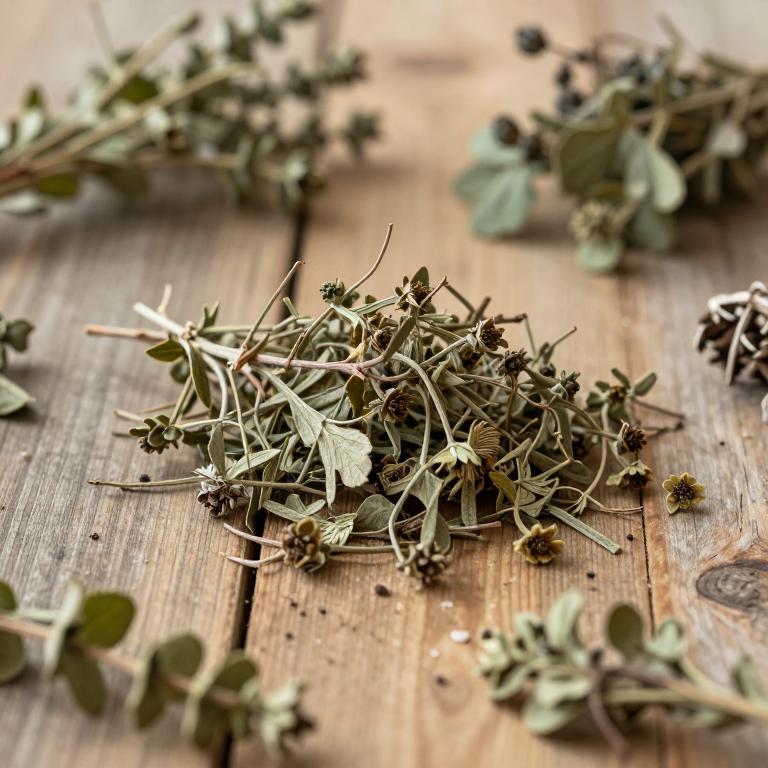
Horopito, scientifically known as Pseudowintera colorata, is a remarkable medicinal plant celebrated for its potent therapeutic properties. Renowned in traditional healing practices, this vibrant species offers unique bioactive compounds used to support holistic wellness. Understanding its botanical characteristics is essential for exploring its significant potential in modern pharmacology.
Names and Synonyms
Common Names
- Mountain Horopito
- Red Horopito
- Pepper tree
Scientific Names
Accepted name
Pseudowintera colorataSynonyms
- Drimys axillaris var. colorata
- Wintera colorata
- Drimys colorata
- Wintera monogyna
Regional and Traditional Names
Spanish:
- Horopito de montaña
- Madera de pimienta
Sources: Wikidata, Catalogue of Life
Taxonomical Classification
This plant belongs to the kingdom Plantae and is classified under the phylum Streptophyta within the class Equisetopsida. It is further organized under the subclass Magnoliidae and the order Caneellales, eventually placing it in the family Winteraceae. Its specific taxonomic identification is completed within the genus Pseudowintera.
| Rank | Classification |
|---|---|
| Kingdom | Plantae |
| Phylum | Streptophyta |
| Class | Equisetopsida |
| Subclass | Magnoliidae |
| Order | Canellales |
| Family | Winteraceae |
| Genus | Pseudowintera |
Sources: The World Checklist of Vascular Plants (WCVP)
Distribution
This plant exhibits a specific geographical range within the island nation of New Zealand. It is found natively in the northern regions of the country, specifically throughout New Zealand North. Additionally, its distribution extends significantly into the southern parts of the territory. This means that the species inhabits both New Zealand South and the northern islands. Consequently, the plant maintains a presence across both major landmasses of the archipelago.
| Region | Area |
|---|---|
| New Zealand | New Zealand North |
| New Zealand | New Zealand South |
Sources: The World Checklist of Vascular Plants (WCVP)
Botanical Identification
Ecology
The ecology of Pseudowintera colorata is characterized by its specific preference for lowland environments, where it occupies stable ecological niches within these lower-altitude regions. Within these lowland habitats, the plant interacts with a diverse array of local flora and fauna, adapting its physiological processes to the specific humidity, soil composition, and temperature profiles typical of such terrains. Its distribution is closely tied to the environmental stability offered by these low-lying areas, which support the specific microclimates necessary for its growth and survival.
- Habitat :
- Lowland
Life history
The life history of Pseudowintera colorata is characterized by its classification as a phanerophyte, specifically exhibiting the growth patterns associated with nanophanerophytes and chamaephytes. This plant maintains its regenerative buds well above the soil surface, allowing it to persist through seasonal shifts. Furthermore, its physiological strategy is defined by being evergreen, ensuring that its photosynthetic tissues remain active and functional throughout the year rather than undergoing a period of deciduousness.
- Deciduousness :
- evergreen
- Life form :
- phanerophyte
Morphology
The morphology of Pseudowintera colorata is characterized by a woody growth form, specifically developing as a shrub. This plant exhibits a self-supporting structure, rather than acting as a vine or liana, and maintains an independent lifestyle without being a parasite or an epiphyte. It is a terrestrial species that reaches a mean height of 2 m, with a maximum potential height of up to 3 m.
- Aquatic :
- terrestrial
- Climber :
- self-supporting
- Epiphyte :
- terrestrial
- Growth form :
- shrub
- Parasite :
- independent
- Plant height max:
- 3 m
- Plant height mean:
- 2 m
- Woodiness :
- woody
Physiology
The physiology of Pseudowintera colorata is characterized by specific morphological dimensions and metabolic limitations regarding nutrient acquisition. The foliar structure exhibits a consistent width, with a mean, minimum, and maximum measurement all stabilizing at 2 cm, suggesting a highly uniform leaf architecture. In terms of longitudinal growth, the leaf length reaches a maximum of 4.7 cm, defining the overall surface area available for photosynthetic activity. Furthermore, the plant does not possess the physiological mechanism for biological nitrogen fixation, as it is classified as a non-nitrogen fixer, meaning it must rely on external soil nitrogen sources rather than symbiotic microbial processes to meet its nutritional requirements.
- Leaf length max:
- 4.7 cm
- Leaf width mean:
- 2 cm
- Nitrogen fixer :
- no
Reproduction
The reproduction of Pseudowintera colorata is driven exclusively by sexual processes, as asexual reproduction is noted to be absent in this species. The plant relies on a biotic pollination syndrome, specifically utilizing insects to facilitate the fertilization process. Following successful pollination, the plant produces small fruits with a mean length and width of 0.4 cm. The resulting seeds are characterized by a highly consistent morphology, featuring a mean seed length of 3.1 mm (with minimum and maximum values also recorded at 3.1 mm) and a constant seed volume of 3.9 mm³. In terms of mass, the seeds are quite lightweight, possessing a mean mass of 0.00407 g, with a range varying from a minimum of 0.00301 g to a maximum of 0.0055 g. Dispersal of these seeds is categorized as zoochorous, specifically employing an endozoochorous strategy, where seeds are dispersed through the internal passage of animals.
- Dispersal syndrome :
- zoochorous
- Dispersal syndrome :
- endozoochorous
- Fruit length mean:
- 0.4 cm
- Fruit width mean:
- 0.4 cm
- Pollination syndrome :
- insect
- Pollination syndrome :
- biotic
- Reproduction asexual :
- absent
- Seed length mean:
- 3.1 mm
- Seed mass max:
- 0.0055 g
- Seed mass mean:
- 0.00407 g
- Seed mass min:
- 0.00301 g
- Seed volume max:
- 3.9 mm³
Sources: Global Inventory of Floras and Traits (GIFT)
Plant Parts
Pseudowintera colorata has 3 reported plant parts identified across 6 scientific publications and several other databases that are studied for medicinal purposes. The most consistently reported plant part include leaf, root, stem.
| Plant part | Supporting sources | Consensus |
|---|---|---|
| Leaf | 2 supporting sources | ★☆☆☆☆ |
| Root | 2 supporting sources | ★☆☆☆☆ |
| Stem | 2 supporting sources | ★☆☆☆☆ |
Leaf
- Plants (Basel, Switzerland)
- Microorganisms
Root
- Plants (Basel, Switzerland)
- Microorganisms
Stem
- Plants (Basel, Switzerland)
- Microorganisms
Activities
Pseudowintera colorata has 1 reported activities identified across 6 scientific publications and several other databases. The most consistently reported activities include Antimicrobial.
| Activity | Supporting sources | Consensus |
|---|---|---|
| Antimicrobial | 1 supporting sources | ★☆☆☆☆ |
Antimicrobial
- Microorganisms