Pseudostellaria europaea
Pseudostellaria europaea · Accepted scientific name
Scientific literature: Very Sparse (0 studies) · ★☆☆☆☆
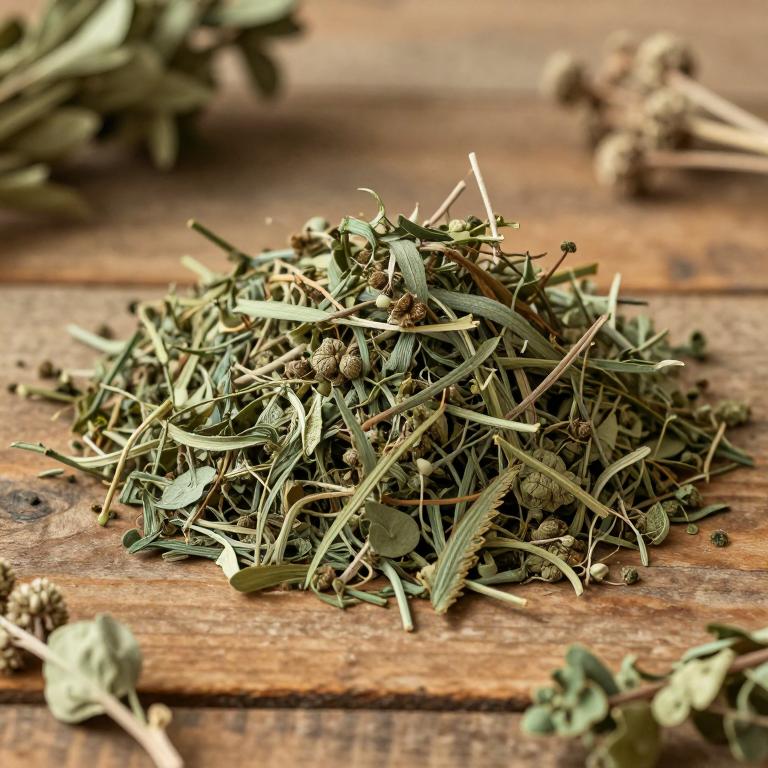
Pseudostellaria europaea is a perennial herbaceous plant known in traditional medicine for its significant therapeutic potential. The most biologically active portion of this species is its underground root, which serves as the primary source for medicinal applications. Researchers often utilize an aqueous ethanolic extract to isolate and concentrate its diverse phytochemical constituents. This specific preparation method enhances the solubility of key bioactive compounds, making them more accessible for study. Understanding the properties of this extract is essential for exploring the plant's role in modern pharmacological development.
- Synonyms
- Stellaria Bulbifera · Stellaria Bulbosa
- Common names
- Not available
- Family
- Caryophyllaceae
- Distribution
- Not available
- Plant Parts
- Root
Classification
Common Names
Pseudostellaria europaea is a fascinating plant known by a diverse array of common names across different regions. In English-speaking areas, it is frequently referred to as the European False Stitchwort. Its linguistic variety continues through Europe, where it is called Knollenmiere in German and Pseudostellaire d'Europe in French. In other parts of the continent, people may identify it as Centocchio bulboso or evropska gomoljčica. These varied names highlight the widespread botanical presence and cultural recognition of this unique species.
Sources: Catalogue of Life (COL)
Synonyms
Pseudostellaria europaea is a botanical subject frequently encountered under various scientific names in historical literature. Within taxonomic records, the plant is closely associated with the synonym Stellaria bulbifera. Researchers may also encounter it documented as Stellaria bulbosa depending on the specific classification system used. These overlapping designations highlight the complex evolutionary history and shifting nomenclature of the species. Understanding these synonymous relationships is essential for ensuring accuracy in botanical studies and herbarium collections.
Sources: The World Checklist of Vascular Plants (WCVP)
Taxonomy
Pseudostellaria europaea belongs to the expansive kingdom Plantae. Within this kingdom, the species is classified under the class Equisetopsida. It is further organized into the order Caryophyllales, which defines its evolutionary lineage. This plant is a member of the specific genus Pseudostellaria. Finally, it is categorized under the family Caryophyllaceae, completing its botanical identity.
| Rank | Classification |
|---|---|
| Kingdom | Plantae |
| Phylum | Streptophyta |
| Class | Equisetopsida |
| Subclass | Magnoliidae |
| Order | Caryophyllales |
| Family | Caryophyllaceae |
| Genus | Pseudostellaria |
Sources: The World Checklist of Vascular Plants (WCVP)
Distribution
Geographic Regions
Pseudostellaria europaea is a plant species primarily distributed across various regions of Europe. Its presence is noted throughout Middle Europe, including specific areas within Austria. The species also extends into Southeastern Europe, with notable populations found in Italy. Furthermore, its range reaches into the NW. Balkan Peninsula, highlighting its connection to the southeastern territories. This widespread distribution demonstrates the plant's ability to thrive in diverse European landscapes.
Sources: The World Checklist of Vascular Plants (WCVP)
Identification
Morphology
Pseudostellaria europaea is a diminutive species that typically maintains a very low profile within its habitat. Its stature generally ranges from a minimum height of 0.05 m to a maximum of 0.15 m.
Sources: Global Inventory of Floras and Traits (GIFT)
Biological Activities
Compounds
Pseudostellaria europaea contains C-3, a specific constituent identified within the study of related botanical structures. This research focuses on the isolation of new beta-carboline-type alkaloids from the roots of Stellaria dichotoma. Among these newly discovered compounds, dichotomine C (3) demonstrated significant inhibitory activity against the release of beta-hexosaminidase in RBL-2H3 cells. Furthermore, this specific molecule was found to inhibit the release of TNF-alpha and IL-4, both of which are critical to the late phase of type I allergic reactions. These findings highlight the potential pharmacological importance of these alkaloids in managing antiallergic responses.
Conditions
Pseudostellaria europaea exhibits significant medicinal properties, including the ability to treat ear passive cutaneous anaphylaxis (PCA) reactions. The plant also functions to treat the release of beta-hexosaminidase, demonstrating its potential antiallergic capabilities. Furthermore, it provides a therapeutic benefit by exerting a vasorelaxant effect on the rat aorta. These diverse biological activities highlight its effectiveness in managing both allergic responses and vascular functions. Such pharmacological actions underscore the complex therapeutic potential inherent in this species.
Preparations
Pseudostellaria europaea is not mentioned in the provided abstract, which focuses instead on the plant Stellaria dichotoma. The text describes how an aqueous ethanolic extract was prepared specifically from the roots of Stellaria dichotoma. This particular extraction method was used to isolate several new beta-carboline-type alkaloids, such as dichotomines A through D. These isolated constituents were subsequently studied for their ability to inhibit beta-hexosaminidase release and allergic reactions. Consequently, no information regarding the preparation of Pseudostellaria europaea as an aqueous ethanolic extract can be derived from this study.
Parts used
Pseudostellaria europaea belongs to a botanical group where the root often serves as a critical source of bioactive compounds. Research into related species like Stellaria dichotoma has demonstrated that aqueous ethanolic extracts from the roots can yield significant antiallergic effects. Specifically, these root extracts have been found to contain unique beta-carboline-type alkaloids that inhibit the release of inflammatory mediators. Furthermore, the roots are a known source of cyclic peptides, such as dichotomins J and K, which exhibit vasorelaxant properties. This underscores the pharmacological importance of utilizing the root structure for discovering new medicinal constituents.