Jersey cudweed
Pseudognaphalium luteoalbum · Accepted scientific name
Scientific literature: Very Sparse (2 studies) · ★☆☆☆☆
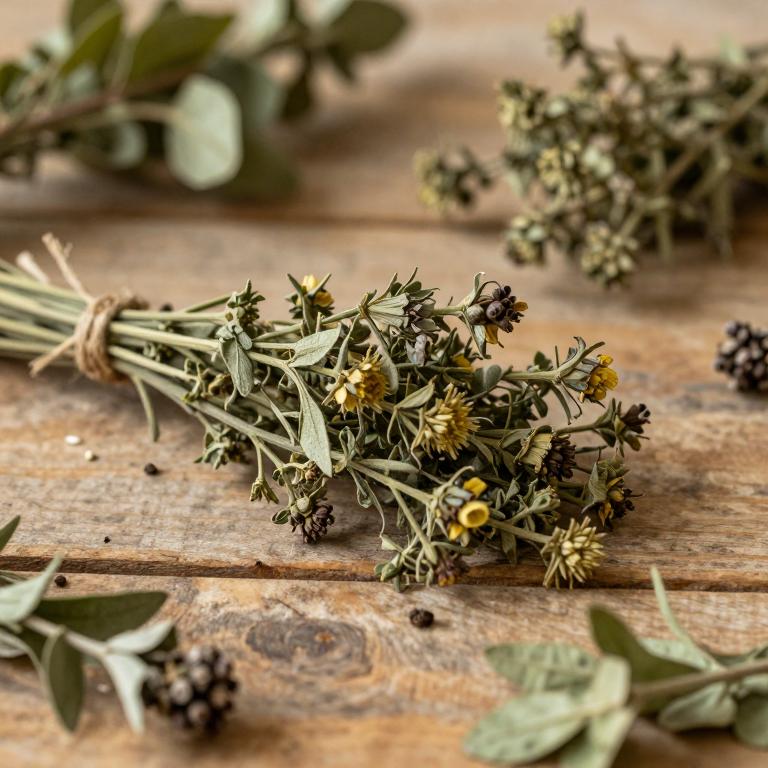
Jersey cudweed, scientifically known as Pseudognaphalium luteoalbum, is a resilient medicinal herb valued for its diverse therapeutic properties. Traditionally used in various cultures, this plant offers significant bioactive compounds known for anti-inflammatory and antioxidant effects. Understanding its botanical characteristics and medicinal potential remains vital for modern pharmacological research.
Names and Synonyms
Common Names
- Jersey cudweed
- red-tipped rabbit-tobacco
- weedy cudweed
- red-tip rabbit-tobacco
Scientific Names
Accepted name
Pseudognaphalium luteoalbumSynonyms
- Helichrysum conglomeratum
- Pseudognaphalium luteoalbum subsp. turcicum
- Gnaphalium martabanicum
- Gnaphalium luteoalbum var. pallidum
- Gnaphalium leontopodinum
- Gnaphalium luteoalbum var. depressum
- Gnaphalium luteoalbum
- Gnaphalium luteoalbum var. glomeratum
- Gnaphalium luteolum
- Gnaphalium javanum
- Gnaphalium luteoalbum var. glandulosum
- Gnaphalium orixense
- Gnaphalium luteoalbum var. occidentale
- Gnaphalium pallidum
- Gnaphalium pompejanum
- Gnaphalium reinwardtianum
- Gnaphalium trifidum
- Laphangium luteoalbum
- Pseudognaphalium luteoalbum var. pallidum
- Helichrysum luteoalbum
- Filaginella luteoalba
- Gnaphalium alboluteum
- Gnaphalium gracile
- Gnaphalium dealbatum var. luteofuscum
- Gnaphalium luteofuscum
Regional and Traditional Names
Spanish:
- Pseudognaphalium luteo-album
- borrosa
- gordolobo algodonoso
- hierba del tomento
German:
- Pseudognaphalium luteo-album
- gelbliches Scheinruhrkraut
- Gelbweißes Ruhrkraut
- Gelbweißes Scheinruhrkraut
French:
- Gnaphale blanc jaunâtre
- Gnaphale Blanc Jaunâtre
- Gnaphale blanc jaunatre
- Pseudognaphalium luteo-album
- Cotonière blanc-jaunâtre
- Cotonnière blanc jaunâtre
- Gnaphale blanc jaunâtre
- Gnaphale jaunâtre
Sources: Wikidata, Catalogue of Life
Taxonomical Classification
This plant belongs to the kingdom Plantae and the phylum Streptophyta, falling under the class Equisetopsida and subclass Magnoliidae. Within the order Asterales, it is classified under the family Asteraceae. Its specific taxonomic placement is defined by the genus Pseudognaphalium, specifically the species Pseudognaphalium luteoalbum.
| Rank | Classification |
|---|---|
| Kingdom | Plantae |
| Phylum | Streptophyta |
| Class | Equisetopsida |
| Subclass | Magnoliidae |
| Order | Asterales |
| Family | Asteraceae |
| Genus | Pseudognaphalium |
Sources: The World Checklist of Vascular Plants (WCVP)
Distribution
This plant exhibits a specific geographical presence across several regions of the European continent. In Northern Europe, its distribution includes the coastal and inland areas of Denmark and Great Britain. It can also be found growing within the territories of Ireland and Sweden. Moving toward the center of the continent, the species is documented in Middle Europe. Specifically, its range extends into the country of Austria.
| Region | Area |
|---|---|
| Northern Europe | Denmark |
| Northern Europe | Great Britain |
| Northern Europe | Ireland |
| Northern Europe | Sweden |
| Middle Europe | Austria |
| Middle Europe | Belgium |
| Middle Europe | Czechia-Slovakia |
| Middle Europe | Germany |
| Middle Europe | Hungary |
| Middle Europe | Netherlands |
Sources: The World Checklist of Vascular Plants (WCVP)
Botanical Identification
Ecology
The ecology of Pseudognaphalium luteoalbum is characterized by its occurrence within the Campo Limpo habitat, where it adapts to specific environmental gradients. This species demonstrates a broad vertical distribution across varying landscapes, spanning an elevational range that starts from 0 m AMSL and reaches a maximum altitude of 3000 m AMSL. While the mean elevational value is recorded at 0 m AMSL, its ability to persist from sea level up to high-altitude mountainous regions underscores its significant ecological plasticity within its native range.
- Elevational range max:
- 3000 m AMSL
- Elevational range mean:
- 0 m AMSL
- Habitat :
- Campo Limpo
Life history
The life history of Pseudognaphalium luteoaulbum is characterized by an annual lifecycle, meaning it completes its entire developmental process from germination to seed production within a single growing season. As a therophyte, the plant is adapted to survive unfavorable environmental conditions by existing primarily in the form of seeds, which remain dormant until favorable conditions trigger rapid growth and reproduction. Regarding its foliage and structural maintenance, the species exhibits variable deciduousness, allowing it to adapt its leaf retention based on seasonal shifts and environmental stressors. This combination of a short-lived annual cycle and a therophytic life form enables the plant to efficiently exploit ephemeral resources and colonize disturbed habitats.
- Deciduousness :
- variable
- Life form :
- therophyte
- Lifecycle :
- annual
Morphology
The morphology of Pseudognaphalium luteoalbum is characterized by its growth form as a non-woody herb and forb. This plant is a terrestrial species that does not function as an epiphyte or a parasite, maintaining an independent existence. It is a self-supporting plant, meaning it does not exhibit climbing behavior such as a liana or vine. The shoots are oriented in an erect manner, and the plant maintains a relatively low stature, with a height ranging from a minimum of 0.03 m to a maximum of 0.7 m, resulting in a mean plant height of approximately 0.15 m.
- Aquatic :
- terrestrial
- Climber :
- self-supporting
- Epiphyte :
- terrestrial
- Growth form :
- herb
- Growth form :
- forb
- Parasite :
- independent
- Plant height max:
- 0.7 m
- Plant height mean:
- 0.15 m
- Plant height min:
- 0.03 m
- Shoot orientation :
- erect
- Woodiness :
- non-woody
Physiology
The physiology of Pseudognaphalium luteoalbum is characterized by a C3 photosynthetic pathway, indicating a standard carbon fixation process typically suited to environments where water availability is not extremely limited. The plant exhibits a non-carnivorous nutritional strategy and does not function as a nitrogen fixer, relying instead on soil-based nutrient uptake. Its leaf morphology is defined by an elliptic form, with a mean leaf width of 0.4 cm (ranging from a minimum of 0.4 cm to a maximum of 0.5 cm) and a maximum leaf length of 5 cm. The average leaf size is measured at 1.32125 cm², complemented by a mean Specific Leaf Area (SLA) of 383.2 cm²/g, which reflects its leaf mass per area and provides insight into its resource acquisition and light-use efficiency.
- Carnivory :
- non-carnivorous
- Leaf form :
- elliptic
- Leaf length max:
- 5 cm
- Leaf size mean:
- 1.32125 cm²
- Leaf width max:
- 0.5 cm
- Leaf width mean:
- 0.4 cm
- Nitrogen fixer :
- no
- Photosynthetic pathway :
- C3
- Specific Leaf Area (SLA) mean:
- 383.2 cm²/g
Reproduction
The reproduction of Pseudognaphalium luteoaibum is characterized by a sexual process involving bisexual flowers that facilitate both self-fertilization and biotic pollination. The flowering period typically commences in June and extends through October, featuring small red flowers that range in length from 0.2 cm to 0.25 cm. Following successful pollination, primarily by insects, the plant produces indehiscent fruits classified as achenes. These fruits have an average length of 0.5 cm, with a maximum length reaching 0.06 cm, and they contain a high volume of seeds, typically ranging from 101 to 1,000 seeds per fruit. The seeds themselves are minute, maintaining a consistent mean length and width of 0.6 mm and 0.3 mm respectively, with an average mass of approximately 1.51875e-05 g (ranging from 1e-05 g to 3e-05 g). Dispersal is achieved through an anemochorous syndrome, meaning the seeds are primarily dispersed by wind. Notably, asexual reproduction is absent in this species.
- Dehiscence :
- indehiscent
- Dispersal syndrome :
- anemochorous
- Flower colour :
- red
- Flower length max:
- 0.25 cm
- Flower length min:
- 0.2 cm
- Flowering time :
- Jun
- Flowering time :
- Oct
- Fruit length max:
- 0.06 cm
- Fruit length mean:
- 0.5 cm
- Fruit type :
- achene
- Pollination syndrome :
- insect
- Pollination syndrome :
- biotic
- Reproduction asexual :
- absent
- Reproduction sexual :
- bisexual
- Seed length mean:
- 0.6 mm
- Seed mass max:
- 3e-05 g
- Seed mass mean:
- 1.51875e-05 g
- Seed mass min:
- 1e-05 g
- Seed width mean:
- 0.3 mm
- Seeds_per_fruit :
- 101-1000
- Self fertilization :
- present
Sources: Global Inventory of Floras and Traits (GIFT)
Plant Parts
Pseudognaphalium luteoalbum has 1 reported plant parts identified across 1 scientific publications and several other databases that are studied for medicinal purposes. The most consistently reported plant part include leaf.
| Plant part | Supporting sources | Consensus |
|---|---|---|
| Leaf | 1 supporting sources | ★☆☆☆☆ |
Leaf
- Journal of natural medicines
Activities
Pseudognaphalium luteoalbum has 1 reported activities identified across 1 scientific publications and several other databases. The most consistently reported activities include Cytotoxic.
| Activity | Supporting sources | Consensus |
|---|---|---|
| Cytotoxic | 1 supporting sources | ★☆☆☆☆ |
Cytotoxic
- Journal of natural medicines
Preparations
Pseudognaphalium luteoalbum has 1 reported preparations identified across 1 scientific publications and several other databases. The most consistently reported preparations include leaf.
| Preparation | Supporting sources | Consensus |
|---|---|---|
| Leaf | 1 supporting sources | ★☆☆☆☆ |
Leaf
- Journal of natural medicines