Pseudognaphalium cheiranthifolium
Pseudognaphalium cheiranthifolium · Accepted scientific name
Scientific literature: Very Sparse (9 studies) · ★☆☆☆☆
Pseudognaphalium cheiranthifolium, scientifically known as Pseudognaphalium cheiranthifolium, is a significant medicinal plant valued in traditional herbal medicine. Renowned for its diverse pharmacological properties, this species is frequently utilized to treat various ailments. Exploring its bioactive compounds offers promising insights into developing natural therapeutic agents for modern healthcare applications.
- Family
- Asteraceae
- Native range
- Southern America
- Parts used
- Not available
- Common names
- Not available
- Scientific synonyms
- Pseudognaphalium Pellitum · Gnaphalium Cheiranthifolium F. Citrinum · 15 more
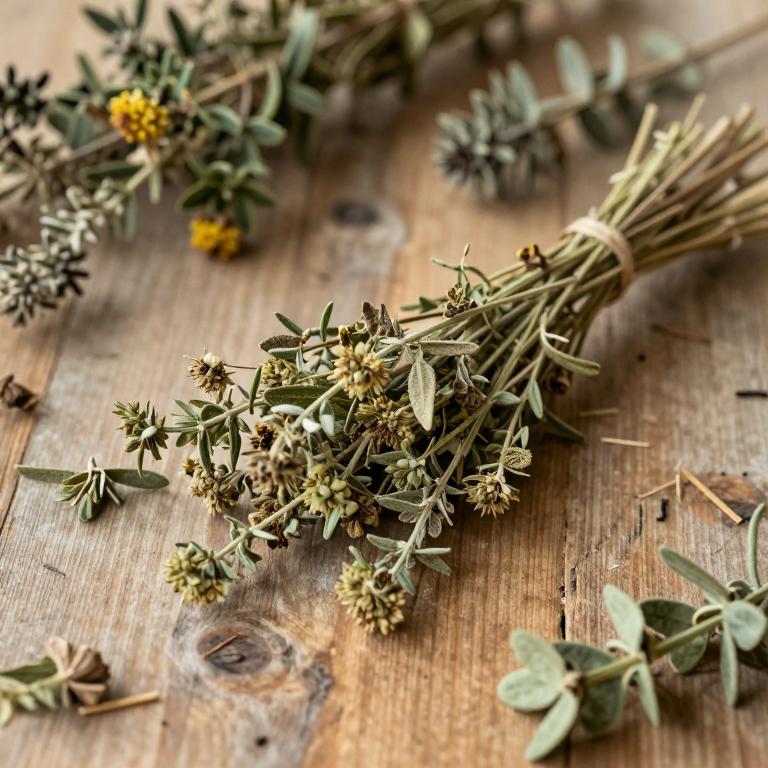
Names and Synonyms
Scientific Names
Accepted name
Pseudognaphalium cheiranthifoliumSynonyms
- Pseudognaphalium pellitum
- Gnaphalium cheiranthifolium f. citrinum
- Gnaphalium acutifolium
- Gnaphalium cheiranthifolium var. riedelianum
- Gnaphalium araucanum
- Gnaphalium cheiranthifolium var. subrufescens
- Gnaphalium cheiranthemifolium
- Gnaphalium cheiranthifolium
- Gnaphalium cheiranthifolium var. paniculatum
- Gnaphalium cheiranthifolium var. multiflorum
- Gnaphalium gaudichaudianum var. subrufescens
- Gnaphalium regnellii
- Gnaphalium riedelianum
- Gnaphalium valdivianum
- Gnaphalium viscosum
- Gnaphalium ecuadorense
- Gnaphalium ecuadorense var. boliviense
Sources: Wikidata, Catalogue of Life
Taxonomical Classification
This plant belongs to the kingdom Plantae and the phylum Streptophyta, specifically falling under the class Equisetopsida and subclass Magnoliidae. Within the order Asterales, it is classified under the family Asteraceae. Finally, its taxonomic identity is defined by the genus Pseudognaphalium, specifically the species Pseudognaphalium cheiranthifolium.
| Rank | Classification |
|---|---|
| Kingdom | Plantae |
| Phylum | Streptophyta |
| Class | Equisetopsida |
| Subclass | Magnoliidae |
| Order | Asterales |
| Family | Asteraceae |
| Genus | Pseudognaphalium |
Sources: The World Checklist of Vascular Plants (WCVP)
Distribution
This plant exhibits a specific distribution across several regions in South America. In Western South America, it can be found inhabiting the territories of Bolivia, Colombia, and Ecuador. The species also extends its range into the Brazilian continent. Within Brazil, its presence is documented specifically in the Southeast and South regions. Therefore, its geographical footprint covers both the western coast and southern parts of the continent.
| Region | Area |
|---|---|
| Western South America | Bolivia |
| Western South America | Colombia |
| Western South America | Ecuador |
| Brazil | Brazil Southeast |
| Brazil | Brazil South |
| Southern South America | Argentina Northeast |
| Southern South America | Argentina Northwest |
| Southern South America | Chile Central |
| Southern South America | Chile South |
| Southern South America | Juan Fernández Is. |
Sources: The World Checklist of Vascular Plants (WCVP)
Botanical Identification
Ecology
The ecology of Pseudognaphalium cheiranthiifolium is characterized by its broad adaptability across diverse altitudinal gradients, ranging from sea level (0 m AMSL) up to a maximum elevation of 4200 m AMSL, with a mean elevational range centered around 700 m AMSL. This species is primarily found inhabiting specific open environments, specifically within the Campo de Altitude and Campo Limpo ecosystems, where it thrives in these distinct high-altitude grasslands and open field habitats.
- Elevational range max:
- 4200 m AMSL
- Elevational range mean:
- 700 m AMSL
- Elevational range min:
- 0 m AMSL
- Habitat :
- Campo de Altitude, Campo Limpo
Life history
The life history of Pseudognaphalium cheiranthiifolium is characterized by a perennial lifecycle, allowing the plant to persist across multiple growing seasons. In terms of its structural development and survival strategy, it is classified as a hemicryptophyte, a life form where the perennating buds are located at or just below the soil surface, protected by leaf litter or surface debris. This hemicryptophytic nature ensures its ability to withstand seasonal environmental fluctuations while maintaining its presence within its ecological niche.
- Life form :
- hemicryptophyte
- Lifecycle :
- perennial
Morphology
The morphology of Pseudognaphalium cheiranthifolium is characterized by its growth form as a non-woody herb. It is a self-supporting plant that does not function as a climber, whether obligatory or facultative, nor does it exhibit liana or vine-like tendencies. As a terrestrial species, it is neither aquatic nor semiaquatic, and it lacks any epiphytic habits, functioning strictly as a terrestrial organism rather than a holoepiphyte or hemiepiphyte. Furthermore, the plant is biologically independent, showing no parasitic behavior, and maintains a consistent non-woody structure throughout its development.
- Aquatic :
- terrestrial
- Climber :
- self-supporting
- Epiphyte :
- terrestrial
- Growth form :
- herb
- Parasite :
- independent
- Woodiness :
- non-woody
Reproduction
Reproduction in Pseudognaphalium cheiranthiifolium is characterized by the production of highly uniform, minute seeds that facilitate dispersal. The reproductive output is defined by a precise seed mass, which remains constant across observed samples, with a mean seed mass of 2e-05 g. This consistency is reflected in the minimum and maximum recorded values, both of which are also 2e-05 g, indicating a lack of significant variance in the mass of individual seeds produced. Such minimal seed weight suggests an evolutionary strategy optimized for efficient distribution, likely relying on wind or other small-scale environmental factors to spread the progeny across its habitat.
- Seed mass mean:
- 2e-05 g
Sources: Global Inventory of Floras and Traits (GIFT)
Chemicals
Pseudognaphalium cheiranthifolium has 4 reported phytochemicals identified across 0 scientific publications and several other databases. The most consistently reported chemicals include 13-epi-sclareol, Saponins, Tannins, Terpenoids.
| Chemical | Supporting sources | Consensus |
|---|---|---|
| 13-epi-sclareol | 1 supporting sources | ★☆☆☆☆ |
| Saponins | 1 supporting sources | ★☆☆☆☆ |
| Tannins | 1 supporting sources | ★☆☆☆☆ |
| Terpenoids | 1 supporting sources | ★☆☆☆☆ |
13-epi-sclareol
- Planta medica
Saponins
- Dr. Duke
Tannins
- Dr. Duke
Terpenoids
- Dr. Duke
Activities
Pseudognaphalium cheiranthifolium has 5 reported activities identified across 0 scientific publications and several other databases. The most consistently reported activities include Antihepatomic, Antimutagenic, Antitumor (Lung), Antitumor (Ovary), Immunomodulator.
| Activity | Supporting sources | Consensus |
|---|---|---|
| Antihepatomic | 1 supporting sources | ★☆☆☆☆ |
| Antimutagenic | 1 supporting sources | ★☆☆☆☆ |
| Antitumor (Lung) | 1 supporting sources | ★☆☆☆☆ |
| Antitumor (Ovary) | 1 supporting sources | ★☆☆☆☆ |
| Immunomodulator | 1 supporting sources | ★☆☆☆☆ |
Antihepatomic
- Dr. Duke
Antimutagenic
- Dr. Duke
Antitumor (Lung)
- Dr. Duke
Antitumor (Ovary)
- Dr. Duke
Immunomodulator
- Dr. Duke
Preparations
Pseudognaphalium cheiranthifolium has 1 reported preparations identified across 0 scientific publications and several other databases. The most consistently reported preparations include methanolic extracts.
| Preparation | Supporting sources | Consensus |
|---|---|---|
| Methanolic extracts | 1 supporting sources | ★☆☆☆☆ |
Methanolic extracts
- Natural product research