Pseudocaryopteris foetida
Pseudocaryopteris foetida · Accepted scientific name
Scientific literature: Very Sparse (3 studies) · ★☆☆☆☆
Pseudocaryopteris foetida, is a distinctive medicinal plant native to specific subtropical regions. Renowned for its unique botanical characteristics, it has long been utilized in traditional healing practices. This species offers significant pharmacological potential, making it a subject of growing interest for researchers studying its bioactive properties and therapeutic applications.
- Family
- Lamiaceae
- Native range
- Asia-Temperate
- Parts used
- Leaf
- Common names
- Not available
- Scientific synonyms
- Caryopteris Foetida · Caryopteris Grata · 8 more
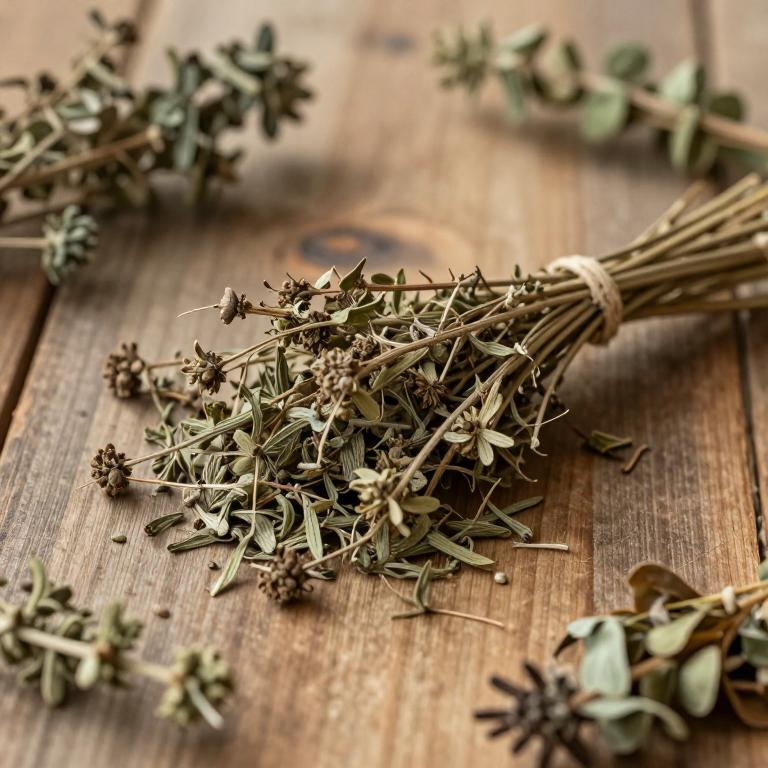
Names and Synonyms
Scientific Names
Accepted name
Pseudocaryopteris foetidaSynonyms
- Caryopteris foetida
- Caryopteris grata
- Caryopteris paniculata
- Callicarpa martini
- Callicarpa vansteenisii
- Clerodendrum foetidum
- Clerodendrum gratum
- Callicarpa esquirolii
- Vitex sexdentata
- Pseudocaryopteris paniculata
Sources: Wikidata
Taxonomical Classification
This plant, known scientifically as Pseudocaryopteris foetida, belongs to the kingdom Plantae and the phylum Streptophyta. It is further classified under the class Equisetopsida and subclass Magnoliidae within the order Lamiales. Finally, it resides in the family Lamiaceae and is categorized under the genus Pseudocaryopteris.
| Rank | Classification |
|---|---|
| Kingdom | Plantae |
| Phylum | Streptophyta |
| Class | Equisetopsida |
| Subclass | Magnoliidae |
| Order | Lamiales |
| Family | Lamiaceae |
| Genus | Pseudocaryopteris |
Sources: The World Checklist of Vascular Plants (WCVP)
Distribution
This plant exhibits a broad geographical distribution across parts of East and South Asia. In China, it can be found specifically within the South-Central and Southeast regions. Moving toward the Indian Subcontinent, its presence is noted in the state of Assam. It is also documented to grow within the borders of Bangladesh. Finally, its range extends into the mountainous terrain of the East Himalaya.
| Region | Area |
|---|---|
| China | China South-Central |
| China | China Southeast |
| Indian Subcontinent | Assam |
| Indian Subcontinent | Bangladesh |
| Indian Subcontinent | East Himalaya |
| Indian Subcontinent | India |
| Indian Subcontinent | Nepal |
| Indian Subcontinent | Pakistan |
| Indian Subcontinent | West Himalaya |
| Indo-China | Myanmar |
Sources: The World Checklist of Vascular Plants (WCVP)
Botanical Identification
Ecology
The ecology of Pseudocaryopteris foetida is characterized by its adaptability to a wide range of altitudinal gradients within its native habitat. This species thrives across a significant vertical span, occurring at elevations ranging from a minimum of 300 m AMSL to a maximum of 2800 m AMSL. This broad elevational distribution suggests that the plant is capable of tolerating diverse microclimates, from the warmer, potentially more humid lowland environments to the cooler, more temperate high-altitude zones. Such a diverse range indicates a high level of ecological plasticity, allowing it to occupy various niches within different mountain ecosystems and respond to the varying temperature and moisture regimes associated with shifting altitudes.
- Elevational range max:
- 2800 m AMSL
- Elevational range min:
- 300 m AMSL
Life history
The life history of Pseudocaryopteris foetida is characterized by its distinct growth strategies, primarily functioning as a phanerophyte, where its perennating buds are located well above the ground level. In certain ecological contexts or specific developmental stages, it may also exhibit characteristics of a nanophanerophyte, maintaining its buds at a very low height just above the substrate. This life form allows the species to navigate its specific environmental niche, utilizing its elevated bud structure to endure seasonal fluctuations and environmental stressors while ensuring its continued survival and regeneration within its habitat.
- Life form :
- nanophanerophyte
- Life form :
- phanerophyte
Morphology
The morphology of Pseudocaryopteris foetida is characterized by a woody growth form that primarily presents as a shrub. As an independent organism, it does not function as a parasite and maintains a terrestrial existence rather than growing as an epiphyte. In terms of its climbing habit, the plant is categorized as self-supporting, meaning it possesses the structural integrity to maintain its position without relying on external hosts for physical support.
- Climber :
- self-supporting
- Epiphyte :
- terrestrial
- Growth form :
- shrub
- Parasite :
- independent
- Woodiness :
- woody
Sources: Global Inventory of Floras and Traits (GIFT)
Plant Parts
Pseudocaryopteris foetida has 1 reported plant parts identified across 1 scientific publications and several other databases that are studied for medicinal purposes. The most consistently reported plant part include leaf.
| Plant part | Supporting sources | Consensus |
|---|---|---|
| Leaf | 1 supporting sources | ★☆☆☆☆ |
Leaf
- Saudi journal of biological sciences
Chemicals
Pseudocaryopteris foetida has 2 reported phytochemicals identified across 1 scientific publications and several other databases. The most consistently reported chemicals include Flavonoid, Tannin.
| Chemical | Supporting sources | Consensus |
|---|---|---|
| Flavonoid | 1 supporting sources | ★☆☆☆☆ |
| Tannin | 1 supporting sources | ★☆☆☆☆ |
Flavonoid
- Saudi journal of biological sciences
Tannin
- Saudi journal of biological sciences
Preparations
Pseudocaryopteris foetida has 3 reported preparations identified across 1 scientific publications and several other databases. The most consistently reported preparations include crude methanolic extract, crude methanolic extracts, fractions.
| Preparation | Supporting sources | Consensus |
|---|---|---|
| Crude methanolic extract | 1 supporting sources | ★☆☆☆☆ |
| Crude methanolic extracts | 1 supporting sources | ★☆☆☆☆ |
| Fractions | 1 supporting sources | ★☆☆☆☆ |
Crude methanolic extract
- Saudi journal of biological sciences
Crude methanolic extracts
- Pakistan journal of pharmaceutical sciences
Fractions
- Saudi journal of biological sciences