Pseudobrickellia brasiliensis
Pseudobrickellia brasiliensis · Accepted scientific name
Scientific literature: Very Sparse (2 studies) · ★☆☆☆☆
Pseudobrickellia brasiliensis, scientifically known as Pseudobrickellia brasiliensis, is a medicinal shrub native to Brazil. Valued in traditional folk medicine, this plant is frequently utilized for its potential therapeutic properties. Researchers are currently exploring its bioactive compounds to better understand its pharmacological applications in treating various inflammatory and systemic conditions.
- Family
- Not available
- Native range
- Southern America
- Parts used
- Stem
- Common names
- Not available
- Scientific synonyms
- Not available
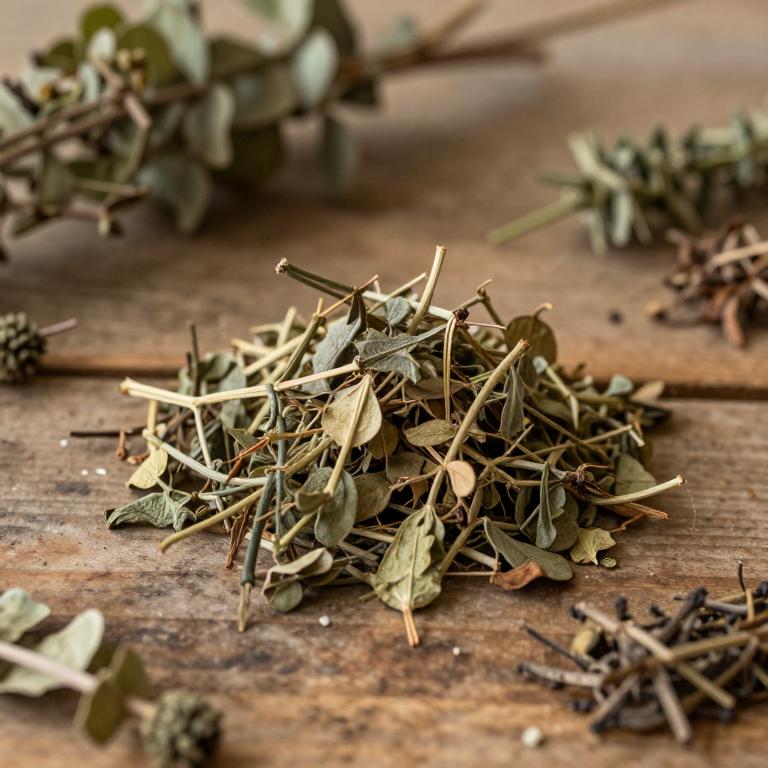
Names and Synonyms
Scientific Names
Accepted name
Pseudobrickellia brasiliensisDistribution
This plant exhibits a widespread presence throughout several distinct regions of Brazil. Its natural range extends across the expansive landscapes of Brazil West-Central. Additionally, the species can be found growing within the diverse ecosystems of Brazil Northeast. The distribution continues into the varied terrains of Brazil Southeast. Finally, the geographical reach of this medicinal plant encompasses the lush environments of Brazil North.
| Region | Area |
|---|---|
| Brazil | Brazil West-Central |
| Brazil | Brazil Northeast |
| Brazil | Brazil Southeast |
| Brazil | Brazil North |
Sources: The World Checklist of Vascular Plants (WCVP)
Botanical Identification
Ecology
The ecology of Pseudobrickellia brasiliensis is defined by its adaptation to highly specialized and nutrient-limited ecosystems within the Brazilian landscape. This species thrives within the distinct vegetation types of Campinarana, Campo Rupestre, and the broader Cerrado (latu sensu) biome. Its presence in Campinarana suggests an ability to tolerate sandy, acidic, and nutrient-poor soils, often characterized by high drainage and specific microclimatic conditions. Furthermore, its occurrence in Campo Rupestre indicates a high degree of resilience to rocky outcrops and intense solar radiation, common in high-altitude rupestrian grasslands. By inhabiting these diverse yet harsh environments, the plant plays a specific role in the community dynamics of the Cerrado, navigating the ecological pressures of seasonal water availability and soil oligotrophy characteristic of these tropical savanna and sandy forest formations.
- Habitat :
- Campinarana, Campo Rupestre, Cerrado (lato sensu)
Morphology
The morphology of Pseudobrickellia brasiliensis is characterized by its growth form as a shrub, which presents a non-woody structure throughout its development. This species functions as an independent organism, lacking any parasitic tendencies, and maintains a terrestrial habit rather than being aquatic, semiaquatic, or epiphytic. Furthermore, the plant is a self-supporting species, lacking the climbing mechanisms found in obligate or facultative climbers.
- Aquatic :
- terrestrial
- Climber :
- self-supporting
- Epiphyte :
- terrestrial
- Growth form :
- shrub
- Parasite :
- independent
- Woodiness :
- non-woody
Sources: Global Inventory of Floras and Traits (GIFT)
Plant Parts
Pseudobrickellia brasiliensis has 1 reported plant parts identified across 1 scientific publications and several other databases that are studied for medicinal purposes. The most consistently reported plant part include stem.
| Plant part | Supporting sources | Consensus |
|---|---|---|
| Stem | 1 supporting sources | ★☆☆☆☆ |
Stem
- Journal of immunological methods
Conditions
Pseudobrickellia brasiliensis has 1 reported investigations on conditions identified across 1 scientific publications and several other databases. The most consistently reported conditions include Pseudomonas aeruginosa.
| Condition | Supporting sources | Consensus |
|---|---|---|
| Pseudomonas aeruginosa | 1 supporting sources | ★☆☆☆☆ |
Pseudomonas aeruginosa
- Journal of applied microbiology
Preparations
Pseudobrickellia brasiliensis has 1 reported preparations identified across 1 scientific publications and several other databases. The most consistently reported preparations include ethanolic extract from stem.
| Preparation | Supporting sources | Consensus |
|---|---|---|
| Ethanolic extract from stem | 1 supporting sources | ★☆☆☆☆ |
Ethanolic extract from stem
- Journal of immunological methods