Prunus japonica
Prunus japonica · Accepted scientific name
Scientific literature: Very Sparse (3 studies) · ★☆☆☆☆
Prunus japonica, scientifically known as Prunus japonica, is a versatile medicinal plant valued in traditional healing practices. Renowned for its antioxidant properties, its leaves, bark, and flowers are frequently utilized to treat skin inflammations, respiratory ailments, and digestive issues, offering a natural approach to holistic wellness and recovery.
- Family
- Not available
- Native range
- Asia-Temperate
- Parts used
- Seed
- Common names
- Not available
- Scientific synonyms
- Not available
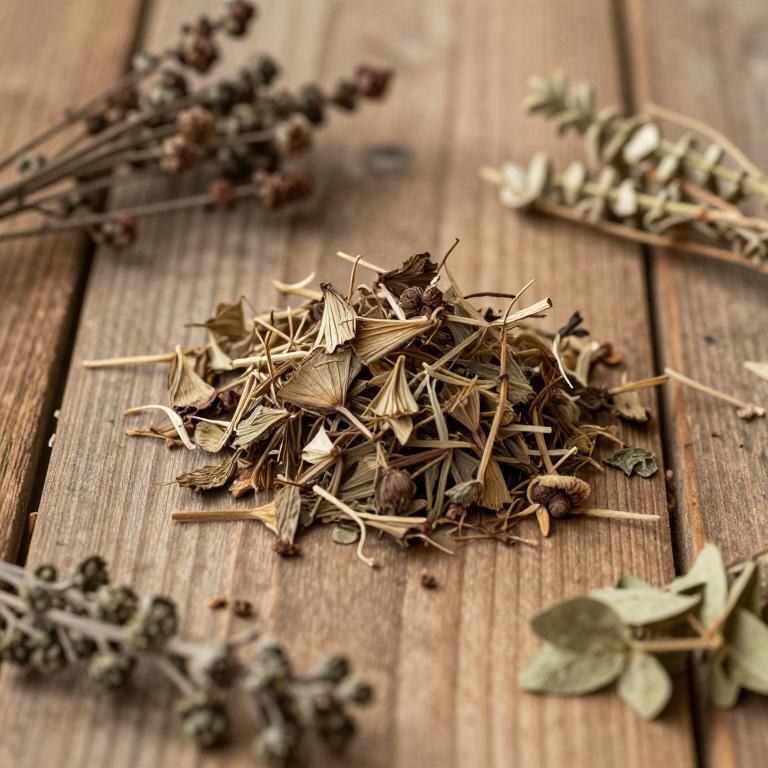
Names and Synonyms
Scientific Names
Accepted name
Prunus japonicaDistribution
This plant exhibits a diverse geographical range across several key regions of East Asia. Within China, its presence is noted in the Manchuria region and throughout the North-Central territories. It is also widely distributed across the Southeast part of the country. Furthermore, its habitat extends beyond Chinese borders into the Korean Peninsula. Consequently, the distribution of Prunus japonica spans significant portions of Eastern Asia.
| Region | Area |
|---|---|
| China | Manchuria |
| China | China North-Central |
| China | China Southeast |
| Eastern Asia | Korea |
Sources: The World Checklist of Vascular Plants (WCVP)
Botanical Identification
Ecology
The ecology of Prunus japonica is closely tied to specific altitudinal gradients, typically flourishing within a narrow lowland belt. This species is most commonly found at a mean elevation of 150 m AMSL, occupying a niche that spans from a minimum altitude of 100 m AMSL to a maximum elevation of 200 m AMSL. This specific vertical distribution suggests an adaptation to the environmental conditions characteristic of low-lying areas, where temperature and moisture levels remain relatively stable within this 100-meter elevation window.
- Elevational range max:
- 200 m AMSL
- Elevational range mean:
- 150 m AMSL
- Elevational range min:
- 100 m AMSL
Life history
The life history of Prunus japonica is characterized by its nature as a perennial plant, allowing it to persist through multiple growing seasons and establish a long-term presence in its ecosystem. As a deciduous species, it undergoes a distinct seasonal transformation, shedding its foliage annually in response to changing environmental conditions and colder temperatures. This cycle of growth and dormancy is central to its survival strategy, as the plant enters a period of rest during the winter months following the loss of its leaves, only to regenerate new foliage and reproductive structures once favorable growing conditions return in the spring.
- Deciduousness :
- deciduous
- Lifecycle :
- perennial
Morphology
The morphology of Prunus japonica is characterized by its growth form as a woody shrub. It is a self-supporting plant that does not function as a climber or a parasite, maintaining an independent existence. As a terrestrial species, it does not exhibit aquatic or epiphytic tendencies. In terms of its physical dimensions, the plant typically reaches a height ranging from a minimum of 1 meter to a maximum of 1.5 meters, with an average plant height of approximately 1.25 meters.
- Aquatic :
- terrestrial
- Climber :
- self-supporting
- Epiphyte :
- terrestrial
- Growth form :
- shrub
- Parasite :
- independent
- Plant height max:
- 1.5 m
- Plant height mean:
- 1.25 m
- Plant height min:
- 1 m
- Woodiness :
- woody
Physiology
The physiology of Prunus japonica is characterized by a C3 photosynthetic pathway, which dictates its metabolic processes and carbon fixation strategies. The vegetative morphology is defined by lanceolate-shaped leaves that typically exhibit a toothed margin, lacking both thorns and spines. These leaves vary in size, with a mean length of 5 cm (ranging from a minimum of 3 cm to a maximum of 7 cm) and a mean width of 2 cm. The width of the leaf blades fluctuates between a minimum of 1.5 cm and a maximum of 2.5 cm, contributing to a slender profile optimized for its specific environmental adaptations.
- Leaf form :
- lanceolate
- Leaf length max:
- 7 cm
- Leaf length mean:
- 5 cm
- Leaf length min:
- 3 cm
- Leaf margin :
- toothed
- Leaf spines :
- no
- Leaf thorns :
- no
- Leaf width max:
- 2.5 cm
- Leaf width mean:
- 2 cm
- Leaf width min:
- 1.5 cm
- Photosynthetic pathway :
- C3
Reproduction
The reproduction of Prunus japonica is characterized by the development of distinct fleshy fruits and specific seed parameters. The fruits produced by this species are highly uniform in dimension, maintaining a consistent size where both the mean, minimum, and maximum fruit length is measured at 1 cm. Similarly, the fruit width exhibits no variance, with the mean, minimum, and maximum values all recorded at exactly 1 cm, resulting in a spherical or near-spherical fruit shape. Within these fruits, the seeds are highly standardized in terms of weight; the seed mass demonstrates no deviation across its recorded range, with the mean, minimum, and maximum mass all being precisely 0.09174 g. This high degree of morphological consistency in both fruit dimensions and seed mass suggests a highly stable reproductive output for the species.
- Fruit length max:
- 1 cm
- Fruit width max:
- 1 cm
- Seed mass mean:
- 0.09174 g
Sources: Global Inventory of Floras and Traits (GIFT)
Plant Parts
Prunus japonica has 1 reported plant parts identified across 1 scientific publications and several other databases that are studied for medicinal purposes. The most consistently reported plant part include seed.
| Plant part | Supporting sources | Consensus |
|---|---|---|
| Seed | 1 supporting sources | ★☆☆☆☆ |
Seed
- Heliyon
Conditions
Prunus japonica has 2 reported investigations on conditions identified across 1 scientific publications and several other databases. The most consistently reported conditions include fertility, sperm motility.
| Condition | Supporting sources | Consensus |
|---|---|---|
| Fertility | 1 supporting sources | ★☆☆☆☆ |
| Sperm motility | 1 supporting sources | ★☆☆☆☆ |
Fertility
- Heliyon
Sperm motility
- Heliyon