Japanese Mountain Cherry
Prunus jamasakura · Accepted scientific name
Scientific literature: Very Sparse (7 studies) · ★☆☆☆☆
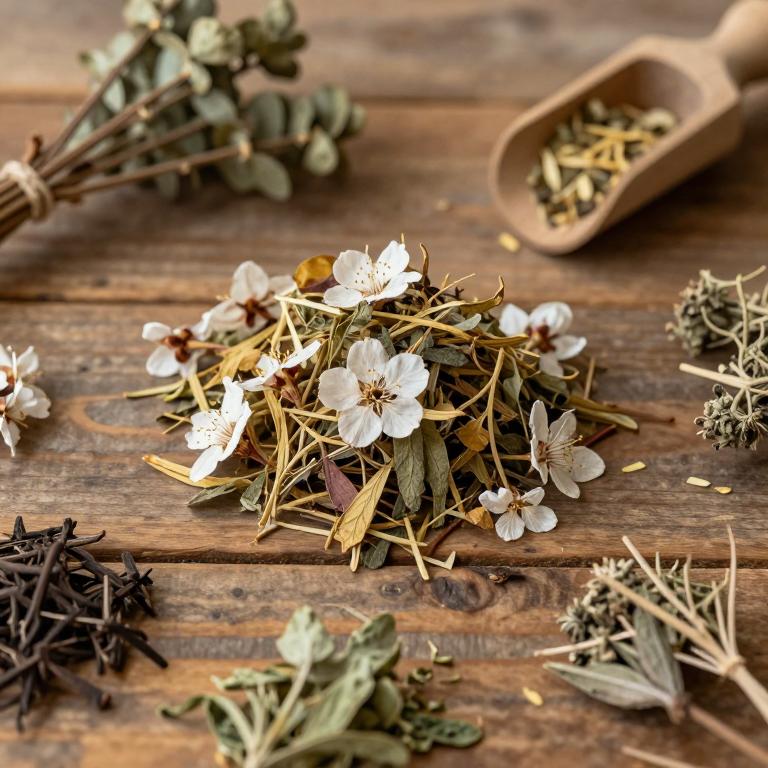
Japanese Mountain Cherry, scientifically known as Pruunus jamasakura, is a revered botanical treasure in East Asian traditional medicine. Renowned for its delicate blossoms, this plant offers therapeutic potential through its bioactive compounds. It is frequently utilized to support skin health, reduce inflammation, and promote overall wellness and vitality.
- Family
- Rosaceae
- Native range
- Asia-Temperate
- Parts used
- Not available
- Common names
- Not available
- Scientific synonyms
- Cerasus Jamasakura · Prunus Pseudocerasus Var. Jamasakura
Names and Synonyms
Scientific Names
Accepted name
Prunus jamasakuraSynonyms
- Cerasus jamasakura
- Prunus pseudocerasus var. jamasakura
Sources: Wikidata
Taxonomical Classification
This plant belongs to the kingdom Plantae and is classified under the phylum Streptophyta within the class Equisetopsida. As a member of the subclass Magnoliidae and the order Rosales, it is further categorized into the family Rosaceae. Finally, its taxonomic identity is defined by the genus Prunus.
| Rank | Classification |
|---|---|
| Kingdom | Plantae |
| Phylum | Streptophyta |
| Class | Equisetopsida |
| Subclass | Magnoliidae |
| Order | Rosales |
| Family | Rosaceae |
| Genus | Prunus |
Sources: The World Checklist of Vascular Plants (WCVP)
Distribution
This plant is primarily distributed across the diverse landscapes of Eastern Asia. Its natural habitat is most notably concentrated within the islands of Japan. Additionally, the species can be found throughout the Nansei-shotō archipelago. These specific regions provide the ideal environmental conditions necessary for its growth. Consequently, the geographical range of Prunus jamasakura remains focused within these East Asian territories.
| Region | Area |
|---|---|
| Eastern Asia | Japan |
| Eastern Asia | Nansei-shoto |
Sources: The World Checklist of Vascular Plants (WCVP)
Botanical Identification
Life history
The life history of Prunus jamasakura is characterized by a perennial growth cycle that follows a woody developmental trajectory, primarily categorized under the life form of a phanerophyte. Within this classification, it exhibits characteristics of both a phanerophyte and a nanophanerophyte, as its reproductive buds and structural biomass are elevated above the ground level, protected by woody stems. This phanerophyte life form allows the plant to endure seasonal fluctuations by maintaining its vital organs in elevated, perennial structures. Throughout its life cycle, the plant progresses from seed germination to the establishment of a robust, woody architecture, eventually reaching maturity where it undergoes seasonal flowering and fruiting cycles. Its survival strategy relies heavily on this perennial, elevated structural habit, which distinguishes it from more ephemeral or ground-level life forms such as hemicryptophytes or therophytes.
- Life form :
- phanerophyte
Morphology
The morphology of Prunus jamasakura is characterized by its distinct growth form as a tree. As a terrestrial species, it grows directly in the soil rather than as an epiphyte, establishing a stable root system within its natural habitat. The plant exhibits a woody structure, featuring permanent, lignified stems and branches that provide the necessary support and durability for its arboreal habit.
- Epiphyte :
- terrestrial
- Growth form :
- tree
- Woodiness :
- woody
Physiology
The physiology of Prunus jamasakura is characterized by its reliance on the C3 photosynthetic pathway, a metabolic process where carbon dioxide is fixed directly into a three-carbon compound during the first stage of the Calvin cycle. This pathway is typical of most temperate woody perennials, allowing the plant to efficiently capture sunlight and convert it into chemical energy under moderate environmental conditions. Through this C3 mechanism, the plant utilizes the enzyme RuBisCO to facilitate carbon fixation, though it remains susceptible to photorespiration when temperatures rise or water availability decreases. The plant's physiological performance is closely tied to its seasonal cycles, where gas exchange and stomatal conductance are finely tuned to balance carbon assimilation with transpirational water loss, ensuring optimal growth and metabolic stability within its specific ecological niche.
- Photosynthetic pathway :
- C3
Reproduction
The reproduction of Prunus jamasakura is characterized by the development of fleshy fruits that serve as the primary vessel for seed dispersal. Within these fruits, the seeds exhibit specific volumetric dimensions essential to the species' reproductive success, with volumes ranging from a minimum of 86 mm³ to a maximum of 100 mm³. On average, the seed volume is recorded at 92.5 mm³, providing a consistent metric for the plant's reproductive output. The fruit itself maintains a fleshy texture, a trait that facilitates interaction with dispersal agents to ensure the effective distribution of these seeds within its habitat.
- Fruit dryness :
- fleshy
- Seed volume max:
- 100 mm³
- Seed volume mean:
- 92.5 mm³
- Seed volume min:
- 86 mm³
Sources: Global Inventory of Floras and Traits (GIFT)
Chemicals
Prunus jamasakura has 5 reported phytochemicals identified across 0 scientific publications and several other databases. The most consistently reported chemicals include Arctigenin, Genkwanin, Sakuranetin, genistein, naringenin.
| Chemical | Supporting sources | Consensus |
|---|---|---|
| Arctigenin | 1 supporting sources | ★☆☆☆☆ |
| Genkwanin | 1 supporting sources | ★☆☆☆☆ |
| Sakuranetin | 1 supporting sources | ★☆☆☆☆ |
| genistein | 1 supporting sources | ★☆☆☆☆ |
| naringenin | 1 supporting sources | ★☆☆☆☆ |
Arctigenin
- Yakugaku zasshi : Journal of the Pharmaceutical Society of Japan
Genkwanin
- Yakugaku zasshi : Journal of the Pharmaceutical Society of Japan
Sakuranetin
- Yakugaku zasshi : Journal of the Pharmaceutical Society of Japan
genistein
- Yakugaku zasshi : Journal of the Pharmaceutical Society of Japan
naringenin
- Yakugaku zasshi : Journal of the Pharmaceutical Society of Japan
Conditions
Prunus jamasakura has 1 reported investigations on conditions identified across 0 scientific publications and several other databases. The most consistently reported conditions include Osteoporosis.
| Condition | Supporting sources | Consensus |
|---|---|---|
| Osteoporosis | 1 supporting sources | ★☆☆☆☆ |
Osteoporosis
- Evidence-based complementary and alternative medicine : eCAM
Preparations
Prunus jamasakura has 1 reported preparations identified across 0 scientific publications and several other databases. The most consistently reported preparations include bark extracts.
| Preparation | Supporting sources | Consensus |
|---|---|---|
| Bark extracts | 1 supporting sources | ★☆☆☆☆ |
Bark extracts
- Evidence-based complementary and alternative medicine : eCAM