Prumnopitys taxifolia
Prumnopitys taxifolia · Accepted scientific name
Scientific literature: Sparse (73 studies) · ★★☆☆☆
, scientifically known as Prumnopitys taxifolia, is a rare medicinal plant valued for its unique biochemical properties. Often found in specific ecological niches, this species is studied for its potential therapeutic applications. Understanding its traditional uses and chemical constituents offers vital insights into developing new natural remedies for modern healthcare.
- Family
- Not available
- Native range
- Australasia
- Parts used
- Not available
- Common names
- Not available
- Scientific synonyms
- Not available
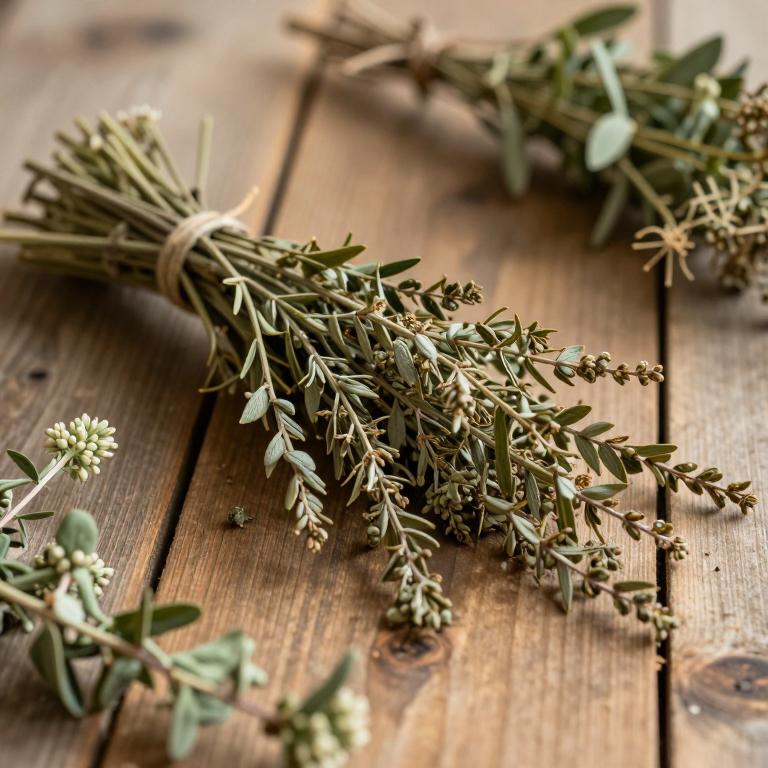
Names and Synonyms
Scientific Names
Accepted name
Prumnopitys taxifoliaDistribution
This plant is native to the islands of New Zealand. Its natural range extends across the diverse landscapes of New Zealand North. Additionally, it can be found growing throughout New Zealand South. This distribution allows the species to inhabit various ecological niches within the country. Consequently, the plant is widely recognized as a characteristic element of the local flora.
| Region | Area |
|---|---|
| New Zealand | New Zealand North |
| New Zealand | New Zealand South |
Sources: The World Checklist of Vascular Plants (WCVP)
Botanical Identification
Ecology
The ecology of Prumnopitys taxifolia is characterized by its preference for lowland environments, where it typically thrives within the complex structural layers of subtropical or temperate rainforest ecosystems. In these lowland habitats, the plant occupies specific ecological niches, often found growing in the shaded understory or as an epiphyte on larger host trees, where it can access stable moisture levels and filtered sunlight. The environmental conditions in these regions provide the necessary humidity and nutrient-rich organic matter found in forest floor litter or bark crevices, which are essential for its growth and survival. By inhabiting these low-lying, moisture-retentive zones, Prumnopitys taxifolia plays a role in the forest's microhabitat dynamics, contributing to the intricate web of biodiversity within the lowland forest canopy and sub-canopy layers.
- Habitat :
- Lowland
Life history
The life history of Prumnopitys taxifolia is characterized by its status as a perennial organism, ensuring its presence in its ecological niche over multiple growing seasons. As a phanerophyte, specifically functioning as a nanophanerophyte, the plant maintains its photosynthetic organs on branches elevated above the ground level, a structural adaptation that defines its growth habit. This phanerophyte life form allows it to thrive within its specific environmental strata, supported by its evergreen deciduousness, which means it retains its foliage throughout the year rather than shedding it seasonally.
- Deciduousness :
- evergreen
- Life form :
- phanerophyte
- Lifecycle :
- perennial
Morphology
The morphology of Prumnopitys taxifolia is characterized by a woody growth form that can manifest as either a tree or a herb depending on developmental stages or environmental contexts, reaching a maximum plant height of up to 25 m, with an average height recorded at 0.15 m. As a terrestrial species, it is neither aquatic nor an epiphyte, and it functions as an independent organism rather than a parasite. In terms of its structural support, the plant is self-supporting, meaning it does not exhibit climbing behavior such as a vine or liana.
- Aquatic :
- terrestrial
- Climber :
- self-supporting
- Epiphyte :
- terrestrial
- Growth form :
- tree
- Growth form :
- herb
- Parasite :
- independent
- Plant height max:
- 25 m
- Plant height mean:
- 0.15 m
- Woodiness :
- woody
Physiology
The physiology of Prumnopitys taxifolia is characterized by a C3 photosynthetic pathway, which dictates its metabolic approach to carbon fixation and energy production. Its foliage exhibits highly consistent morphological dimensions, with a mean leaf width of 0.2 cm, a minimum width of 0.2 cm, and a maximum width of 0.2 cm, reflecting a uniform leaf structure. The leaves reach a maximum length of 1.3 cm, contributing to the overall canopy architecture. Furthermore, this species does not function as a nitrogen fixer, relying instead on the availability of nitrogen within the soil medium for its nutritional requirements and growth processes.
- Leaf length max:
- 1.3 cm
- Leaf width mean:
- 0.2 cm
- Nitrogen fixer :
- no
- Photosynthetic pathway :
- C3
Reproduction
The reproduction of Prumnopitys taxifolia is driven by abiotic pollination mechanisms, specifically utilizing wind to facilitate the transfer of pollen. The plant relies on sexual reproduction, as asexual reproduction is noted to be absent. Following successful fertilization, the plant produces fleshy fruits that typically measure approximately 1 cm in both length and width. These fruits contain seeds that exhibit consistent morphological dimensions, with a mean seed length of 7 mm and a mean seed width of 5 mm, resulting in a seed volume of 220 mm³. The seeds possess a mean mass of approximately 0.1194 g, ranging from a minimum of 0.1017 g to a maximum of 0.1429 g. Dispersal is achieved through a zoochorous syndrome, specifically via endozoochory, where the seeds are dispersed after being ingested by animals.
- Dispersal syndrome :
- zoochorous
- Dispersal syndrome :
- endozoochorous
- Fruit dryness :
- fleshy
- Fruit length mean:
- 1 cm
- Fruit width mean:
- 1 cm
- Pollination syndrome :
- wind
- Pollination syndrome :
- abiotic
- Reproduction asexual :
- absent
- Seed length mean:
- 7 mm
- Seed mass max:
- 0.14286 g
- Seed mass mean:
- 0.119396666666667 g
- Seed mass min:
- 0.10166 g
- Seed volume max:
- 220 mm³
- Seed width mean:
- 5 mm
Sources: Global Inventory of Floras and Traits (GIFT)
Chemicals
Prumnopitys taxifolia has 1 reported phytochemicals identified across 0 scientific publications and several other databases. The most consistently reported chemicals include genistein.
| Chemical | Supporting sources | Consensus |
|---|---|---|
| genistein | 1 supporting sources | ★☆☆☆☆ |
genistein
- Dr. Duke
Activities
Prumnopitys taxifolia has 72 reported activities identified across 0 scientific publications and several other databases. The most consistently reported activities include Abortifacient, Aldose-Reductase-Inhibitor, Alpha-Reductase-Inhibitor, Antiaggregant, Antiangiogenic.
| Activity | Supporting sources | Consensus |
|---|---|---|
| Abortifacient | 1 supporting sources | ★☆☆☆☆ |
| Aldose-Reductase-Inhibitor | 1 supporting sources | ★☆☆☆☆ |
| Alpha-Reductase-Inhibitor | 1 supporting sources | ★☆☆☆☆ |
| Antiaggregant | 1 supporting sources | ★☆☆☆☆ |
| Antiangiogenic | 1 supporting sources | ★☆☆☆☆ |
| Antiatherosclerotic | 1 supporting sources | ★☆☆☆☆ |
| Anticancer (Breast) | 1 supporting sources | ★☆☆☆☆ |
| Anticarcinomic (Breast) | 1 supporting sources | ★☆☆☆☆ |
| Anticlimacteric | 1 supporting sources | ★☆☆☆☆ |
| Antiendoccytotic | 1 supporting sources | ★☆☆☆☆ |
Abortifacient
- Dr. Duke
Aldose-Reductase-Inhibitor
- Dr. Duke
Alpha-Reductase-Inhibitor
- Dr. Duke
Antiaggregant
- Dr. Duke
Antiangiogenic
- Dr. Duke
Antiatherosclerotic
- Dr. Duke
Anticancer (Breast)
- Dr. Duke
Anticarcinomic (Breast)
- Dr. Duke
Anticlimacteric
- Dr. Duke
Antiendoccytotic
- Dr. Duke