Protium heptaphyllum
Protium heptaphyllum · Accepted scientific name
Scientific literature: Very Sparse (34 studies) · ★☆☆☆☆
, scientifically known as Protium heptaphyllum, is a remarkable medicinal plant native to tropical rainforests. Renowned for its aromatic resin, often called breu branco, it holds significant ethnobotanical value. This species is widely utilized in traditional medicine for its potent anti-inflammatory, antimicrobial, and healing properties in diverse cultures.
- Family
- Burseraceae
- Native range
- Southern America
- Parts used
- Not available
- Common names
- Not available
- Scientific synonyms
- Tingulonga Heptaphylla · Icica Heptaphylla · 1 more
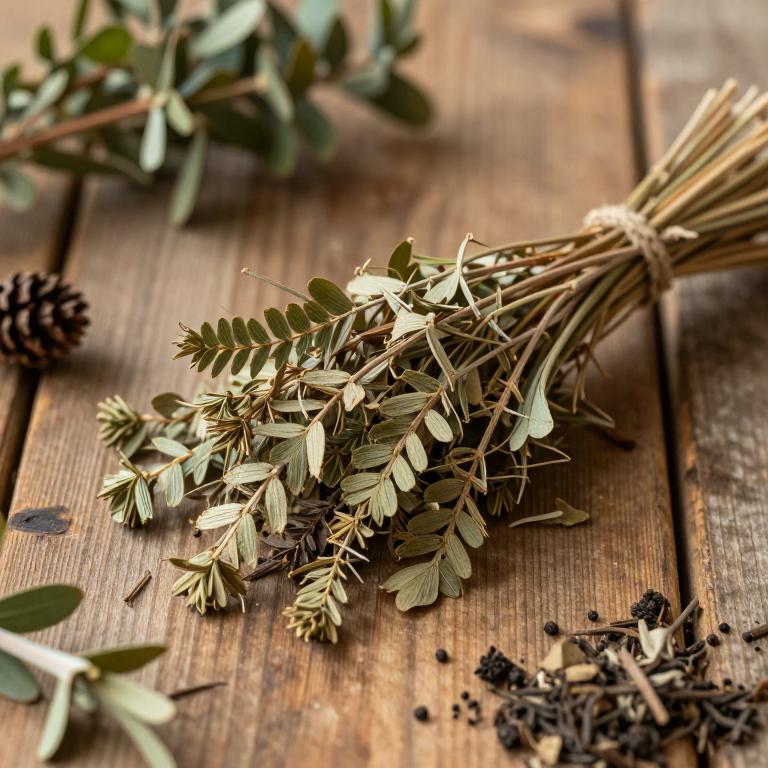
Names and Synonyms
Scientific Names
Accepted name
Protium heptaphyllumSynonyms
- Tingulonga heptaphylla
- Icica heptaphylla
- Elaphrium heptaphyllum
Regional and Traditional Names
Spanish:
- Icica heptaphylla
- Protium aromaticum
- Protium insigne
- Protium microphyllum
- Protium tacamahaca
- Caraño
- Isiga
Sources: Wikidata, Catalogue of Life
Taxonomical Classification
This plant, known scientifically as Protium heptaphyllum, belongs to the kingdom Plantae and the phylum Streptophyta. Within the class Equisetopsida and subclass Magnoliidae, it is classified under the order Sapindales. Finally, it is a member of the family Burseraceae and falls under the genus Protium.
| Rank | Classification |
|---|---|
| Kingdom | Plantae |
| Phylum | Streptophyta |
| Class | Equisetopsida |
| Subclass | Magnoliidae |
| Order | Sapindales |
| Family | Burseraceae |
| Genus | Protium |
Sources: The World Checklist of Vascular Plants (WCVP)
Distribution
This plant, Protium heptaphyllum, exhibits a specific geographical distribution across several tropical regions. It can be found throughout various parts of Northern South America, including Venezuela, Guyana, and Suriname. Additionally, the species extends its range into French Guiana. Beyond the mainland, its presence is also recorded within the Caribbean, specifically in Trinidad and Tobago. Together, these locations define the natural habitat where this medicinal plant thrives.
| Region | Area |
|---|---|
| Caribbean | Trinidad-Tobago |
| Northern South America | French Guiana |
| Northern South America | Guyana |
| Northern South America | Suriname |
| Northern South America | Venezuela |
| Western South America | Bolivia |
| Western South America | Colombia |
| Brazil | Brazil West-Central |
| Brazil | Brazil Northeast |
| Brazil | Brazil Southeast |
Sources: The World Checklist of Vascular Plants (WCVP)
Botanical Identification
Ecology
The ecology of Protium heptaphyllum is characterized by its occurrence in high forest environments, specifically within the habitat known as Bosque alto. This species thrives across a broad altitudinal gradient, establishing itself at elevations ranging from sea level (0 m AMSL) up to a maximum height of 600 m AMSL.
- Elevational range max:
- 600 m AMSL
- Elevational range min:
- 0 m AMSL
- Habitat :
- Bosque alto
Life history
The life history of Protium heptaphyllum is characterized by its classification as a perennial organism, ensuring its presence in the ecosystem across multiple years. As a phanerophyte, it maintains its photosynthetic organs on elevated woody stems, a life form that can be further specified as a phanerophyte to describe its structural growth habit. This species maintains a consistent presence within its habitat due to its evergreen deciduousness, meaning it retains its foliage throughout the year rather than shedding it seasonally.
- Deciduousness :
- evergreen
- Life form :
- phanerophyte
- Lifecycle :
- perennial
Morphology
The morphology of Protium heptaphyllum is characterized by a woody growth form that primarily manifests as a tree, though it can also exhibit shrub-like qualities. As a terrestrial organism, it is non-aquatic and functions as an independent species rather than a parasite. The plant is self-supporting, meaning it lacks climbing mechanisms such as being a liana or vine, and it does not exhibit epiphytic behavior, remaining strictly terrestrial. In terms of stature, it reaches significant dimensions, with an average plant height of approximately 15 m and a maximum height that can extend up to 20 m.
- Aquatic :
- terrestrial
- Climber :
- self-supporting
- Epiphyte :
- terrestrial
- Growth form :
- tree
- Growth form :
- shrub
- Parasite :
- independent
- Plant height max:
- 20 m
- Plant height mean:
- 15 m
- Woodiness :
- woody
Physiology
The physiology of Protium heptaphyllum is characterized by a C3 photosynthetic pathway, reflecting its metabolic strategy for carbon fixation. The plant exhibits significant morphological traits related to its vegetative structure, including a mean leaf size of 244.099 cm² and a mean Specific Leaf Area (SLA) of 103.507 cm²/g, which indicates its leaf thickness and resource allocation strategies. Structural integrity is supported by a stem specific density (SSD) with a mean value of 610 mg/cm³. Furthermore, the species does not function as a nitrogen fixer, relying instead on available soil nitrogen rather than symbiotic nitrogen-fixing processes.
- Leaf size mean:
- 244.099 cm²
- Nitrogen fixer :
- no
- Photosynthetic pathway :
- C3
- Specific Leaf Area (SLA) mean:
- 103.507 cm²/g
- Stem specific density (SSD) mean:
- 610 mg/cm³
Reproduction
The reproduction of Protium heptaphyllum is characterized by a specialized reproductive strategy that relies on cross-pollination, as self-fertilization is notably absent. The plant produces fruits that fall into a non-standard category outside the common botanical classifications provided, with an average fruit length and width both measuring approximately 2.5 cm. The dispersal of its offspring follows a zoochorous syndrome, meaning the seeds are spread via animals. The seeds themselves are highly consistent in size and weight, exhibiting a mean seed mass of 0.11661 g (with minimum and maximum values also at 0.11661 g) and a mean seed length of 12.841 mm. Furthermore, the seed volume remains constant at a value of 690 mm³, reflecting a highly uniform seed morphology within the species.
- Dispersal syndrome :
- zoochorous
- Fruit length mean:
- 2.5 cm
- Fruit type :
- other
- Fruit width mean:
- 2.5 cm
- Seed length mean:
- 12.841 mm
- Seed mass mean:
- 0.11661 g
- Seed volume max:
- 690 mm³
- Self fertilization :
- absent
Sources: Global Inventory of Floras and Traits (GIFT)
Chemicals
Protium heptaphyllum has 11 reported phytochemicals identified across 0 scientific publications and several other databases. The most consistently reported chemicals include Cellulase, Dillapiol, LIMONENE, Oleoresin, P-CYMENE.
| Chemical | Supporting sources | Consensus |
|---|---|---|
| Cellulase | 1 supporting sources | ★☆☆☆☆ |
| Dillapiol | 1 supporting sources | ★☆☆☆☆ |
| LIMONENE | 1 supporting sources | ★☆☆☆☆ |
| Oleoresin | 1 supporting sources | ★☆☆☆☆ |
| P-CYMENE | 1 supporting sources | ★☆☆☆☆ |
| Pectinase | 1 supporting sources | ★☆☆☆☆ |
| Sesquiterpenes | 1 supporting sources | ★☆☆☆☆ |
| alpha-TERPINEOL | 1 supporting sources | ★☆☆☆☆ |
| alpha-Terpinolene | 1 supporting sources | ★☆☆☆☆ |
| p-cimen-8-ol | 1 supporting sources | ★☆☆☆☆ |
Cellulase
- Protoplasma
Dillapiol
- Journal of ethnopharmacology
LIMONENE
- Journal of ethnopharmacology
Oleoresin
- Protoplasma
P-CYMENE
- Journal of ethnopharmacology
Pectinase
- Protoplasma
Sesquiterpenes
- Journal of ethnopharmacology
alpha-TERPINEOL
- Life sciences
alpha-Terpinolene
- Journal of ethnopharmacology
p-cimen-8-ol
- Journal of ethnopharmacology
Activities
Protium heptaphyllum has 7 reported activities identified across 0 scientific publications and several other databases. The most consistently reported activities include Antibacterial, Antifungal, Antihypertensive, Cytostatic, Gastroprotective.
| Activity | Supporting sources | Consensus |
|---|---|---|
| Antibacterial | 1 supporting sources | ★☆☆☆☆ |
| Antifungal | 1 supporting sources | ★☆☆☆☆ |
| Antihypertensive | 1 supporting sources | ★☆☆☆☆ |
| Cytostatic | 1 supporting sources | ★☆☆☆☆ |
| Gastroprotective | 1 supporting sources | ★☆☆☆☆ |
| Hepatoprotective | 1 supporting sources | ★☆☆☆☆ |
| Vasorelaxant | 1 supporting sources | ★☆☆☆☆ |
Antibacterial
- Brazilian journal of microbiology : [publication of the Brazilian Society for Microbiology]
Antifungal
- Brazilian journal of microbiology : [publication of the Brazilian Society for Microbiology]
Antihypertensive
- Life sciences
Cytostatic
- Phytotherapy research : PTR
Gastroprotective
- Pharmacological research
Hepatoprotective
- Journal of ethnopharmacology
Vasorelaxant
- Life sciences
Conditions
Protium heptaphyllum has 9 reported investigations on conditions identified across 0 scientific publications and several other databases. The most consistently reported conditions include cardiovascular diseases, gastric ulcer, gastrointestinal disorders, infectious diseases, inflammation.
| Condition | Supporting sources | Consensus |
|---|---|---|
| Cardiovascular diseases | 1 supporting sources | ★☆☆☆☆ |
| Gastric ulcer | 1 supporting sources | ★☆☆☆☆ |
| Gastrointestinal disorders | 1 supporting sources | ★☆☆☆☆ |
| Infectious diseases | 1 supporting sources | ★☆☆☆☆ |
| Inflammation | 1 supporting sources | ★☆☆☆☆ |
| Pleurisy | 1 supporting sources | ★☆☆☆☆ |
| Pruritus | 1 supporting sources | ★☆☆☆☆ |
| Skin diseases | 1 supporting sources | ★☆☆☆☆ |
| Tumor cell lines | 1 supporting sources | ★☆☆☆☆ |
Cardiovascular diseases
- Life sciences
Gastric ulcer
- Pharmacological research
Gastrointestinal disorders
- Pharmacological research
Infectious diseases
- Brazilian journal of microbiology : [publication of the Brazilian Society for Microbiology]
Inflammation
- Pharmacological research
Pleurisy
- Journal of ethnopharmacology
Pruritus
- Pharmacology, biochemistry, and behavior
Skin diseases
- Brazilian journal of microbiology : [publication of the Brazilian Society for Microbiology]
Tumor cell lines
- Phytotherapy research : PTR
Preparations
Protium heptaphyllum has 5 reported preparations identified across 0 scientific publications and several other databases. The most consistently reported preparations include resin, P. heptaphyllum resin, aromatic resin, extracts, trunk wood resin.
| Preparation | Supporting sources | Consensus |
|---|---|---|
| Resin | 4 supporting sources | ★★☆☆☆ |
| P. heptaphyllum resin | 1 supporting sources | ★☆☆☆☆ |
| Aromatic resin | 1 supporting sources | ★☆☆☆☆ |
| Extracts | 1 supporting sources | ★☆☆☆☆ |
| Trunk wood resin | 1 supporting sources | ★☆☆☆☆ |
Resin
- Journal of ethnopharmacology
- Pharmacology, biochemistry, and behavior
- Pharmacological research
- Life sciences
P. heptaphyllum resin
- Pharmacological research
Aromatic resin
- Protoplasma
Extracts
- Phytotherapy research : PTR
Trunk wood resin
- Journal of ethnopharmacology