long-leaf sugarbush
Protea longifolia · Accepted scientific name
Scientific literature: Very Sparse (1 studies) · ★☆☆☆☆
Long-leaf sugarbush, scientifically known as Protea longifolia, is a striking evergreen shrub native to South Africa. Renowned for its dramatic, elongated bracts and nectar-rich blooms, it serves as a vital food source for nectar-feeding birds. This resilient species thrives in coastal fynbos, adding sculptural beauty to any garden.
- Family
- Proteaceae
- Native range
- Africa
- Parts used
- Not available
- Common names
- Long-Leaf Sugarbush · Long-Leaf Protea
- Scientific synonyms
- Erodendrum Umbonale · Erodendrum Ligulifolium · 10 more
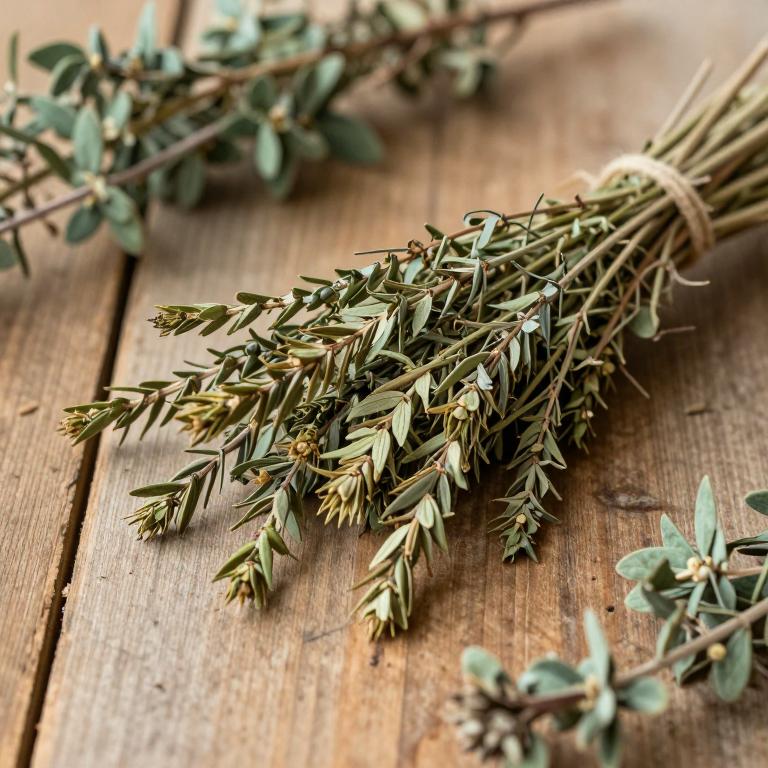
Names and Synonyms
Common Names
- Long-leaf Sugarbush
- long-leaf protea
Scientific Names
Accepted name
Protea longifoliaSynonyms
- Erodendrum umbonale
- Erodendrum ligulifolium
- Protea ligulifolia
- Erodendrum longifolium
- Erodendrum longipenne
- Protea turbinata
- Protea umbonalis
- Protea vidua
- Protea minor
- Protea ignota
- Protea nigra
- Scolymocephalus longifolius
Sources: Wikidata, Catalogue of Life
Taxonomical Classification
This plant, Protea longifolia, belongs to the kingdom Plantae and the phylum Streptophyta. Within the class Equisetopsida and subclass Magnoliidae, it is classified under the order Proteales and the family Proteaceae. Finally, it is categorized under the genus Protea.
| Rank | Classification |
|---|---|
| Kingdom | Plantae |
| Phylum | Streptophyta |
| Class | Equisetopsida |
| Subclass | Magnoliidae |
| Order | Proteales |
| Family | Proteaceae |
| Genus | Protea |
Sources: The World Checklist of Vascular Plants (WCVP)
Distribution
This plant is native to the southern regions of the African continent. Specifically, its natural habitat is located within the Cape Provinces of South Africa. Within this geographical area, it thrives in unique local ecosystems. The distribution of this species is quite specialized to these specific coastal and mountain environments. Consequently, its presence is a distinct feature of the Cape floral kingdom.
| Region | Area |
|---|---|
| Southern Africa | Cape Provinces |
Sources: The World Checklist of Vascular Plants (WCVP)
Botanical Identification
Ecology
The ecology of Protea longifolia is defined by its adaptation to a wide range of altitudinal gradients, typically thriving within an elevational range that begins at 0 m AMSL and extends up to a maximum of 1000 m AMSL. This broad vertical distribution allows the species to occupy diverse ecological niches, from coastal lowlands to montane environments. It is characteristic of nutrient-poor, sandy, or acidic soils, often occurring in fynbos biomes where it plays a vital role in the ecosystem as a nectar source for various pollinators. The plant is well-adapted to fire-prone landscapes, utilizing specialized mechanisms to regenerate following periodic wildfire events, which are essential for maintaining the health and succession of its native habitat.
- Elevational range max:
- 1000 m AMSL
- Elevational range min:
- 0 m AMSL
Life history
The life history of Protea longifolia is characterized by its status as a perennial species, meaning it lives for many years rather than completing its cycle in a single growing season. As a long-lived woody shrub, its life cycle involves a robust establishment phase followed by sustained vegetative growth and periodic reproductive cycles. The plant undergoes seasonal development influenced by environmental factors, investing significant energy into its complex inflorescences and woody structure to ensure long-term survival within its ecosystem. This perennial nature allows the species to withstand varying environmental conditions over successive years, maintaining a stable presence in its natural habitat through continuous growth and recurring flowering periods.
- Lifecycle :
- perennial
Morphology
The morphology of Protea longifolia is characterized by its growth form as a woody shrub, existing as a self-supporting structure that does not require climbing support. As a terrestrial species, it is neither aquatic nor an epiphyte, growing independently without parasitic tendencies. The plant typically reaches a mean height of 1.5 m, with its stature ranging from a minimum of 0.5 m to a maximum height of 1.5 m.
- Aquatic :
- terrestrial
- Climber :
- self-supporting
- Epiphyte :
- terrestrial
- Growth form :
- shrub
- Parasite :
- independent
- Plant height mean:
- 1.5 m
- Plant height min:
- 0.5 m
- Woodiness :
- woody
Physiology
The physiology of Protea longifolia is characterized by a specialized metabolic and structural framework adapted to nutrient-poor, Mediterranean-type ecosystems. Primarily, the plant utilizes a C3 photosynthetic pathway, which involves the direct fixation of carbon dioxide by the enzyme RuBisCO within the mesophyll cells. To mitigate the physiological stresses of seasonal drought and low soil phosphorus, the plant employs highly specialized proteoid (cluster) roots that increase the surface area for nutrient absorption through the exudation of organic acids. Water relations are managed through sclerophyllous leaf morphology, featuring thickened cuticles and sunken stomata that reduce transpirational water loss while maintaining gas exchange efficiency. Furthermore, the plant's physiological processes are tightly integrated with its ability to manage oxidative stress and maintain osmotic balance during periods of high solar radiation and intermittent water scarcity.
- Photosynthetic pathway :
- C3
Reproduction
Reproduction in Protea longifolia is characterized by specific seed morphological traits that contribute to its reproductive success within its natural habitat. The seeds produced by this species exhibit a measurable range of mass, which is a critical factor in seedling establishment and dispersal. Specifically, the seed mass for this plant shows a mean value of 0.04359 g. Within the population, there is natural variation in this weight, with the individual seed mass ranging from a minimum of 0.03455 g to a maximum of 0.05263 g. This variability in seed mass plays a significant role in the plant's life cycle and its ability to colonize new areas.
- Seed mass max:
- 0.05263 g
- Seed mass mean:
- 0.04359 g
- Seed mass min:
- 0.03455 g
Sources: Global Inventory of Floras and Traits (GIFT)
Activities
Protea longifolia has 1 reported activities identified across 0 scientific publications and several other databases. The most consistently reported activities include Antioxidant.
| Activity | Supporting sources | Consensus |
|---|---|---|
| Antioxidant | 1 supporting sources | ★☆☆☆☆ |
Antioxidant
- Pharmaceutical biology