Ghaf
Prosopis cineraria · Accepted scientific name
Scientific literature: Very Sparse (31 studies) · ★☆☆☆☆
Ghaf, scientifically known as Prosopis cineraria, is a resilient, drought-tolerant tree native to the arid regions of the Middle East and Indian subcontinent. Revered for its deep roots and ecological importance, it offers significant medicinal value, providing traditional remedies for skin ailments, respiratory issues, and various digestive disorders.
- Family
- Fabaceae
- Native range
- Asia-Temperate
- Parts used
- Leaf · Seed
- Common names
- Jandi
- Scientific synonyms
- Prosopis Aculeata · Mimosa Cinerea · 5 more
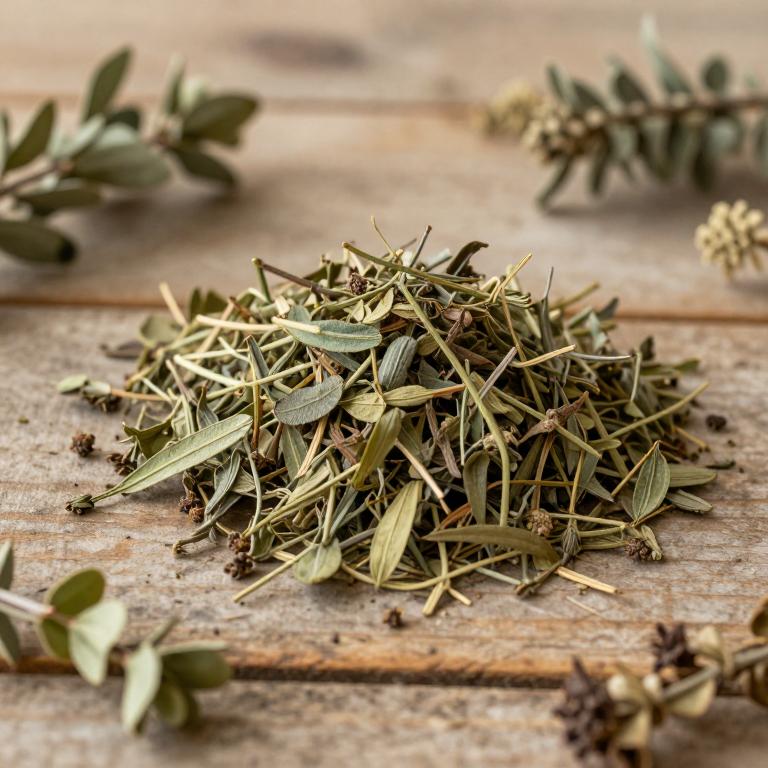
Names and Synonyms
Common Names
- jandi
Scientific Names
Accepted name
Prosopis cinerariaSynonyms
- Prosopis aculeata
- Mimosa cinerea
- Prosopis spicigera
- Mimosa cineraria
- Acacia cineraria
- Adenanthera aculeata
- Prosopis spicata
Sources: Wikidata, Catalogue of Life
Taxonomical Classification
This plant belongs to the kingdom Plantae and is classified under the phylum Streptophyta and the class Equisetopsida. Within the subclass Magnoliidae, it is organized under the order Fabales and the family Fabaceae. Finally, it is specifically identified by the genus Prosopis.
| Rank | Classification |
|---|---|
| Kingdom | Plantae |
| Phylum | Streptophyta |
| Class | Equisetopsida |
| Subclass | Magnoliidae |
| Order | Fabales |
| Family | Fabaceae |
| Genus | Prosopis |
Sources: The World Checklist of Vascular Plants (WCVP)
Distribution
This plant exhibits a wide geographical distribution across several arid regions of Western Asia and the Arabian Peninsula. In the area of Western Asia, it can be found growing in both Afghanistan and Iran. Its presence extends into the Arabian Peninsula, where it is common throughout the various Gulf States. Specifically, the species is well-documented in the nation of Kuwait. Additionally, the plant is naturally distributed within the borders of Oman.
| Region | Area |
|---|---|
| Western Asia | Afghanistan |
| Western Asia | Iran |
| Arabian Peninsula | Gulf States |
| Arabian Peninsula | Kuwait |
| Arabian Peninsula | Oman |
| Arabian Peninsula | Saudi Arabia |
| Indian Subcontinent | India |
| Indian Subcontinent | Pakistan |
| Malesia | Jawa |
Sources: The World Checklist of Vascular Plants (WCVP)
Botanical Identification
Life history
The life history of Prosopis cineraria is characterized by a perennial lifecycle, allowing the plant to persist in its environment over many years. As a phanerophyte, it develops significant woody structures that elevate its photosynthetic organs well above the ground, though it can also be categorized under the life form of nanophanerophyte depending on specific growth stages or environmental adaptations. In terms of its foliage patterns, the species exhibits evergreen deciduousness, maintaining its canopy and physiological activity throughout much of its existence.
- Deciduousness :
- evergreen
- Life form :
- nanophanerophyte
- Life form :
- phanerophyte
- Lifecycle :
- perennial
Morphology
The morphology of Prosopis cineraria is characterized by its growth form as a tree, exhibiting a robust and woody structure. It is an independent organism, functioning without any parasitic relationship, and typically reaches a mean plant height of approximately 6.5 m. As a self-supporting species, it maintains a sturdy, upright stature without the need for external climbing structures.
- Climber :
- self-supporting
- Growth form :
- tree
- Parasite :
- independent
- Plant height mean:
- 6.5 m
- Woodiness :
- woody
Physiology
The physiology of Prosopis cineraria is characterized by highly efficient metabolic adaptations that allow it to thrive in arid and semi-arid environments. The plant utilizes a C3 photosynthetic pathway, relying on the standard fixation of carbon dioxide via the enzyme RuBisCO, which it manages effectively through specialized anatomical adaptations to minimize water loss. A defining physiological feature of this species is its capacity to act as a nitrogen fixer; through a symbiotic relationship with Rhizobium bacteria located within its root nodules, the plant converts atmospheric nitrogen into a bioavailable form, significantly enhancing soil fertility and its own nutrient uptake in nitrogen-poor soils. This combination of efficient carbon assimilation and biological nitrogen fixation supports its robust growth and resilience in harsh ecological niches.
- Nitrogen fixer :
- yes
- Photosynthetic pathway :
- C3
Reproduction
The reproduction of Prosopis cineraria is characterized by a seasonal flowering cycle and a biotic pollination strategy. The flowering period typically commences in May and continues through August, though the exact timing can be variable depending on environmental conditions. This process relies on biotic pollination, specifically utilizing an insect-based pollination syndrome to facilitate fertilization. Following successful pollination, the plant produces seeds with a highly consistent mass; the mean seed mass is approximately 0.039555 g, with recorded values ranging from a minimum of 0.0385 g to a maximum of 0.04061 g.
- Flowering time :
- May
- Flowering time :
- Aug
- Pollination syndrome :
- insect
- Pollination syndrome :
- biotic
- Seed mass max:
- 0.04061 g
- Seed mass mean:
- 0.039555 g
- Seed mass min:
- 0.0385 g
Sources: Global Inventory of Floras and Traits (GIFT)
Plant Parts
Prosopis cineraria has 3 reported plant parts identified across 6 scientific publications and several other databases that are studied for medicinal purposes. The most consistently reported plant part include leaf, seed, stem.
| Plant part | Supporting sources | Consensus |
|---|---|---|
| Leaf | 4 supporting sources | ★★☆☆☆ |
| Seed | 1 supporting sources | ★☆☆☆☆ |
| Stem | 1 supporting sources | ★☆☆☆☆ |
Leaf
- Natural product research
- Journal of ethnopharmacology
- The Journal of pharmacy and pharmacology
- Biological trace element research
Seed
- International journal of peptide research and therapeutics
Stem
- Biological trace element research
Chemicals
Prosopis cineraria has 9 reported phytochemicals identified across 6 scientific publications and several other databases. The most consistently reported chemicals include Vitexin, CHLOROGENIC ACID, Myricitrin, Rhoifolin, caffeic acid.
| Chemical | Supporting sources | Consensus |
|---|---|---|
| Vitexin | 3 supporting sources | ★★☆☆☆ |
| CHLOROGENIC ACID | 1 supporting sources | ★☆☆☆☆ |
| Myricitrin | 1 supporting sources | ★☆☆☆☆ |
| Rhoifolin | 1 supporting sources | ★☆☆☆☆ |
| caffeic acid | 1 supporting sources | ★☆☆☆☆ |
| ferulic acid | 1 supporting sources | ★☆☆☆☆ |
| palmitic acid | 1 supporting sources | ★☆☆☆☆ |
| protocatechuic acid | 1 supporting sources | ★☆☆☆☆ |
| vanillin | 1 supporting sources | ★☆☆☆☆ |
Vitexin
- Natural product research
- Journal of ethnopharmacology
- The Journal of pharmacy and pharmacology
CHLOROGENIC ACID
- Biomedicine & pharmacotherapy = Biomedecine & pharmacotherapie
Myricitrin
- Journal of ethnopharmacology
Rhoifolin
- Natural product research
caffeic acid
- Biomedicine & pharmacotherapy = Biomedecine & pharmacotherapie
ferulic acid
- Biomedicine & pharmacotherapy = Biomedecine & pharmacotherapie
palmitic acid
- Toxicon: X
protocatechuic acid
- Biomedicine & pharmacotherapy = Biomedecine & pharmacotherapie
vanillin
- Journal of ethnopharmacology
Activities
Prosopis cineraria has 2 reported activities identified across 6 scientific publications and several other databases. The most consistently reported activities include Antibacterial, Expectorant.
| Activity | Supporting sources | Consensus |
|---|---|---|
| Antibacterial | 1 supporting sources | ★☆☆☆☆ |
| Expectorant | 1 supporting sources | ★☆☆☆☆ |
Antibacterial
- Iranian journal of microbiology
Expectorant
- Biomolecules
Conditions
Prosopis cineraria has 8 reported investigations on conditions identified across 6 scientific publications and several other databases. The most consistently reported conditions include Acute lymphoblastic leukemia, Acute myeloid leukemia, Chronic myeloid leukemia, asthma, conjunctivitis.
| Condition | Supporting sources | Consensus |
|---|---|---|
| Acute lymphoblastic leukemia | 1 supporting sources | ★☆☆☆☆ |
| Acute myeloid leukemia | 1 supporting sources | ★☆☆☆☆ |
| Chronic myeloid leukemia | 1 supporting sources | ★☆☆☆☆ |
| Asthma | 1 supporting sources | ★☆☆☆☆ |
| Conjunctivitis | 1 supporting sources | ★☆☆☆☆ |
| Diarrhea | 1 supporting sources | ★☆☆☆☆ |
| Leukemia | 1 supporting sources | ★☆☆☆☆ |
| Wound healing | 1 supporting sources | ★☆☆☆☆ |
Acute lymphoblastic leukemia
- Journal of ethnopharmacology
Acute myeloid leukemia
- Journal of ethnopharmacology
Chronic myeloid leukemia
- Journal of ethnopharmacology
Asthma
- Biomolecules
Conjunctivitis
- Biomolecules
Diarrhea
- Biomolecules
Leukemia
- The Journal of pharmacy and pharmacology
Wound healing
- Mini reviews in medicinal chemistry
Preparations
Prosopis cineraria has 4 reported preparations identified across 6 scientific publications and several other databases. The most consistently reported preparations include Methanolic extract, Prosopis cineraria leaf, essential oils, leaf.
| Preparation | Supporting sources | Consensus |
|---|---|---|
| Methanolic extract | 1 supporting sources | ★☆☆☆☆ |
| Prosopis cineraria leaf | 1 supporting sources | ★☆☆☆☆ |
| Essential oils | 1 supporting sources | ★☆☆☆☆ |
| Leaf | 1 supporting sources | ★☆☆☆☆ |
Methanolic extract
- Toxicon: X
Prosopis cineraria leaf
- The Journal of pharmacy and pharmacology
Essential oils
- Mycoses
Leaf
- Natural product research