Primrose
Primula vulgaris · Accepted scientific name
Scientific literature: Very Sparse (14 studies) · ★☆☆☆☆
Primrose, scientifically known as Primula vulgaris, is a charming perennial herb native to Europe. Renowned for its delicate yellow blossoms, this woodland plant holds deep historical significance. Beyond its aesthetic beauty, it has been traditionally used in herbal medicine to soothe respiratory ailments and support overall digestive health.
- Family
- Primulaceae
- Native range
- Europe
- Parts used
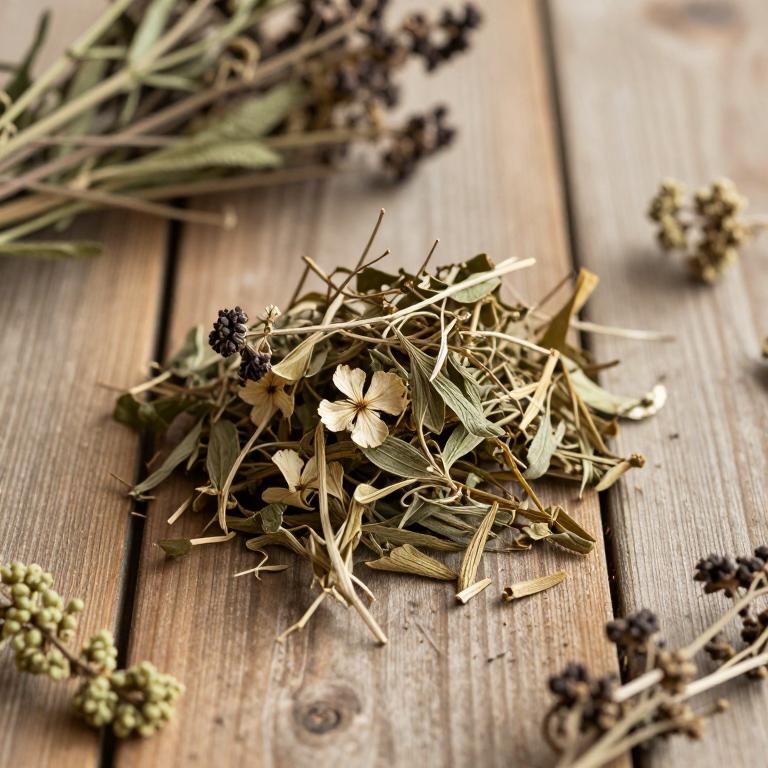
- Leaf
- Common names
- Primrose
- Scientific synonyms
- Primula Acaulis Subsp. Vulgaris
Names and Synonyms
Common Names
- Primrose
Scientific Names
Accepted name
Primula vulgarisSynonyms
- Primula acaulis subsp. vulgaris
Regional and Traditional Names
Spanish:
- Primula veris var. acaulis
- Primula acaulis
- Primula veris var acaulis
- Primavera
German:
- Stängellose Schlüsselblume
- Stengellose Schlüsselblume
- Erd-Primel
- Schaftlose Schlüsselblume
- Primula acaulis
- Schaftlose Primel
- Primevère commune
- Kissenprimel
- stängellose Schlüsselblume
French:
- primevère commune
- primevère acaule
- primevère acaule
- primevère des jardins
- primevère à grandes fleurs
Sources: Wikidata, Catalogue of Life
Taxonomical Classification
This plant, known scientifically as Primula vulgaris, belongs to the kingdom Plantae and the phylum Streptophyta. Within the class Equisetopsida and subclass Magnoliidae, it is categorized under the order Ericales and the family Primulaceae. Finally, it is classified under the genus Primula.
| Rank | Classification |
|---|---|
| Kingdom | Plantae |
| Phylum | Streptophyta |
| Class | Equisetopsida |
| Subclass | Magnoliidae |
| Order | Ericales |
| Family | Primulaceae |
| Genus | Primula |
Sources: The World Checklist of Vascular Plants (WCVP)
Distribution
This plant is native to several regions across Northern Europe. It can be found growing naturally within the landscapes of Denmark and Norway. Its distribution also extends to the islands of the Faroe Islands, known as Føroyar. Furthermore, the species is commonly documented throughout Great Britain. Finally, the plant is widely distributed across the green terrain of Ireland.
| Region | Area |
|---|---|
| Northern Europe | Denmark |
| Northern Europe | Føroyar |
| Northern Europe | Great Britain |
| Northern Europe | Ireland |
| Northern Europe | Norway |
| Northern Europe | Sweden |
| Middle Europe | Austria |
| Middle Europe | Belgium |
| Middle Europe | Czechia-Slovakia |
| Middle Europe | Germany |
Sources: The World Checklist of Vascular Plants (WCVP)
Botanical Identification
Ecology
The ecology of Primula vulgaris is characterized by its preference for stable, moist, and semi-shaded environments, most notably within the forest ecosystem. As a typical woodland species, it thrives in the nutrient-rich, deciduous leaf litter of ancient woodlands, where it benefits from the dappled sunlight that filters through the canopy before the trees reach full summer leafage. This habitat provides the consistent soil moisture and moderate temperatures necessary for its growth cycle. By occupying the forest floor, the plant plays a role in the understory community, often colonizing damp banks, hedgerows, and shaded meadows that mimic the conditions of a woodland floor. Its presence is frequently an indicator of undisturbed, long-established habitats where the soil structure and moisture levels remain relatively constant.
- Habitat :
- forest
Life history
The life history of Primula vulgaris is characterized by its status as a perennial plant, allowing it to persist through multiple growing seasons. As a hemicryptophyte, it survives unfavorable periods by keeping its perennuating buds at or just below the soil surface, protected by leaf litter or soil. This species exhibits a deciduous nature, shedding its foliage during dormant periods to manage seasonal changes. Its life cycle is defined by this recurring pattern of growth and dormancy, facilitated by its robust hemicryptophytic structure which ensures stability and regrowth in its natural habitat.
- Deciduousness :
- deciduous
- Life form :
- hemicryptophyte
- Lifecycle :
- perennial
Morphology
The morphology of Primula vulgaris is characterized by its growth as a non-woody herb and forb, functioning as a self-supporting plant that does not require climbing structures. It is a terrestrial species, existing as an independent organism rather than a parasite or epiphyte. In terms of stature, the plant maintains a relatively low profile, with a height that typically ranges from a minimum of 0.05 m to a maximum of 0.15 m, resulting in an average plant height of approximately 0.0925 m.
- Aquatic :
- terrestrial
- Climber :
- self-supporting
- Epiphyte :
- terrestrial
- Growth form :
- herb
- Parasite :
- independent
- Plant height max:
- 0.15 m
- Plant height mean:
- 0.0925 m
- Plant height min:
- 0.05 m
- Woodiness :
- non-woody
Physiology
The physiology of Primula vulgaris is characterized by a C3 photosynthetic pathway, a common metabolic strategy for temperate herbaceous perennials. The plant exhibits a non-carnivorous nutritional strategy and does not function as a nitrogen fixer, relying instead on organic matter decomposition in the soil for nutrient uptake. Its foliage is defined by a mean leaf size of 64.09 cm² and can reach a maximum leaf length of 15 cm. Furthermore, the plant maintains a mean Specific Leaf Area (SLA) of 286 cm²/g, reflecting its leaf density and structural investment in light interception.
- Carnivory :
- non-carnivorous
- Leaf length max:
- 15 cm
- Leaf size mean:
- 64.09 cm²
- Nitrogen fixer :
- no
- Photosynthetic pathway :
- C3
- Specific Leaf Area (SLA) mean:
- 286 cm²/g
Reproduction
The reproduction of Primula vulgaris is primarily driven by sexual processes, as asexual reproduction is absent in this species. The flowering period typically begins in April and extends through May, facilitating a critical window for pollination. This plant utilizes a biotic pollination syndrome, specifically relying on insects, with bees serving as a key pollinator. Notably, self-fertilization is absent, which promotes genetic diversity through cross-pollination. Following successful fertilization, the plant develops fruit in the form of a capsule. This fruit is dehiscent, meaning it opens at maturity to release its seeds. The seeds produced are quite small, with a mean mass of approximately 0.00109791675 g, ranging from a minimum of 0.000681 g to a maximum of 0.00138 g. Dispersal of these seeds follows a zoochorous strategy, specifically exhibiting myrmecocory, a method where seeds are dispersed by ants.
- Dehiscence :
- dehiscent
- Dispersal syndrome :
- zoochorous
- Dispersal syndrome :
- myrmecochorous
- Flowering time :
- Apr
- Flowering time :
- May
- Fruit type :
- capsule
- Pollination syndrome :
- insect
- Pollination syndrome :
- bee
- Pollination syndrome :
- biotic
- Reproduction asexual :
- absent
- Seed mass max:
- 0.00138 g
- Seed mass mean:
- 0.00109791675 g
- Seed mass min:
- 0.000681 g
- Self fertilization :
- absent
Sources: Global Inventory of Floras and Traits (GIFT)
Plant Parts
Primula vulgaris has 1 reported plant parts identified across 2 scientific publications and several other databases that are studied for medicinal purposes. The most consistently reported plant part include leaf.
| Plant part | Supporting sources | Consensus |
|---|---|---|
| Leaf | 2 supporting sources | ★☆☆☆☆ |
Leaf
- Saudi pharmaceutical journal : SPJ : the official publication of the Saudi Pharmaceutical Society
- Natural product research
Chemicals
Primula vulgaris has 5 reported phytochemicals identified across 2 scientific publications and several other databases. The most consistently reported chemicals include Gallic acid, RUTIN, Saponine, p-coumaric acid, protocatechuic acid.
| Chemical | Supporting sources | Consensus |
|---|---|---|
| Gallic acid | 1 supporting sources | ★☆☆☆☆ |
| RUTIN | 1 supporting sources | ★☆☆☆☆ |
| Saponine | 1 supporting sources | ★☆☆☆☆ |
| p-coumaric acid | 1 supporting sources | ★☆☆☆☆ |
| protocatechuic acid | 1 supporting sources | ★☆☆☆☆ |
Gallic acid
- Saudi pharmaceutical journal : SPJ : the official publication of the Saudi Pharmaceutical Society
RUTIN
- Saudi pharmaceutical journal : SPJ : the official publication of the Saudi Pharmaceutical Society
Saponine
- Wiadomosci lekarskie (Warsaw, Poland : 1960)
p-coumaric acid
- Saudi pharmaceutical journal : SPJ : the official publication of the Saudi Pharmaceutical Society
protocatechuic acid
- Saudi pharmaceutical journal : SPJ : the official publication of the Saudi Pharmaceutical Society
Activities
Primula vulgaris has 1 reported activities identified across 2 scientific publications and several other databases. The most consistently reported activities include Antioxidant.
| Activity | Supporting sources | Consensus |
|---|---|---|
| Antioxidant | 1 supporting sources | ★☆☆☆☆ |
Antioxidant
- Saudi pharmaceutical journal : SPJ : the official publication of the Saudi Pharmaceutical Society
Conditions
Primula vulgaris has 5 reported investigations on conditions identified across 2 scientific publications and several other databases. The most consistently reported conditions include cough, common cold, dyspnea, oxidative damage, upper respiratory tract infections.
| Condition | Supporting sources | Consensus |
|---|---|---|
| Cough | 2 supporting sources | ★☆☆☆☆ |
| Common cold | 1 supporting sources | ★☆☆☆☆ |
| Dyspnea | 1 supporting sources | ★☆☆☆☆ |
| Oxidative damage | 1 supporting sources | ★☆☆☆☆ |
| Upper respiratory tract infections | 1 supporting sources | ★☆☆☆☆ |
Cough
- Acta poloniae pharmaceutica
- Wiadomosci lekarskie (Warsaw, Poland : 1960)
Common cold
- Phytomedicine : international journal of phytotherapy and phytopharmacology
Dyspnea
- Wiadomosci lekarskie (Warsaw, Poland : 1960)
Oxidative damage
- Saudi pharmaceutical journal : SPJ : the official publication of the Saudi Pharmaceutical Society
Upper respiratory tract infections
- Wiadomosci lekarskie (Warsaw, Poland : 1960)