oxlip
Primula elatior · Accepted scientific name
Scientific literature: Very Sparse (13 studies) · ★☆☆☆☆
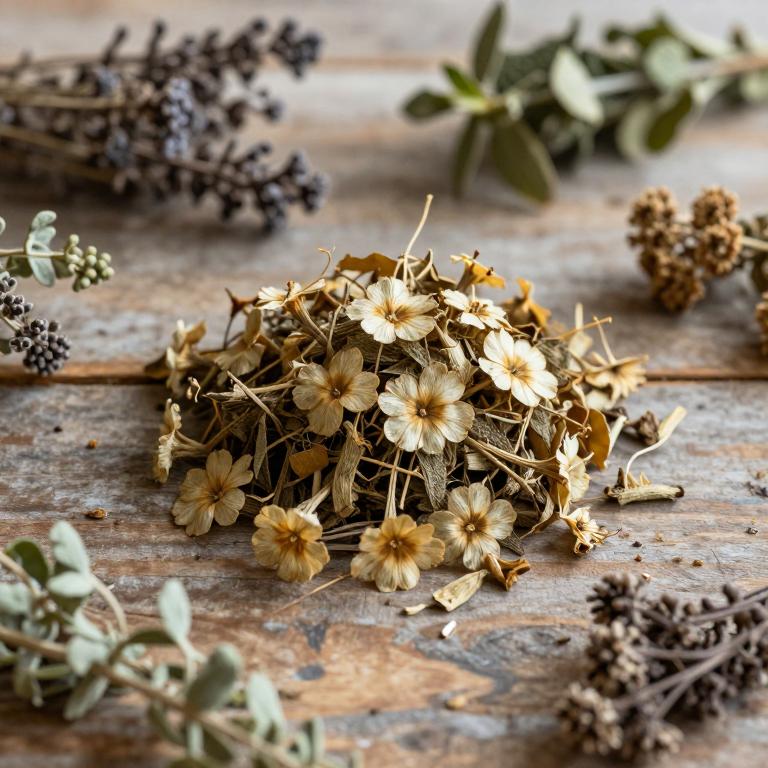
Oxlip, scientifically known as Primula elatior, is a charming perennial primrose native to Europe's damp woodlands. Distinguished by its bright yellow, trumpet-shaped flowers, this woodland treasure thrives in shady, moist habitats. Traditionally valued for its aesthetic beauty, it serves as a vital indicator of healthy, ancient meadow ecosystems.
- Family
- Primulaceae
- Native range
- Europe
- Parts used
- Leaf
- Common names
- Not available
- Scientific synonyms
- Primula Veris Subsp. Elatior · Primula Veris Elatior · 1 more
Names and Synonyms
Scientific Names
Accepted name
Primula elatiorSynonyms
- Primula veris subsp. elatior
- Primula veris elatior
- Primula veris var. elatior
Regional and Traditional Names
Spanish:
- Lilicopa
- Yerba de San Pablo Mayor
- Primicias del buen día
- Nabo montes
- Bragas de cuco
- Primula intricata var. nevadensis
- Primicias de la luna
- Flor de las neberas
- Primula perreiniana
- Primula lofthousei
- Primula intricata
- Bellorita encarnada
- Primabera de puerto
- Papagalls de primavera
- Primicias del buen dia
- Primula rhododendricola
- manguitos
- nabo montés
- gallos
- hierba de San Pablo mayor
- primavera
- primavera común
- bellorita
- yerba de San Pedro
- yerba de San Pedro mayor
German:
- Hohe Schlüsselblume
- Wald-Schlüsselblume
- Hohe Primel
- Waldschlüsselblume
- primevère élevée
- Wald-Schluesselblume
French:
- Primevère élevée
- Primevere elevee
- Coucou des bois
- Primevere elevee
Sources: Wikidata, Catalogue of Life
Taxonomical Classification
This plant belongs to the kingdom Plantae and the phylum Streptophyta, falling under the class Equisetopsida and subclass Magnoliidae. Within the order Ericales, it is classified under the family Primulaceae. Finally, it is identified by its genus, Primula, and its specific species name, Primula elatior.
| Rank | Classification |
|---|---|
| Kingdom | Plantae |
| Phylum | Streptophyta |
| Class | Equisetopsida |
| Subclass | Magnoliidae |
| Order | Ericales |
| Family | Primulaceae |
| Genus | Primula |
Sources: The World Checklist of Vascular Plants (WCVP)
Distribution
This plant exhibits a specific distribution pattern across the northern regions of Europe. It can be found growing within the borders of Denmark and Finland. Furthermore, its presence extends to the landscapes of Great Britain. The species is also well-established in Norway. Finally, its geographical range includes the territory of Sweden.
| Region | Area |
|---|---|
| Northern Europe | Denmark |
| Northern Europe | Finland |
| Northern Europe | Great Britain |
| Northern Europe | Norway |
| Northern Europe | Sweden |
| Middle Europe | Austria |
| Middle Europe | Belgium |
| Middle Europe | Czechia-Slovakia |
| Middle Europe | Germany |
| Middle Europe | Hungary |
Sources: The World Checklist of Vascular Plants (WCVP)
Botanical Identification
Ecology
The ecology of Primula elatior is characterized by its preference for diverse, high-altitude environments, where it typically flourishes within forests, hills, meadows, and mountainous terrains. This species is specifically adapted to these varied landscapes, occupying niches that provide the necessary moisture and shade found in woodland understories or open alpine meadows. Its distribution is closely linked to specific altitudinal belts, with an average elevational range centered around 1866 m AMSL. This positioning within montane ecosystems suggests a reliance on the cooler temperatures and unique soil compositions found at mid-to-high elevations.
- Elevational range mean:
- 1866 m AMSL
- Habitat :
- forest, hills, meadows, mountains
Life history
The life history of Primula elatior is characterized by its existence as a perennial species, allowing it to persist through multiple growing seasons. As a hemicryptophyte, its perennating buds are located at or just below the soil surface, protected by leaf litter or the ground layer during unfavorable periods. The plant exhibits a deciduous nature, shedding its foliage as part of its seasonal cycle, which aligns with its survival strategy in its natural habitat.
- Deciduousness :
- deciduous
- Life form :
- hemicryptophyte
- Lifecycle :
- perennial
Morphology
The morphology of Primula elatior is characterized by its growth form as a non-woody herb, specifically classified as a forb. This self-supporting plant exhibits a terrestrial lifestyle and functions as an independent organism, not relying on parasitic relationships. In terms of stature, it is a relatively low-growing species with a plant height that typically reaches a mean of 0.113 m, ranging from a minimum of 0.1 m to a maximum of 0.4 m.
- Aquatic :
- terrestrial
- Climber :
- self-supporting
- Growth form :
- herb
- Parasite :
- independent
- Plant height max:
- 0.4 m
- Plant height mean:
- 0.113 m
- Plant height min:
- 0.1 m
- Woodiness :
- non-woody
Physiology
The physiology of Primula elatior is characterized by a C3 photosynthetic pathway, utilizing the standard Calvin cycle for carbon fixation. The plant exhibits a non-carnivorous nutritional strategy, relying on traditional soil-based nutrient uptake rather than the capture of prey. Its leaf morphology is defined by a mean leaf size of approximately 42.05875 cm², which contributes to a mean Specific Leaf Area (SLA) of 323.02 cm²/g, reflecting its structural investment in leaf tissue relative to its mass.
- Carnivory :
- non-carnivorous
- Leaf size mean:
- 42.05875 cm²
- Photosynthetic pathway :
- C3
- Specific Leaf Area (SLA) mean:
- 323.02 cm²/g
Reproduction
The reproduction of Primula elatior is characterized by a sexual process, as asexual reproduction is noted to be absent. The flowering period typically begins in March and concludes in May, though the timing can be variable. During the flowering stage, the plant utilizes biotic pollination syndromes, specifically relying on insects such as bees to facilitate fertilization; notably, self-fertilization is absent in this species. Following successful pollination, the plant produces fruit in the form of a capsule. This fruit is dehiscent, meaning it opens at maturity to release its seeds. The seeds produced are quite small, with a mean mass of 0.000651 g, and a recorded mass range between 0.00085 g (noted as both the minimum and maximum in specific data points). Once released, the seeds undergo an anemochorous dispersal syndrome, utilizing wind to spread throughout the environment.
- Dehiscence :
- dehiscent
- Dispersal syndrome :
- anemochorous
- Flowering time :
- Mar
- Flowering time :
- May
- Fruit type :
- capsule
- Pollination syndrome :
- insect
- Pollination syndrome :
- bee
- Pollination syndrome :
- biotic
- Reproduction asexual :
- absent
- Seed mass max:
- 0.00085 g
- Seed mass mean:
- 0.000651 g
- Self fertilization :
- absent
Sources: Global Inventory of Floras and Traits (GIFT)
Plant Parts
Primula elatior has 1 reported plant parts identified across 1 scientific publications and several other databases that are studied for medicinal purposes. The most consistently reported plant part include leaf.
| Plant part | Supporting sources | Consensus |
|---|---|---|
| Leaf | 1 supporting sources | ★☆☆☆☆ |
Leaf
- Journal of ethnopharmacology
Chemicals
Primula elatior has 6 reported phytochemicals identified across 1 scientific publications and several other databases. The most consistently reported chemicals include Flavonoids, Hyperoside, Isorhamnetin-3-O-rutinoside, PRIMVERIN, Primulaverin.
| Chemical | Supporting sources | Consensus |
|---|---|---|
| Flavonoids | 1 supporting sources | ★☆☆☆☆ |
| Hyperoside | 1 supporting sources | ★☆☆☆☆ |
| Isorhamnetin-3-O-rutinoside | 1 supporting sources | ★☆☆☆☆ |
| PRIMVERIN | 1 supporting sources | ★☆☆☆☆ |
| Primulaverin | 1 supporting sources | ★☆☆☆☆ |
| rutoside | 1 supporting sources | ★☆☆☆☆ |
Flavonoids
- International journal of analytical chemistry
Hyperoside
- International journal of analytical chemistry
Isorhamnetin-3-O-rutinoside
- International journal of analytical chemistry
PRIMVERIN
- International journal of analytical chemistry
Primulaverin
- International journal of analytical chemistry
rutoside
- International journal of analytical chemistry
Activities
Primula elatior has 2 reported activities identified across 1 scientific publications and several other databases. The most consistently reported activities include Antioxidant, Expectorant.
| Activity | Supporting sources | Consensus |
|---|---|---|
| Antioxidant | 1 supporting sources | ★☆☆☆☆ |
| Expectorant | 1 supporting sources | ★☆☆☆☆ |
Antioxidant
- International journal of analytical chemistry
Expectorant
- International journal of analytical chemistry
Conditions
Primula elatior has 4 reported investigations on conditions identified across 1 scientific publications and several other databases. The most consistently reported conditions include antioxidant activity, convulsions, epilepsy, upper respiratory tract infections.
| Condition | Supporting sources | Consensus |
|---|---|---|
| Antioxidant activity | 1 supporting sources | ★☆☆☆☆ |
| Convulsions | 1 supporting sources | ★☆☆☆☆ |
| Epilepsy | 1 supporting sources | ★☆☆☆☆ |
| Upper respiratory tract infections | 1 supporting sources | ★☆☆☆☆ |
Antioxidant activity
- International journal of analytical chemistry
Convulsions
- Journal of ethnopharmacology
Epilepsy
- Journal of ethnopharmacology
Upper respiratory tract infections
- Fitoterapia
Preparations
Primula elatior has 1 reported preparations identified across 1 scientific publications and several other databases. The most consistently reported preparations include Ethanolic extracts of leaves.
| Preparation | Supporting sources | Consensus |
|---|---|---|
| Ethanolic extracts of leaves | 1 supporting sources | ★☆☆☆☆ |
Ethanolic extracts of leaves
- Journal of ethnopharmacology