Premna chrysoclada
Premna chrysoclada · Accepted scientific name
Scientific literature: Very Sparse (3 studies) · ★☆☆☆☆
Premna chrysoclada, scientifically known as Premna chrysoclada, is a versatile medicinal shrub native to the tropical regions of Madagascar. Renowned for its potent therapeutic properties, this plant is frequently utilized in traditional medicine to treat various ailments, including digestive issues, inflammation, and skin conditions, through its bioactive compounds.
- Family
- Lamiaceae
- Native range
- Africa
- Parts used
- Not available
- Common names
- Not available
- Scientific synonyms
- Premna Zanzibarensis · Vitex Chrysoclada
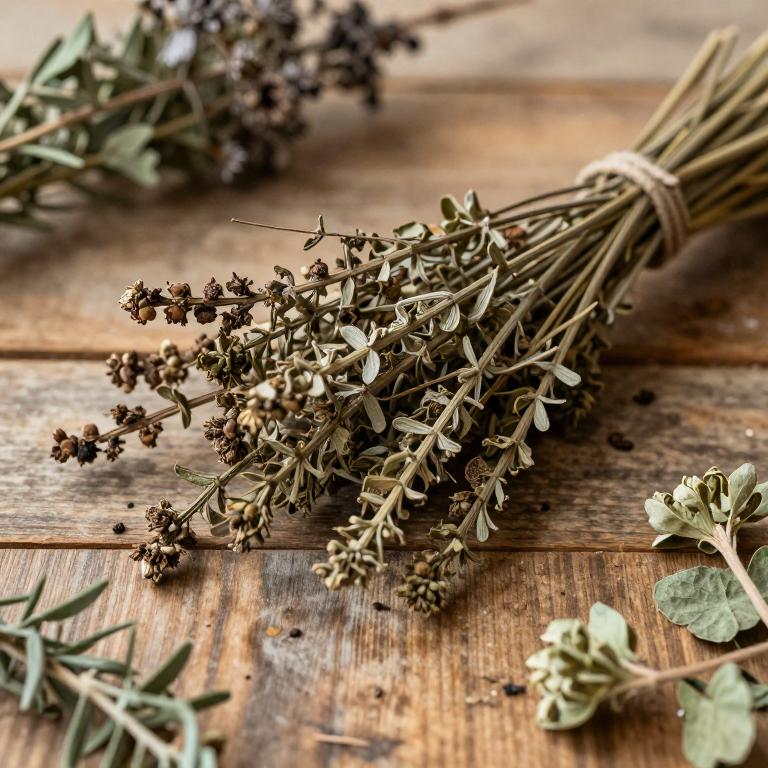
Names and Synonyms
Scientific Names
Accepted name
Premna chrysocladaSynonyms
- Premna zanzibarensis
- Vitex chrysoclada
Sources: Wikidata
Taxonomical Classification
This plant belongs to the kingdom Plantae within the phylum Streptophyta and the class Equisetopsida. It is further classified under the subclass Magnoliidae in the order Lamiales and the family Lamiaceae. Specifically, it is identified by the genus Premna.
| Rank | Classification |
|---|---|
| Kingdom | Plantae |
| Phylum | Streptophyta |
| Class | Equisetopsida |
| Subclass | Magnoliidae |
| Order | Lamiales |
| Family | Lamiaceae |
| Genus | Premna |
Sources: The World Checklist of Vascular Plants (WCVP)
Distribution
This plant exhibits a wide geographical distribution across different regions of the African continent. In West Tropical Africa, its presence is specifically noted in Guinea-Bissau. Moving toward the eastern side of the continent, the species can be found in East Tropical Africa. Within this eastern zone, it is documented to grow in Kenya. Furthermore, the plant also inhabits the territory of Tanzania.
| Region | Area |
|---|---|
| West Tropical Africa | Guinea-Bissau |
| East Tropical Africa | Kenya |
| East Tropical Africa | Tanzania |
Sources: The World Checklist of Vascular Plants (WCVP)
Botanical Identification
Ecology
The ecology of Premna chrysoclada is characterized by its preference for diverse, vegetated environments where moisture and varying levels of canopy cover are available. This species is typically found inhabiting moist forests, forest edges, woodlands, thickets, and secondary bushland, indicating an adaptability to both stable interior forest conditions and more transitional, disturbed ecological zones. By occupying these niches, the plant thrives in areas that provide sufficient humidity and protection from extreme desiccation, often playing a role in the structural complexity of secondary growth habitats and forest margins.
- Habitat :
- moist forest, forest edges, woodland, thicket and secondary bushland
Life history
The life history of Premna chrysoclada is characterized by its growth habit as a woody perennial, primarily existing as a phanerophyte where its regenerative buds are located on aerial branches well above the ground level. Depending on the specific environmental conditions and the stage of its development within its ecosystem, it may also exhibit characteristics of a nanophanerophyte, maintaining a smaller stature with buds positioned slightly above the soil surface. This plant's life cycle involves a robust structural development typical of woody species, allowing it to occupy stable niches within its habitat while utilizing its elevated branching system for efficient light capture and reproductive success.
- Life form :
- nanophanerophyte
- Life form :
- phanerophyte
Morphology
The morphology of Premna chrysoclada is characterized by a woody growth form, specifically developing as a shrub. This plant reaches an average height of approximately 2 meters and functions as a self-supporting structure rather than a climber. It is a terrestrial species, living in land-based environments rather than aquatic or epiphytic habitats, and maintains an independent biological existence without acting as a parasite.
- Aquatic :
- terrestrial
- Climber :
- self-supporting
- Epiphyte :
- terrestrial
- Growth form :
- shrub
- Parasite :
- independent
- Plant height mean:
- 2 m
- Woodiness :
- woody
Physiology
The physiology of Premna chrysoclada is characterized by its specialized metabolic and structural adaptations suited to its environment. Central to its energy production is its photosynthetic pathway, which follows the C3 mechanism; this process involves the direct fixation of atmospheric carbon dioxide by the enzyme RuBisCO within the mesophyll cells to produce three-carbon compounds. This C3 pathway dictates the plant's water-use efficiency and gas exchange dynamics, influencing how it manages transpiration and carbon assimilation under varying light and temperature conditions. Beyond carbon fixation, its physiological profile includes complex secondary metabolic processes that facilitate the synthesis of bioactive compounds, which are integral to its medicinal properties.
- Photosynthetic pathway :
- C3
Sources: Global Inventory of Floras and Traits (GIFT)
Activities
Premna chrysoclada has 1 reported activities identified across 0 scientific publications and several other databases. The most consistently reported activities include Antiplasmodial.
| Activity | Supporting sources | Consensus |
|---|---|---|
| Antiplasmodial | 1 supporting sources | ★☆☆☆☆ |
Antiplasmodial
- Journal of ethnopharmacology
Conditions
Premna chrysoclada has 2 reported investigations on conditions identified across 0 scientific publications and several other databases. The most consistently reported conditions include Plasmodium falciparum, malaria.
| Condition | Supporting sources | Consensus |
|---|---|---|
| Plasmodium falciparum | 1 supporting sources | ★☆☆☆☆ |
| Malaria | 1 supporting sources | ★☆☆☆☆ |
Plasmodium falciparum
- Journal of ethnopharmacology
Malaria
- Journal of ethnopharmacology
Preparations
Premna chrysoclada has 1 reported preparations identified across 0 scientific publications and several other databases. The most consistently reported preparations include Methanolic extracts.
| Preparation | Supporting sources | Consensus |
|---|---|---|
| Methanolic extracts | 1 supporting sources | ★☆☆☆☆ |
Methanolic extracts
- Journal of ethnopharmacology