prangos
Prangos pabularia · Accepted scientific name
Scientific literature: Very Sparse (8 studies) · ★☆☆☆☆
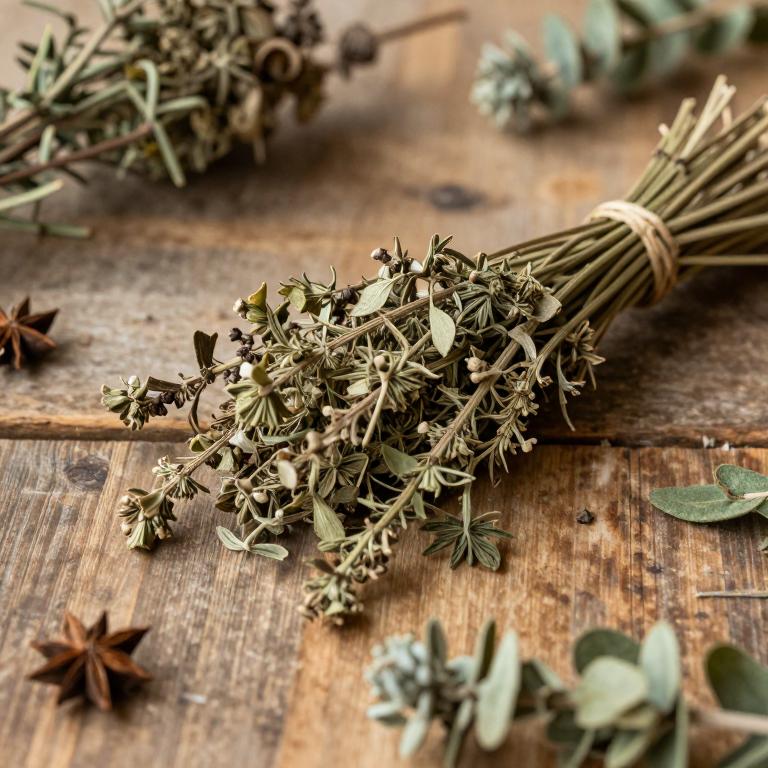
Prangos, scientifically known as Prangos pabularia, is a robust perennial herb native to the mountainous regions of Eurasia. Historically valued in traditional medicine, this plant belongs to the Apiaceae family. It is recognized for its distinctive foliage and bioactive compounds, which offer significant therapeutic potential in herbal pharmacology.
- Family
- Apiaceae
- Native range
- Asia-Temperate
- Parts used
- Root · Stem
- Common names
- Prangos · Yugan
- Scientific synonyms
- Koelzella Pabularia · Cachrys Pabularia
Names and Synonyms
Common Names
- prangos
- yugan
Scientific Names
Accepted name
Prangos pabulariaSynonyms
- Koelzella pabularia
- Cachrys pabularia
Sources: Wikidata, Catalogue of Life
Taxonomical Classification
This plant belongs to the kingdom Plantae and the phylum Streptophyta, falling under the class Equisetopsida and subclass Magnoliidae. Within the order Apiales, it is classified under the family Apiaceae and the genus Prangos. As a member of the Prangos pabularia species, it occupies a specific niche within this complex botanical hierarchy.
| Rank | Classification |
|---|---|
| Kingdom | Plantae |
| Phylum | Streptophyta |
| Class | Equisetopsida |
| Subclass | Magnoliidae |
| Order | Apiales |
| Family | Apiaceae |
| Genus | Prangos |
Sources: The World Checklist of Vascular Plants (WCVP)
Distribution
This plant is primarily found within the expansive landscapes of Central Asia. Its natural range includes the vast territories of Kazakhstan and Kirgizstan. Additionally, the species can be located throughout the country of Turkmenistan. It also thrives within the specific environmental conditions of Tadzhikistan. Finally, the geographical distribution of this medicinal herb extends into Uzbekistan.
| Region | Area |
|---|---|
| Central Asia | Kazakhstan |
| Central Asia | Kirgizstan |
| Central Asia | Turkmenistan |
| Central Asia | Tadzhikistan |
| Central Asia | Uzbekistan |
| Western Asia | Afghanistan |
| Indian Subcontinent | Pakistan |
| Indian Subcontinent | West Himalaya |
Sources: The World Checklist of Vascular Plants (WCVP)
Botanical Identification
Ecology
The ecology of Prangos pabularia is characterized by its ability to thrive across diverse high-altitude terrains, typically occupying a broad elevational range that spans from 900 m to 3300 m AMSL. It is commonly found inhabiting various environments including meadows, mountains, shrubberies, and stony places, demonstrating a versatile capacity to adapt to different soil textures and vegetation structures within these montane ecosystems.
- Elevational range max:
- 3300 m AMSL
- Elevational range min:
- 900 m AMSL
- Habitat :
- meadows, mountains, shrubberies, stony places
Life history
The life history of Prangos pabularia is characterized by its status as a perennial species, allowing it to persist in its environment through multiple growing seasons. As a perennial, the plant establishes a stable presence in its habitat, often developing robust root systems that facilitate long-term survival and the ability to regrow after dormant periods. Its developmental trajectory involves navigating various seasonal shifts, which supports its continuous lifecycle within its ecological niche. This enduring growth habit enables the plant to invest resources into complex structures and reproductive cycles over several years, distinguishing its biological rhythm from that of strictly annual or biennial species.
- Lifecycle :
- perennial
Morphology
The morphology of Prangos pabularia is characterized by its growth form as a non-woody herb, specifically categorized as a forb. This plant is a self-supporting species, neither acting as a climber nor a liana, and it grows in a terrestrial manner rather than being aquatic or epiphytic. It functions as an independent organism, lacking any parasitic tendencies. In terms of stature, the plant reaches a minimum height of 0.6 m and can grow to a maximum height of 1.75 m.
- Aquatic :
- terrestrial
- Climber :
- self-supporting
- Epiphyte :
- terrestrial
- Growth form :
- herb
- Parasite :
- independent
- Plant height max:
- 1.75 m
- Plant height min:
- 0.6 m
- Woodiness :
- non-woody
Reproduction
The reproduction of Prangos pabularia is characterized by a specific seasonal flowering window and distinct seed morphology. The plant enters its flowering stage in June, maintaining its bloom through July. The resulting seeds exhibit a notable range in mass, with a minimum weight of 0.0094 g and a maximum weight reaching 0.05656 g. On average, the seed mass for this species is approximately 0.03298 g, reflecting the biological variability inherent in its reproductive cycle.
- Flowering time :
- Jun
- Flowering time :
- Jul
- Seed mass max:
- 0.05656 g
- Seed mass mean:
- 0.03298 g
- Seed mass min:
- 0.0094 g
Sources: Global Inventory of Floras and Traits (GIFT)
Plant Parts
Prangos pabularia has 2 reported plant parts identified across 2 scientific publications and several other databases that are studied for medicinal purposes. The most consistently reported plant part include root, stem.
| Plant part | Supporting sources | Consensus |
|---|---|---|
| Root | 1 supporting sources | ★☆☆☆☆ |
| Stem | 1 supporting sources | ★☆☆☆☆ |
Root
- Phytochemistry
Stem
- Phytochemistry
Chemicals
Prangos pabularia has 3 reported phytochemicals identified across 2 scientific publications and several other databases. The most consistently reported chemicals include Pabularin A, Pabularin B, Pabularin C.
| Chemical | Supporting sources | Consensus |
|---|---|---|
| Pabularin A | 1 supporting sources | ★☆☆☆☆ |
| Pabularin B | 1 supporting sources | ★☆☆☆☆ |
| Pabularin C | 1 supporting sources | ★☆☆☆☆ |
Pabularin A
- Phytochemistry
Pabularin B
- Phytochemistry
Pabularin C
- Phytochemistry
Preparations
Prangos pabularia has 2 reported preparations identified across 2 scientific publications and several other databases. The most consistently reported preparations include ethyl acetate extracts of roots, n-hexane and ethyl acetate extracts of the stems.
| Preparation | Supporting sources | Consensus |
|---|---|---|
| Ethyl acetate extracts of roots | 1 supporting sources | ★☆☆☆☆ |
| N-hexane and ethyl acetate extracts of the stems | 1 supporting sources | ★☆☆☆☆ |
Ethyl acetate extracts of roots
- Phytochemistry
N-hexane and ethyl acetate extracts of the stems
- Phytochemistry