Prangos ferulacea
Prangos ferulacea · Accepted scientific name
Scientific literature: Very Sparse (13 studies) · ★☆☆☆☆
, scientifically known as Prangos ferulacea, is a resilient perennial herb prized in traditional medicine for its potent therapeutic properties. Found in mountainous regions, this plant contains bioactive compounds used to treat various ailments, including inflammation and digestive issues. Its unique chemical profile makes it a vital botanical resource.
- Family
- Apiaceae
- Native range
- Europe
- Parts used
- Leaf
- Common names
- Not available
- Scientific synonyms
- Cachrys Alata · Cachrys Nematoloba · 18 more
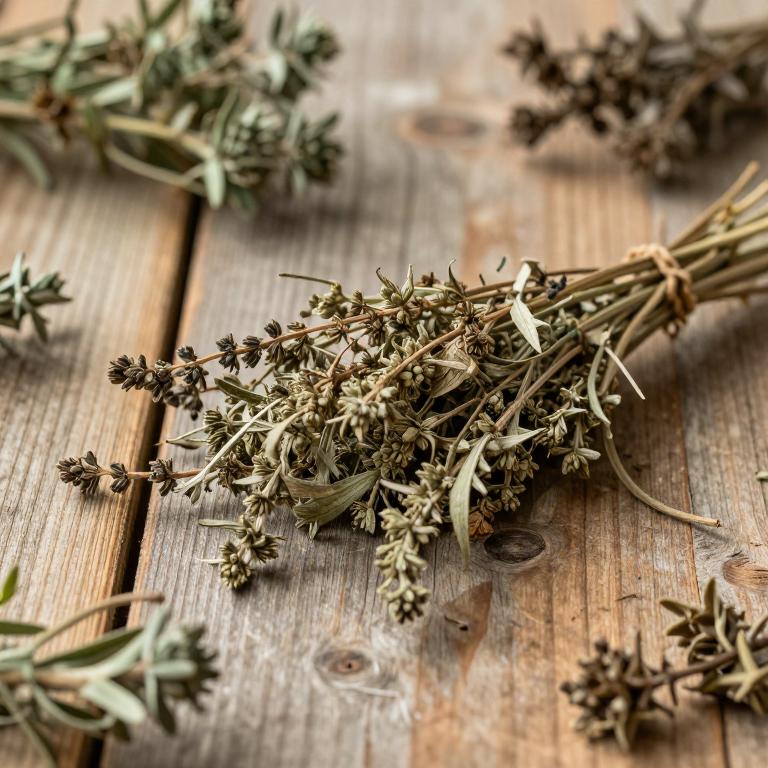
Names and Synonyms
Scientific Names
Accepted name
Prangos ferulaceaSynonyms
- Cachrys alata
- Cachrys nematoloba
- Laserpitium ferulaceum
- Prangos cylindracea
- Prangos macrocarpa
- Prangos stenoptera
- Cachrys goniocarpa
- Prangos foeniculacea
- Cachrys ferulacea
- Prangos asperula var. stenoptera
- Prangos biebersteinii
- Cachrys prangoides
- Prangos goniocarpa var. stenoptera
- Prangos goniocarpa
- Smyrnium laserpitioides
- Prangos ferulacea var. scabridula
- Prangos asperula var. leiopetala
- Prangos ferulacea var. cylindracea
- Prangos asperula var. judaica
- Cachrys goniocarpa var. asperifolia
Sources: Wikidata, Catalogue of Life
Taxonomical Classification
This plant belongs to the kingdom Plantae and the phylum Streptophyta, specifically classified within the class Equisetopsida and subclass Magnoliidae. It is further organized under the order Apiales and the family Apiaceae. Finally, its taxonomic identity is established within the genus Prangos, where it is known as Prangos ferulacea.
| Rank | Classification |
|---|---|
| Kingdom | Plantae |
| Phylum | Streptophyta |
| Class | Equisetopsida |
| Subclass | Magnoliidae |
| Order | Apiales |
| Family | Apiaceae |
| Genus | Prangos |
Sources: The World Checklist of Vascular Plants (WCVP)
Distribution
This plant, known scientifically as Prangos ferulacea, exhibits a specific range across Southeastern Europe. Its distribution includes the mountainous and coastal regions of Albania. It can also be found growing throughout various territories in Bulgaria. Furthermore, the species is documented within the diverse landscapes of Greece. Finally, its presence extends into the territories of Italy and Romania.
| Region | Area |
|---|---|
| Southeastern Europe | Albania |
| Southeastern Europe | Bulgaria |
| Southeastern Europe | Greece |
| Southeastern Europe | Italy |
| Southeastern Europe | Romania |
| Southeastern Europe | Sicilia |
| Southeastern Europe | NW. Balkan Pen. |
| Caucasus | North Caucasus |
| Caucasus | Transcaucasus |
| Western Asia | Iran |
Sources: The World Checklist of Vascular Plants (WCVP)
Botanical Identification
Ecology
The ecology of Prangos ferulacea is defined by its adaptation to rugged, high-altitude environments, specifically thriving within mountains and stony places. It occupies niches characterized by well-drained, rocky substrates where competition from dense vegetation is minimal, allowing it to colonize sparse, mineral-rich terrains. This preference for montane landscapes suggests an evolutionary resilience to extreme temperature fluctuations and varying levels of solar radiation typical of elevated elevations. By establishing itself in these stony habitats, the plant utilizes the microclimates provided by rock crevices and scree slopes to manage moisture availability and soil stability within its specialized ecological niche.
- Habitat :
- mountains, stony places
Life history
The life history of Prangos ferulacea is characterized by its status as a perennial plant, allowing it to persist through multiple growing seasons. Structurally, it functions as a hemicryptophyte, meaning its perennable buds are located at or just below the soil surface, protected by leaf litter or substrate during unfavorable periods. This life form, classified under both the hemicryptophyte and hemicryptophyte designations, enables the species to endure seasonal environmental shifts and maintain its presence within its ecological niche over a long-term duration.
- Life form :
- hemicryptophyte
- Lifecycle :
- perennial
Morphology
The morphology of Prangos ferulacea is characterized by its growth form as a non-woody herb, existing as a self-supporting plant that does not exhibit climbing or vining tendencies. It is an independent species, functioning as a terrestrial plant rather than an aquatic, semiaquatic, or epiphytic organism. The plant's structure is defined by its herbaceous nature, lacking any woody tissue, and it typically reaches a plant height ranging from a minimum of 0.6 m to a maximum of 1.5 m.
- Aquatic :
- terrestrial
- Climber :
- self-supporting
- Epiphyte :
- terrestrial
- Growth form :
- herb
- Parasite :
- independent
- Plant height max:
- 1.5 m
- Plant height min:
- 0.6 m
- Woodiness :
- non-woody
Reproduction
The reproduction of Prangos ferulacea is characterized by a specific seasonal flowering window and specialized seed dispersal mechanisms. The flowering period typically begins in June and concludes in July, marking a concentrated reproductive phase. Following successful pollination, the plant produces seeds with a highly consistent mass; the seed mass is measured at a mean, minimum, and maximum of 0.0354 g, indicating a very uniform seed size across the population. For the spread of its offspring, the species employs an anemochorous dispersal syndrome, relying on wind currents to transport its seeds away from the parent plant to new locations.
- Dispersal syndrome :
- anemochorous
- Flowering time :
- Jun
- Flowering time :
- Jul
- Seed mass mean:
- 0.0354 g
Sources: Global Inventory of Floras and Traits (GIFT)
Plant Parts
Prangos ferulacea has 1 reported plant parts identified across 1 scientific publications and several other databases that are studied for medicinal purposes. The most consistently reported plant part include leaf.
| Plant part | Supporting sources | Consensus |
|---|---|---|
| Leaf | 1 supporting sources | ★☆☆☆☆ |
Leaf
- Contraception
Chemicals
Prangos ferulacea has 2 reported phytochemicals identified across 1 scientific publications and several other databases. The most consistently reported chemicals include Flavonoid, Isoimperatorin.
| Chemical | Supporting sources | Consensus |
|---|---|---|
| Flavonoid | 1 supporting sources | ★☆☆☆☆ |
| Isoimperatorin | 1 supporting sources | ★☆☆☆☆ |
Flavonoid
- Journal of pharmaceutical and biomedical analysis
Isoimperatorin
- Iranian journal of pharmaceutical research : IJPR
Activities
Prangos ferulacea has 4 reported activities identified across 1 scientific publications and several other databases. The most consistently reported activities include Antimicrobial, Antioxidant, Cytotoxic, Phytotoxic.
| Activity | Supporting sources | Consensus |
|---|---|---|
| Antimicrobial | 1 supporting sources | ★☆☆☆☆ |
| Antioxidant | 1 supporting sources | ★☆☆☆☆ |
| Cytotoxic | 1 supporting sources | ★☆☆☆☆ |
| Phytotoxic | 1 supporting sources | ★☆☆☆☆ |
Antimicrobial
- Plants (Basel, Switzerland)
Antioxidant
- Plants (Basel, Switzerland)
Cytotoxic
- Plants (Basel, Switzerland)
Phytotoxic
- Plants (Basel, Switzerland)
Conditions
Prangos ferulacea has 5 reported investigations on conditions identified across 1 scientific publications and several other databases. The most consistently reported conditions include Alzheimer's disease, cancer, itching, tumor, vulvovaginal candidiasis.
| Condition | Supporting sources | Consensus |
|---|---|---|
| Alzheimer's disease | 1 supporting sources | ★☆☆☆☆ |
| Cancer | 1 supporting sources | ★☆☆☆☆ |
| Itching | 1 supporting sources | ★☆☆☆☆ |
| Tumor | 1 supporting sources | ★☆☆☆☆ |
| Vulvovaginal candidiasis | 1 supporting sources | ★☆☆☆☆ |
Alzheimer's disease
- Journal of pharmaceutical and biomedical analysis
Cancer
- Integrative cancer therapies
Itching
- Complementary therapies in medicine
Tumor
- Integrative cancer therapies
Vulvovaginal candidiasis
- Complementary therapies in medicine
Preparations
Prangos ferulacea has 6 reported preparations identified across 1 scientific publications and several other databases. The most consistently reported preparations include Ethyl acetate, aqueous and/or methanolic extracts, aqueous extracts, essential oil, methanol.
| Preparation | Supporting sources | Consensus |
|---|---|---|
| Ethyl acetate | 1 supporting sources | ★☆☆☆☆ |
| Aqueous and/or methanolic extracts | 1 supporting sources | ★☆☆☆☆ |
| Aqueous extracts | 1 supporting sources | ★☆☆☆☆ |
| Essential oil | 1 supporting sources | ★☆☆☆☆ |
| Methanol | 1 supporting sources | ★☆☆☆☆ |
| N-hexane extract | 1 supporting sources | ★☆☆☆☆ |
Ethyl acetate
- Integrative cancer therapies
Aqueous and/or methanolic extracts
- Biological & pharmaceutical bulletin
Aqueous extracts
- Integrative cancer therapies
Essential oil
- Dental research journal
Methanol
- Integrative cancer therapies
N-hexane extract
- Journal of pharmaceutical and biomedical analysis