elephant-bush
Portulacaria afra · Accepted scientific name
Scientific literature: Very Sparse (24 studies) · ★☆☆☆☆
Elephant-bush, scientifically known as Portulacaria afra, is a versatile succulent native to South Africa. Renowned for its medicinal properties, it is traditionally used to treat inflammation, skin ailments, and digestive issues. Beyond its healing potential, this resilient plant serves as vital forage for wildlife and a stunning ornamental choice.
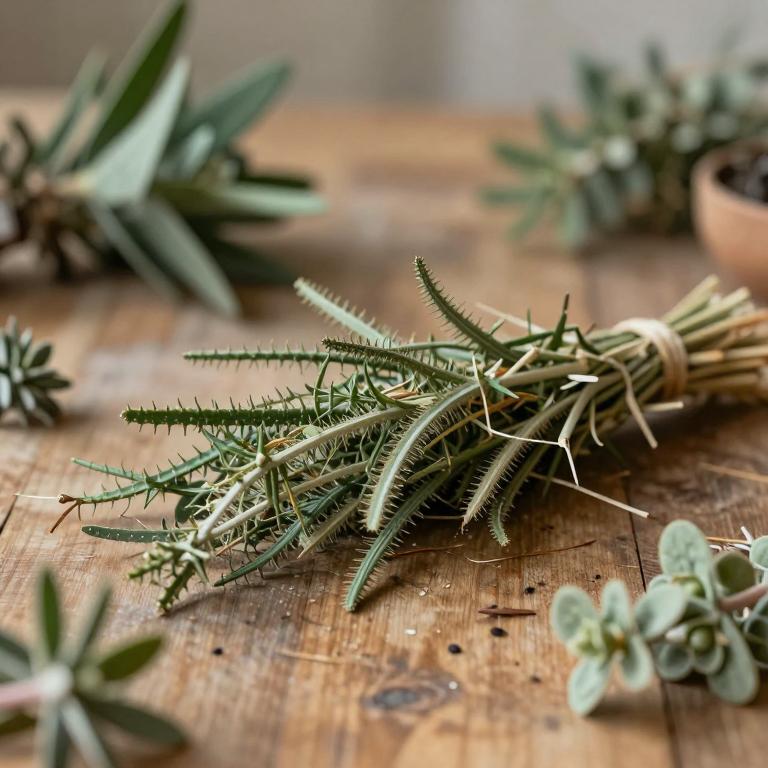
Names and Synonyms
Common Names
- elephant-bush
- Common Spekboom
- Elephant Food
- Elephant bush
- Elephant's Food
- Elephant-Food
- Porkbush
Scientific Names
Accepted name
Portulacaria afraSynonyms
- Portulacaria afra f. variegata
- Portulacaria afra f. macrophylla
- Portulacaria afra f. microphylla
- Crassula portulacaria
- Crassula portulacastrum
- Claytonia portulacaria
Regional and Traditional Names
Spanish:
- Jade
- Árbol africano de la abundancia
German:
- Speckbaum
French:
- Portulacaria
- pourpier en arbre
Sources: Wikidata, Catalogue of Life
Taxonomical Classification
This plant belongs to the kingdom Plantae and is classified within the phylum Streptophyta and the class Equisetopsida. As a member of the subclass Magnoliidae and the order Caryophyllales, it is further categorized under the family Didieraceae. Finally, its specific taxonomic placement is defined by the genus Portulacaria.
| Rank | Classification |
|---|---|
| Kingdom | Plantae |
| Phylum | Streptophyta |
| Class | Equisetopsida |
| Subclass | Magnoliidae |
| Order | Caryophyllales |
| Family | Didiereaceae |
| Genus | Portulacaria |
Sources: The World Checklist of Vascular Plants (WCVP)
Distribution
This plant exhibits a wide geographical distribution spanning across several continents. In Europe, it can be found in Spain within the southwestern region and in Sicilia throughout the southeast. Its presence extends into East Tropical Africa, specifically within the borders of Kenya. Additionally, it is located in Mozambique, which is part of South Tropical Africa. Finally, the species is also distributed across the Cape Provinces in Southern Africa.
| Region | Area |
|---|---|
| Southwestern Europe | Spain |
| Southeastern Europe | Sicilia |
| East Tropical Africa | Kenya |
| South Tropical Africa | Mozambique |
| Southern Africa | Cape Provinces |
| Southern Africa | KwaZulu-Natal |
| Southern Africa | Eswatini |
| Southern Africa | Northern Provinces |
Sources: The World Checklist of Vascular Plants (WCVP)
Botanical Identification
Ecology
The ecology of Portulacaria afra is characterized by its remarkable adaptability to diverse environmental conditions, allowing it to thrive across a broad altitudinal gradient. This succulent species is found inhabiting landscapes ranging from sea level up to a maximum elevation of 1400 m AMSL. Its distribution spans from coastal lowlands to more elevated terrains, where it frequently occupies rocky outcrops, scrublands, and semi-arid environments. The plant is particularly well-adapted to nutrient-poor soils and can withstand varying levels of moisture availability, making it a resilient component of its native ecosystems. Its ability to colonize such a wide elevational range—from 0 m AMSL to 1400 m AMSL—underscores its physiological flexibility in responding to the shifting climatic and topographical nuances of its habitat.
- Elevational range max:
- 1400 m AMSL
- Elevational range min:
- 0 m AMSL
Life history
The life history of Portulacaria afra is characterized by a perennial lifecycle, allowing the plant to persist through multiple growing seasons. It exhibits a complex growth habit that can be classified under different life forms depending on environmental conditions and structural development, ranging from a phanerophyte to a nanophanerophyte. Furthermore, the plant maintains an evergreen deciduousness, ensuring that its foliage remains functional throughout the year without the seasonal shedding of leaves typical of deciduous species.
- Deciduousness :
- evergreen
- Life form :
- nanophanerophyte
- Life form :
- phanerophyte
- Lifecycle :
- perennial
Morphology
The morphology of Portulacaria afra is characterized by its growth form as a woody shrub that functions as a self-supporting plant. It is a terrestrial species, existing independently rather than as a parasite or an epiphyte. In terms of stature, the plant exhibits significant vertical development, with a height that typically ranges from a minimum of 1 m to a maximum of 4.5 m, maintaining an average plant height of approximately 2.5 m.
- Aquatic :
- terrestrial
- Climber :
- self-supporting
- Epiphyte :
- terrestrial
- Growth form :
- shrub
- Parasite :
- independent
- Plant height max:
- 4.5 m
- Plant height mean:
- 2.5 m
- Plant height min:
- 1 m
- Woodiness :
- woody
Physiology
The physiology of Portulacaria afra is characterized by its specific metabolic and nutritional adaptations, most notably its utilization of the C3 photosynthetic pathway to facilitate carbon fixation. Unlike some succulent species that employ Crassulacean Acid Metabolism (CAM) to conserve water, this plant operates via C3 metabolism, which dictates its gas exchange patterns and energy conversion processes. In terms of nutrient cycling and soil interaction, the species does not function as a nitrogen fixer, meaning it lacks the symbiotic relationship with diazotrophic bacteria required to convert atmospheric nitrogen into bioavailable forms; instead, it relies on the uptake of nitrogenous compounds directly from the soil substrate to support its growth and cellular functions.
- Nitrogen fixer :
- no
- Photosynthetic pathway :
- C3
Reproduction
The reproduction of Portulacaria afra is characterized by a predominantly biotic pollination syndrome, relying on living organisms rather than abiotic factors to facilitate genetic exchange. Specifically, the plant exhibits a pollination syndrome driven by insects, which serves as the primary mechanism for transferring pollen between flowers. This insect-mediated process is diverse, involving a variety of pollinators such as bees, beetles, ants, butterflies, moths, and flies, all of which contribute to the plant's reproductive success through biotic interaction.
- Pollination syndrome :
- insect
- Pollination syndrome :
- biotic
Sources: Global Inventory of Floras and Traits (GIFT)
Plant Parts
Portulacaria afra has 1 reported plant parts identified across 1 scientific publications and several other databases that are studied for medicinal purposes. The most consistently reported plant part include leaf.
| Plant part | Supporting sources | Consensus |
|---|---|---|
| Leaf | 1 supporting sources | ★☆☆☆☆ |
Leaf
- Pakistan journal of biological sciences : PJBS
Chemicals
Portulacaria afra has 9 reported phytochemicals identified across 1 scientific publications and several other databases. The most consistently reported chemicals include Alkanes, Alkenes, Esters, Fatty acids, Flavonoids.
| Chemical | Supporting sources | Consensus |
|---|---|---|
| Alkanes | 1 supporting sources | ★☆☆☆☆ |
| Alkenes | 1 supporting sources | ★☆☆☆☆ |
| Esters | 1 supporting sources | ★☆☆☆☆ |
| Fatty acids | 1 supporting sources | ★☆☆☆☆ |
| Flavonoids | 1 supporting sources | ★☆☆☆☆ |
| Phenanthrenes | 1 supporting sources | ★☆☆☆☆ |
| Phenols | 1 supporting sources | ★☆☆☆☆ |
| Steroids | 1 supporting sources | ★☆☆☆☆ |
| triterpenoids | 1 supporting sources | ★☆☆☆☆ |
Alkanes
- Pakistan journal of biological sciences : PJBS
Alkenes
- Pakistan journal of biological sciences : PJBS
Esters
- Pakistan journal of biological sciences : PJBS
Fatty acids
- Pakistan journal of biological sciences : PJBS
Flavonoids
- Pakistan journal of biological sciences : PJBS
Phenanthrenes
- Pakistan journal of biological sciences : PJBS
Phenols
- Pakistan journal of biological sciences : PJBS
Steroids
- Pakistan journal of biological sciences : PJBS
triterpenoids
- Pakistan journal of biological sciences : PJBS
Activities
Portulacaria afra has 6 reported activities identified across 1 scientific publications and several other databases. The most consistently reported activities include Analgesic, Antibacterial, Antidiabetic, Antifungal, Antioxidant.
| Activity | Supporting sources | Consensus |
|---|---|---|
| Analgesic | 1 supporting sources | ★☆☆☆☆ |
| Antibacterial | 1 supporting sources | ★☆☆☆☆ |
| Antidiabetic | 1 supporting sources | ★☆☆☆☆ |
| Antifungal | 1 supporting sources | ★☆☆☆☆ |
| Antioxidant | 1 supporting sources | ★☆☆☆☆ |
| Antiplasmodial | 1 supporting sources | ★☆☆☆☆ |
Analgesic
- Pakistan journal of biological sciences : PJBS
Antibacterial
- Pakistan journal of biological sciences : PJBS
Antidiabetic
- Pakistan journal of biological sciences : PJBS
Antifungal
- Pakistan journal of biological sciences : PJBS
Antioxidant
- Pakistan journal of biological sciences : PJBS
Antiplasmodial
- Pakistan journal of biological sciences : PJBS
Conditions
Portulacaria afra has 8 reported investigations on conditions identified across 1 scientific publications and several other databases. The most consistently reported conditions include diarrhea, earaches, fever, hypertension, mouth ulcers.
| Condition | Supporting sources | Consensus |
|---|---|---|
| Diarrhea | 1 supporting sources | ★☆☆☆☆ |
| Earaches | 1 supporting sources | ★☆☆☆☆ |
| Fever | 1 supporting sources | ★☆☆☆☆ |
| Hypertension | 1 supporting sources | ★☆☆☆☆ |
| Mouth ulcers | 1 supporting sources | ★☆☆☆☆ |
| Pain | 1 supporting sources | ★☆☆☆☆ |
| Respiratory infections | 1 supporting sources | ★☆☆☆☆ |
| Wounds | 1 supporting sources | ★☆☆☆☆ |
Diarrhea
- Pakistan journal of biological sciences : PJBS
Earaches
- Pakistan journal of biological sciences : PJBS
Fever
- Pakistan journal of biological sciences : PJBS
Hypertension
- Pakistan journal of biological sciences : PJBS
Mouth ulcers
- Pakistan journal of biological sciences : PJBS
Pain
- Pakistan journal of biological sciences : PJBS
Respiratory infections
- Pakistan journal of biological sciences : PJBS
Wounds
- Pakistan journal of biological sciences : PJBS
Preparations
Portulacaria afra has 2 reported preparations identified across 1 scientific publications and several other databases. The most consistently reported preparations include crude extracts, eaten raw.
| Preparation | Supporting sources | Consensus |
|---|---|---|
| Crude extracts | 1 supporting sources | ★☆☆☆☆ |
| Eaten raw | 1 supporting sources | ★☆☆☆☆ |
Crude extracts
- Pakistan journal of biological sciences : PJBS
Eaten raw
- Pakistan journal of biological sciences : PJBS