odora
Porophyllum gracile · Accepted scientific name
Scientific literature: Very Sparse (13 studies) · ★☆☆☆☆
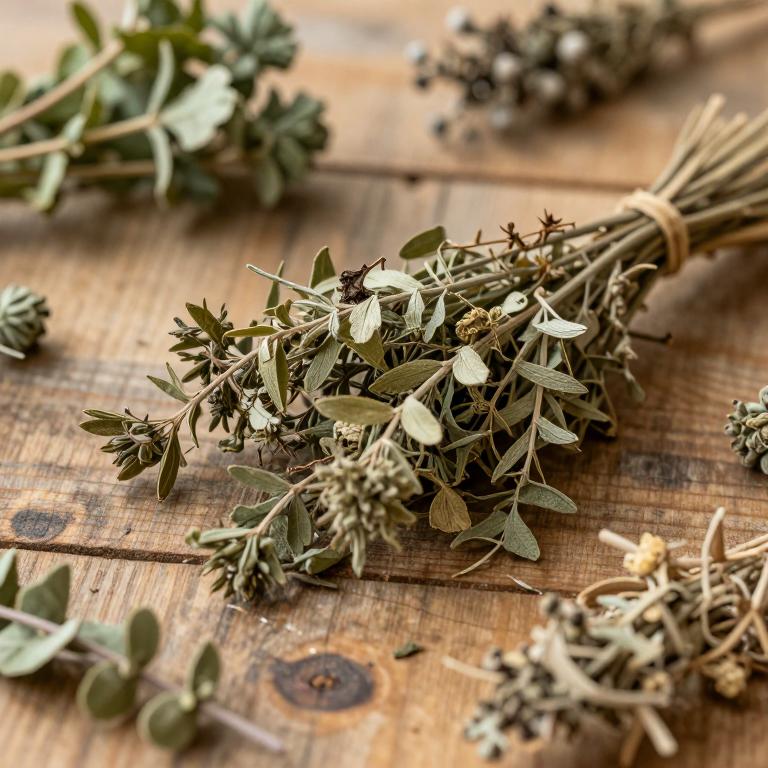
Odora, scientifically known as Porophyllum gracile, is a fragrant, aromatic herb native to diverse regions of the Americas. Often recognized by its distinct, pungent scent, this plant holds significant ethnobotanical value. It is frequently utilized in traditional medicine for its diverse therapeutic properties and unique chemical profile.
- Family
- Asteraceae
- Native range
- Northern America
- Parts used
- Leaf · Stem
- Common names
- Odora · Slender Poreleaf
- Scientific synonyms
- Porophyllum Vaseyi · Porophyllum Junciforme · 9 more
Names and Synonyms
Common Names
- odora
- Slender Poreleaf
Scientific Names
Accepted name
Porophyllum gracileSynonyms
- Porophyllum vaseyi
- Porophyllum junciforme
- Porophyllum leucospermum
- Porophyllum nodosum
- Porophyllum caesium
- Porophyllum ochroleucum
- Porophyllum pinifolium
- Porophyllum putidum
- Porophyllum cedrense
- Porophyllum confertum
- Porophyllum confertum var. ochroleucum
Regional and Traditional Names
Spanish:
- hierba de venado
Sources: Wikidata, Catalogue of Life
Taxonomical Classification
This plant belongs to the kingdom Plantae and the phylum Streptophyta, falling under the class Equisetopsida and subclass Magnoliidae. Within the order Asterales, it is classified under the family Asteraceae and is specifically identified by the genus Porophyllum.
| Rank | Classification |
|---|---|
| Kingdom | Plantae |
| Phylum | Streptophyta |
| Class | Equisetopsida |
| Subclass | Magnoliidae |
| Order | Asterales |
| Family | Asteraceae |
| Genus | Porophyllum |
Sources: The World Checklist of Vascular Plants (WCVP)
Distribution
This plant exhibits a broad distribution across several key regions in North America. In the Southwestern United States, it can be found growing in both Arizona and California. Its presence extends into the South-Central United States, specifically within the states of New Mexico and Texas. Moving southward, the species is also established in the northeastern parts of Mexico. Together, these areas define the natural range of this medicinal species.
| Region | Area |
|---|---|
| Southwestern U.S.A. | Arizona |
| Southwestern U.S.A. | California |
| South-Central U.S.A. | New Mexico |
| South-Central U.S.A. | Texas |
| Mexico | Mexico Northeast |
| Mexico | Mexico Northwest |
Sources: The World Checklist of Vascular Plants (WCVP)
Botanical Identification
Life history
The life history of Porophyllum gracile is characterized by its status as a perennial organism, though its growth pattern can exhibit variability depending on environmental conditions. As a perennial, the plant is capable of surviving for multiple growing seasons, often establishing a persistent root system that allows it to regrow after periods of dormancy or seasonal stress. Throughout its life cycle, it undergoes distinct vegetative and reproductive phases, transitioning from initial seedling establishment to a mature state where it produces flowering structures to ensure genetic continuity. This perennial nature provides the plant with a competitive advantage in its natural habitat, allowing it to persist through varying climatic fluctuations rather than completing its cycle in a single season.
- Lifecycle :
- perennial
Morphology
The morphology of Porophyllum gracile is characterized by a growth form that functions primarily as a subshrub and a herb, exhibiting a woody texture in its structure. It is a self-supporting plant, lacking the characteristics of a climber, liana, or vine, as it maintains an upright, non-obligatory stance. The species is classified as terrestrial in its habitat, functioning as an independent organism rather than an obligatory or facultative parasite, and it does not exhibit epiphytic behavior, remaining strictly terrestrial in its ecological niche.
- Aquatic :
- terrestrial
- Climber :
- self-supporting
- Epiphyte :
- terrestrial
- Growth form :
- herb
- Growth form :
- subshrub
- Parasite :
- independent
- Woodiness :
- woody
Physiology
The physiology of Porophyllum gracile is fundamentally characterized by its carbon fixation strategy, utilizing a C3 photosynthetic pathway to convert light energy into chemical energy. Under this metabolic framework, the plant undergoes the Calvin cycle directly within the mesophyll cells, where the enzyme RuBisCO facilitates the initial carboxylation of ribulose-1,5-bisphosphate. This C3 mechanism dictates the plant's water-use efficiency and transpiration rates, as it lacks the specialized Kranz anatomy or temporal separation of gas exchange found in C4 or CAM species. Consequently, its physiological performance, including growth rates and stomatal conductance, is closely tied to environmental factors such as ambient CO2 concentrations and temperature, which influence the efficiency of photorespiration within its leaf tissues.
- Photosynthetic pathway :
- C3
Reproduction
The reproduction of Porophyllum gracile is characterized by the production of small seeds with a mean mass of 0.000685 g, though individual seed weights vary between a minimum of 0.0005 g and a maximum of 0.00102 g. The dispersal of these seeds follows an anemochorous syndrome, relying on wind currents to facilitate the movement and colonization of new habitats.
- Dispersal syndrome :
- anemochorous
- Seed mass max:
- 0.00102 g
- Seed mass mean:
- 0.000685 g
- Seed mass min:
- 5e-04 g
Sources: Global Inventory of Floras and Traits (GIFT)
Plant Parts
Porophyllum gracile has 2 reported plant parts identified across 2 scientific publications and several other databases that are studied for medicinal purposes. The most consistently reported plant part include leaf, stem.
| Plant part | Supporting sources | Consensus |
|---|---|---|
| Leaf | 1 supporting sources | ★☆☆☆☆ |
| Stem | 1 supporting sources | ★☆☆☆☆ |
Leaf
- International journal of molecular sciences
Stem
- International journal of molecular sciences
Chemicals
Porophyllum gracile has 5 reported phytochemicals identified across 2 scientific publications and several other databases. The most consistently reported chemicals include Alcohols, Fatty acids, Terpenes, aldehydes, ketones.
| Chemical | Supporting sources | Consensus |
|---|---|---|
| Alcohols | 1 supporting sources | ★☆☆☆☆ |
| Fatty acids | 1 supporting sources | ★☆☆☆☆ |
| Terpenes | 1 supporting sources | ★☆☆☆☆ |
| aldehydes | 1 supporting sources | ★☆☆☆☆ |
| ketones | 1 supporting sources | ★☆☆☆☆ |
Alcohols
- International journal of molecular sciences
Fatty acids
- International journal of molecular sciences
Terpenes
- International journal of molecular sciences
aldehydes
- International journal of molecular sciences
ketones
- International journal of molecular sciences
Conditions
Porophyllum gracile has 1 reported investigations on conditions identified across 2 scientific publications and several other databases. The most consistently reported conditions include oxidative stress.
| Condition | Supporting sources | Consensus |
|---|---|---|
| Oxidative stress | 1 supporting sources | ★☆☆☆☆ |
Oxidative stress
- International journal of molecular sciences
Preparations
Porophyllum gracile has 2 reported preparations identified across 2 scientific publications and several other databases. The most consistently reported preparations include dried leaves and stems, hexane and ethanolic extracts from leaves and stems.
| Preparation | Supporting sources | Consensus |
|---|---|---|
| Dried leaves and stems | 1 supporting sources | ★☆☆☆☆ |
| Hexane and ethanolic extracts from leaves and stems | 1 supporting sources | ★☆☆☆☆ |
Dried leaves and stems
- International journal of molecular sciences
Hexane and ethanolic extracts from leaves and stems
- International journal of molecular sciences