the poplar and aspen genus
Populus · Accepted scientific name
Scientific literature: Very Sparse (28 studies) · ★☆☆☆☆
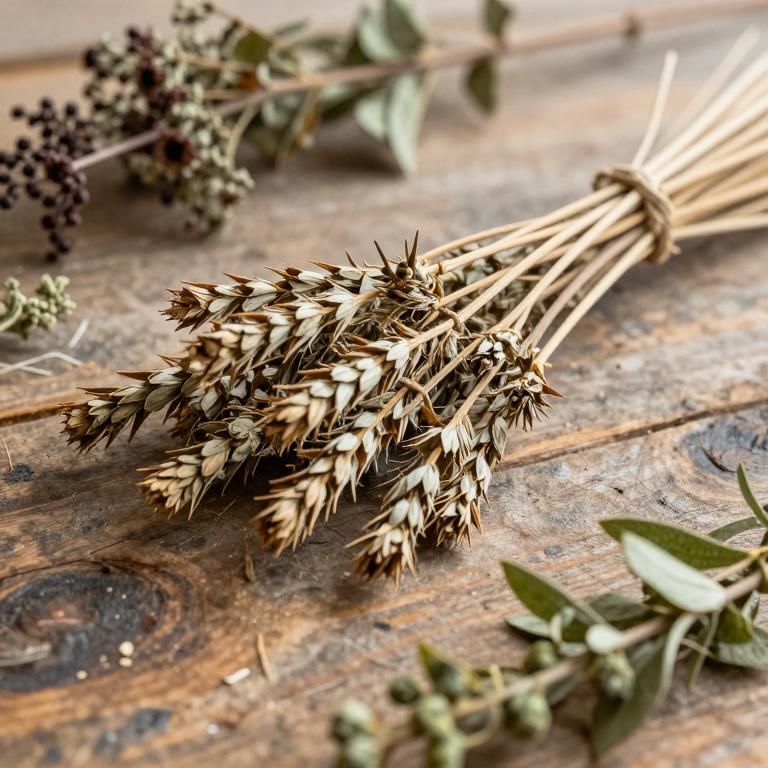
The poplar and aspen genus, scientifically known as Populace, is a versatile group of deciduous trees renowned for their therapeutic potential. Historically utilized in traditional medicine, these plants contain salicin, a precursor to salicylic acid, offering natural anti-inflammatory and analgesic properties essential for soothing pain and reducing systemic fever.
Names and Synonyms
Common Names
- aspen
- cottonwood
- poplar
- cottonwoods
Scientific Names
Accepted name
PopulusSynonyms
- Tacamahaca
- Turanga
- Monilistus
- Aigiros
- Tsavo
- Tremula
- Leuce
- Balsamiflua
- Octima
Regional and Traditional Names
Spanish:
- choped
- Chopos
- Álamo
- Alamo
- Álamos
German:
- Pappeln
- Pappel
- Pappeln
French:
- peuplier
- peupliers
- Peuplier
Sources: Wikidata, Catalogue of Life
Taxonomical Classification
This plant belongs to the kingdom Plantae and the phylum Streptophyta, placing it within the class Equisetopsida and subclass Magnoliidae. It is further categorized under the order Malpighiales and the family Salicaceae. Ultimately, this medicinal species is classified under the genus Populus.
| Rank | Classification |
|---|---|
| Kingdom | Plantae |
| Phylum | Streptophyta |
| Class | Equisetopsida |
| Subclass | Magnoliidae |
| Order | Malpighiales |
| Family | Salicaceae |
| Genus | Populus |
Sources: The World Checklist of Vascular Plants (WCVP)
Distribution
This plant, known as Populus, exhibits a specific distribution across several regions in Northern Europe. It can be found growing within the borders of Denmark. Additionally, its presence extends to the northern territories of Finland. The species is also documented throughout Great Britain and Ireland. Finally, the geographical range of this medicinal plant includes the landscapes of Norway.
| Region | Area |
|---|---|
| Northern Europe | Denmark |
| Northern Europe | Finland |
| Northern Europe | Great Britain |
| Northern Europe | Ireland |
| Northern Europe | Norway |
| Northern Europe | Sweden |
| Middle Europe | Austria |
| Middle Europe | Belgium |
| Middle Europe | Czechia-Slovakia |
| Middle Europe | Germany |
Sources: The World Checklist of Vascular Plants (WCVP)
Chemicals
Populus has 17 reported phytochemicals identified across 0 scientific publications and several other databases. The most consistently reported chemicals include LIGNIN, Galangin, Pinocembrin, 3-O-acetyl pinobanksin, CATECHIN.
| Chemical | Supporting sources | Consensus |
|---|---|---|
| LIGNIN | 3 supporting sources | ★★☆☆☆ |
| Galangin | 2 supporting sources | ★☆☆☆☆ |
| Pinocembrin | 2 supporting sources | ★☆☆☆☆ |
| 3-O-acetyl pinobanksin | 1 supporting sources | ★☆☆☆☆ |
| CATECHIN | 1 supporting sources | ★☆☆☆☆ |
| Caffeic acid phenethyl ester | 1 supporting sources | ★☆☆☆☆ |
| Caffeoyl-coenzyme A | 1 supporting sources | ★☆☆☆☆ |
| Epicatechin | 1 supporting sources | ★☆☆☆☆ |
| Epigallocatechin | 1 supporting sources | ★☆☆☆☆ |
| Gallocatechin | 1 supporting sources | ★☆☆☆☆ |
LIGNIN
- Physiologia plantarum
- Scientific reports
- Bioresource technology
Galangin
- Molecules (Basel, Switzerland)
- Biomolecules
Pinocembrin
- Molecules (Basel, Switzerland)
- Biomolecules
3-O-acetyl pinobanksin
- Biomolecules
CATECHIN
- Frontiers in plant science
Caffeic acid phenethyl ester
- Molecules (Basel, Switzerland)
Caffeoyl-coenzyme A
- Physiologia plantarum
Epicatechin
- Frontiers in plant science
Epigallocatechin
- Frontiers in plant science
Gallocatechin
- Frontiers in plant science
Activities
Populus has 1 reported activities identified across 0 scientific publications and several other databases. The most consistently reported activities include Antimicrobial.
| Activity | Supporting sources | Consensus |
|---|---|---|
| Antimicrobial | 1 supporting sources | ★☆☆☆☆ |
Antimicrobial
- Pathogens (Basel, Switzerland)
Conditions
Populus has 5 reported investigations on conditions identified across 0 scientific publications and several other databases. The most consistently reported conditions include Helicobacter pylori, cough, peptic ulcers, stomach cancer, yeasts.
| Condition | Supporting sources | Consensus |
|---|---|---|
| Helicobacter pylori | 1 supporting sources | ★☆☆☆☆ |
| Cough | 1 supporting sources | ★☆☆☆☆ |
| Peptic ulcers | 1 supporting sources | ★☆☆☆☆ |
| Stomach cancer | 1 supporting sources | ★☆☆☆☆ |
| Yeasts | 1 supporting sources | ★☆☆☆☆ |
Helicobacter pylori
- Pathogens (Basel, Switzerland)
Cough
- Phytomedicine : international journal of phytotherapy and phytopharmacology
Peptic ulcers
- Pathogens (Basel, Switzerland)
Stomach cancer
- Pathogens (Basel, Switzerland)
Yeasts
- Pathogens (Basel, Switzerland)