Szechuan poplar
Populus szechuanica · Accepted scientific name
Scientific literature: Very Sparse (3 studies) · ★☆☆☆☆
Szechuan poplar, scientifically known as Populus szechuanicus, is a medicinal plant prized in traditional medicine. Often utilized for its bark, it contains bioactive compounds that offer anti-inflammatory and analgesic properties. This versatile species plays a crucial role in treating various ailments, bridging ancient herbal wisdom with modern pharmacological research.
- Family
- Salicaceae
- Native range
- Asia-Temperate
- Parts used
- Not available
- Common names
- Szechuan Poplar
- Scientific synonyms
- Populus Violascens
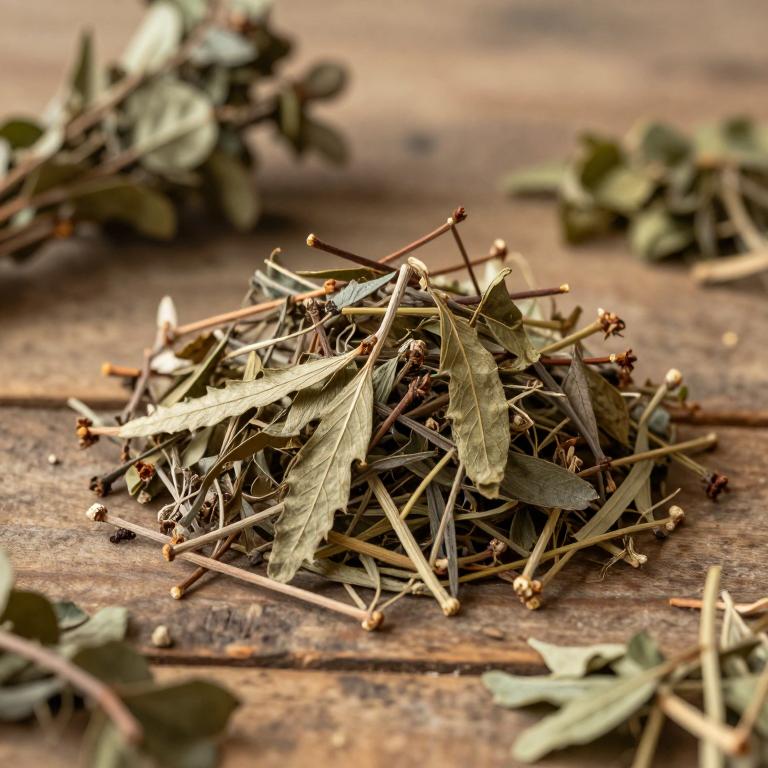
Names and Synonyms
Common Names
- Szechuan poplar
Scientific Names
Accepted name
Populus szechuanicaSynonyms
- Populus violascens
Regional and Traditional Names
German:
- Chinesische Balsam-Pappel
- chinesische Balsam-Pappel
Sources: Wikidata, Catalogue of Life
Taxonomical Classification
This plant belongs to the kingdom Plantae and the phylum Streptophyta, falling under the class Equisetopsida and subclass Magnoliidae. Within the order Malpighiales and the family Salicaceae, it is further classified under the genus Populus.
| Rank | Classification |
|---|---|
| Kingdom | Plantae |
| Phylum | Streptophyta |
| Class | Equisetopsida |
| Subclass | Magnoliidae |
| Order | Malpighiales |
| Family | Salicaceae |
| Genus | Populus |
Sources: The World Checklist of Vascular Plants (WCVP)
Distribution
This plant is native to several specific regions throughout the vast landscapes of China. Its primary occurrence can be found within the diverse environments of China South-Central. Additionally, the species is widely distributed across the areas of China North-Central. It also inhabits the high-altitude terrains found in Tibet. These specific locations define the natural geographical range of Populus szechuanica.
| Region | Area |
|---|---|
| China | China South-Central |
| China | China North-Central |
| China | Tibet |
Sources: The World Checklist of Vascular Plants (WCVP)
Botanical Identification
Ecology
The ecology of Populus szechuanica is characterized by its ability to inhabit a broad altitudinal gradient across its natural habitat. This species demonstrates significant adaptability to varying mountain environments, maintaining an elevational range that begins at a minimum of 1,100 m AMSL. Within this distribution, the plant thrives across diverse topographical layers, reaching a mean elevation of 2,850 m AMSL. Its ecological tolerance extends to high-altitude zones, with its upper elevational limit recorded at a maximum of 4,600 m AMSL, allowing it to occupy a wide vertical niche within its ecosystem.
- Elevational range max:
- 4600 m AMSL
- Elevational range mean:
- 2850 m AMSL
- Elevational range min:
- 1100 m AMSL
Life history
The life history of Populus szechuanica is characterized by its status as a perennial species, allowing it to establish long-term presence within its natural habitat. As a woody plant, it undergoes a continuous developmental cycle that spans multiple years, avoiding the rapid completion of a life cycle seen in annuals. This perennial nature enables the plant to invest significant energy into structural growth, such as the development of a robust root system and woody stem, which facilitates survival through varying seasonal conditions and provides the resilience necessary for long-term reproductive success.
- Lifecycle :
- perennial
Morphology
The morphology of Populus szechuanica is characterized by its growth form as a tree, exhibiting a robust and woody structure. This species can reach a significant plant height, with a documented mean height of approximately 40 m. Unlike climbing species, it is categorized as self-supporting, maintaining its upright stature through its strong, woody development.
- Climber :
- self-supporting
- Growth form :
- tree
- Plant height mean:
- 40 m
- Woodiness :
- woody
Physiology
The physiology of Populus szechuanica is characterized by distinct morphological dimensions of its foliage, which play a critical role in its photosynthetic capacity and transpiration rates. The leaves exhibit a significant range in size, with a mean leaf length of 15.5 cm, extending from a minimum of 11 cm to a maximum of 20 cm. Correspondingly, the leaf width shows substantial variability, maintaining a mean of 10 cm, with dimensions ranging from a minimum of 5 cm to a maximum of 15 cm. These varying surface area parameters, governed by the interplay between length and width, suggest a physiological adaptability to light interception and moisture regulation within its specific ecological niche.
- Leaf length max:
- 20 cm
- Leaf length mean:
- 15.5 cm
- Leaf length min:
- 11 cm
- Leaf width max:
- 15 cm
- Leaf width mean:
- 10 cm
- Leaf width min:
- 5 cm
Reproduction
The reproduction of Populus sichuanica involves the production of small, capsule-like fruits that play a critical role in its dispersal cycle. These fruits exhibit specific morphological dimensions, with a recorded mean fruit length of 0.8 cm. The variation within the population shows that the fruit length ranges from a minimum of 0.7 cm to a maximum of 0.9 cm. These measurements characterize the size of the reproductive structures used to house and eventually release seeds for the next generation.
- Fruit length max:
- 0.9 cm
- Fruit length mean:
- 0.8 cm
- Fruit length min:
- 0.7 cm
Sources: Global Inventory of Floras and Traits (GIFT)
Chemicals
Populus szechuanica has 1 reported phytochemicals identified across 0 scientific publications and several other databases. The most consistently reported chemicals include Tannin.
| Chemical | Supporting sources | Consensus |
|---|---|---|
| Tannin | 1 supporting sources | ★☆☆☆☆ |
Tannin
- Mitochondrial DNA. Part B, Resources