Pombalia calceolaria
Pombalia calceolaria · Accepted scientific name
Scientific literature: Very Sparse (5 studies) · ★☆☆☆☆
Pombalia calcoleum, scientifically known as Pombaliaceae calceolaria, is a distinctive medicinal plant valued for its unique therapeutic properties. Often found in specific tropical ecosystems, it is traditionally utilized in various herbal remedies to treat inflammatory conditions and support overall wellness, making it a subject of significant ethnobotanical interest.
- Family
- Violaceae
- Native range
- Northern America
- Parts used
- Root
- Common names
- Not available
- Scientific synonyms
- Pombalia Itoubou · Calceolaria Villosissima · 25 more
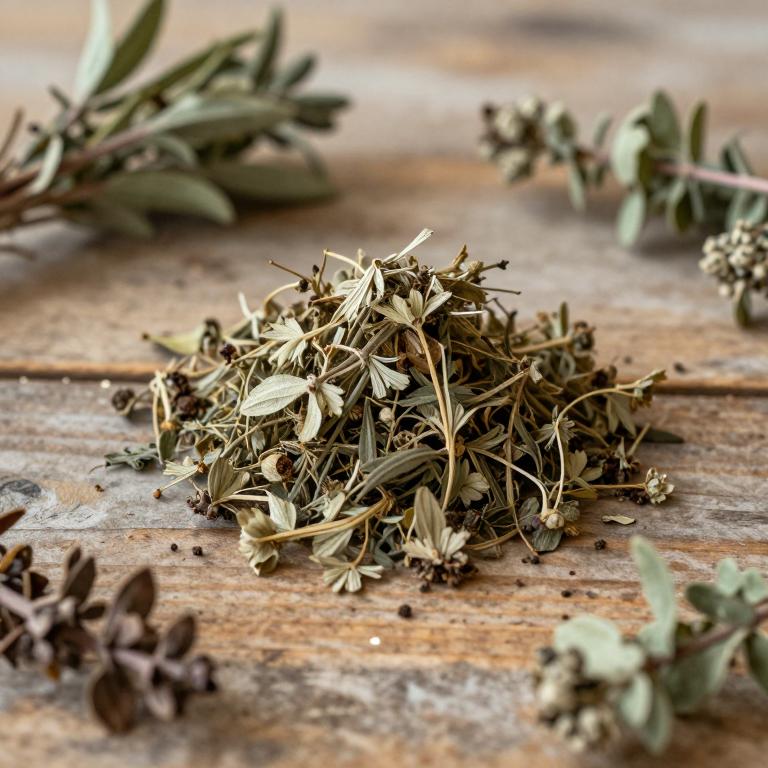
Names and Synonyms
Scientific Names
Accepted name
Pombalia calceolariaSynonyms
- Pombalia itoubou
- Calceolaria villosissima
- Calceolaria ipecacuanha
- Ionidium calceolaria
- Ionidium ipecacuanha
- Ionidium itoubou
- Calceolaria hirsuta
- Ionidium indecorum
- Ionidium ipecacuanha var. glabrum
- Ionidium ipecacuanha f. grandiflora
- Ionidium ipecacuanha var. pubescens
- Viola calceolaria
- Viola loefflingiana
- Viola itoubou
- Viola ipecacuanha
- Solea calceolaria
- Pombalia ipecacuanha
- Solea itoubou
- Solea ipecacuanha
- Ionidium villosissimum
- Ionidium loefflingianum
- Ionidium itubu
- Hybanthus supinus
- Hybanthus villosissimus
- Hybanthus indecorus
- Hybanthus ipecacuanha
- Hybanthus calceolaria
Sources: Wikidata, Catalogue of Life
Taxonomical Classification
This plant, Pombalia calceolaria, belongs to the kingdom Plantae and the phylum Streptophyta. It is classified under the class Equisetopsida and the subclass Magnoliidae, falling within the order Malpighiales. Finally, it is a member of the family Violaceae and the genus Pombalia.
| Rank | Classification |
|---|---|
| Kingdom | Plantae |
| Phylum | Streptophyta |
| Class | Equisetopsida |
| Subclass | Magnoliidae |
| Order | Malpighiales |
| Family | Violaceae |
| Genus | Pombalia |
Sources: The World Checklist of Vascular Plants (WCVP)
Distribution
This plant exhibits a widespread presence across several distinct tropical regions. In Mexico, its range extends through the Gulf coastal areas and into the Southeast. Moving southward into Central America, it can be found in both Belize and Costa Rica. The distribution also reaches the Caribbean islands, specifically within Trinidad and Tobago. Together, these locations highlight the diverse environmental niches inhabited by the species.
| Region | Area |
|---|---|
| Mexico | Mexico Gulf |
| Mexico | Mexico Southeast |
| Central America | Belize |
| Central America | Costa Rica |
| Caribbean | Trinidad-Tobago |
| Caribbean | Venezuelan Antilles |
| Northern South America | French Guiana |
| Northern South America | Guyana |
| Northern South America | Suriname |
| Northern South America | Venezuela |
Sources: The World Checklist of Vascular Plants (WCVP)
Botanical Identification
Ecology
The ecology of Pombalia calceolaria is characterized by its remarkable adaptability to a diverse array of ecosystems, ranging from anthropized areas to highly specialized natural formations. This species thrives in various environments, including the Caatinga (strictu sensu), Campinarana, and the Cerrado (lato sensu), as well as within several forest types such as Seasonal Semi-deciduous Forest, Ombrophilous (Pluvial) Forest, and Terra Firme Forest. Its ability to inhabit distinct hydrological settings is further evidenced by its presence in Gallery Forests, Igapó Forests, and Várzea Forests, alongside coastal Restingas. This wide ecological breadth allows the plant to occupy niches from sea level up to an elevation of 1000 m AMSL, demonstrating a significant tolerance for different soil types and moisture gradients across its range.
- Elevational range max:
- 1000 m AMSL
- Elevational range min:
- 0 m AMSL
- Habitat :
- Área Antrópica, Caatinga (stricto sensu), Campinarana, Cerrado (lato sensu), Floresta Ciliar ou Galeria, Floresta de Igapó, Floresta de Terra Firme, Floresta de Várzea, Floresta Estacional Semidecidual, Floresta Ombrófila (= Floresta Pluvial), Restinga
Life history
The life history of Pombalia calceolaria is characterized by a perennial lifecycle, allowing the plant to persist through multiple growing seasons. In terms of its structural growth strategy, it is classified as a chamaephyte, a life form where the perennating buds are located close to the soil surface, often just above it. This chamaephyte designation is consistent across its morphological categorization, defining its survival strategy and physical presence within its ecological niche.
- Life form :
- chamaephyte
- Lifecycle :
- perennial
Morphology
The morphology of Pombalia calceolaria is characterized by a growth form classified as a herb and a subshrub, reaching an average plant height of approximately 0.4 m. As a non-woody organism, it maintains a self-supporting structure, functioning as a self-supporting plant rather than a liana or vine. The species is strictly terrestrial in its habitat, exhibiting neither aquatic nor epiphytic tendencies, and it lives as an independent organism without parasitic requirements.
- Aquatic :
- terrestrial
- Climber :
- self-supporting
- Epiphyte :
- terrestrial
- Growth form :
- herb
- Growth form :
- subshrub
- Parasite :
- independent
- Plant height mean:
- 0.4 m
- Woodiness :
- non-woody
Physiology
The physiology of Pombia calceolaria is characterized by a standard C3 photosynthetic pathway, utilizing the Calvin cycle to fix atmospheric carbon dioxide through the enzyme RuBisCO. In terms of nutrient cycling and metabolic nitrogen acquisition, the plant does not function as a nitrogen fixer, meaning it relies on the uptake of available nitrates and ammonium from the soil rather than establishing symbiotic relationships with nitrogen-fixing bacteria to convert atmospheric nitrogen into organic forms.
- Nitrogen fixer :
- no
- Photosynthetic pathway :
- C3
Reproduction
The reproduction of Pombalia calceolaria is characterized by the production of highly uniform, minute seeds that play a critical role in its dispersal and establishment. Based on quantitative data, the seed mass is exceptionally consistent, showing no variance across measured samples. The mean seed mass is recorded at 0.00102 g, a value that is identical to both the maximum and minimum recorded seed masses (0.00102 g). This extreme uniformity in seed weight suggests a highly stabilized reproductive strategy, where each individual seed carries a standardized amount of nutrient reserves to support early seedling development.
- Seed mass mean:
- 0.00102 g
Sources: Global Inventory of Floras and Traits (GIFT)
Plant Parts
Pombalia calceolaria has 1 reported plant parts identified across 1 scientific publications and several other databases that are studied for medicinal purposes. The most consistently reported plant part include root.
| Plant part | Supporting sources | Consensus |
|---|---|---|
| Root | 1 supporting sources | ★☆☆☆☆ |
Root
- Journal of natural products
Chemicals
Pombalia calceolaria has 1 reported phytochemicals identified across 1 scientific publications and several other databases. The most consistently reported chemicals include coumarin.
| Chemical | Supporting sources | Consensus |
|---|---|---|
| coumarin | 1 supporting sources | ★☆☆☆☆ |
coumarin
- Journal of ethnopharmacology
Activities
Pombalia calceolaria has 3 reported activities identified across 1 scientific publications and several other databases. The most consistently reported activities include Antiinflammatory, Antinociceptive, Bronchodilator.
| Activity | Supporting sources | Consensus |
|---|---|---|
| Antiinflammatory | 1 supporting sources | ★☆☆☆☆ |
| Antinociceptive | 1 supporting sources | ★☆☆☆☆ |
| Bronchodilator | 1 supporting sources | ★☆☆☆☆ |
Antiinflammatory
- Journal of ethnopharmacology
Antinociceptive
- Journal of ethnopharmacology
Bronchodilator
- Journal of ethnopharmacology
Preparations
Pombalia calceolaria has 1 reported preparations identified across 1 scientific publications and several other databases. The most consistently reported preparations include hydroalcoholic extracts (HAEs).
| Preparation | Supporting sources | Consensus |
|---|---|---|
| Hydroalcoholic extracts (haes) | 1 supporting sources | ★☆☆☆☆ |
Hydroalcoholic extracts (haes)
- Journal of ethnopharmacology