Polystichum luctuosum
Polystichum luctuosum · Accepted scientific name
Scientific literature: Extensive (174 studies) · ★★★★☆
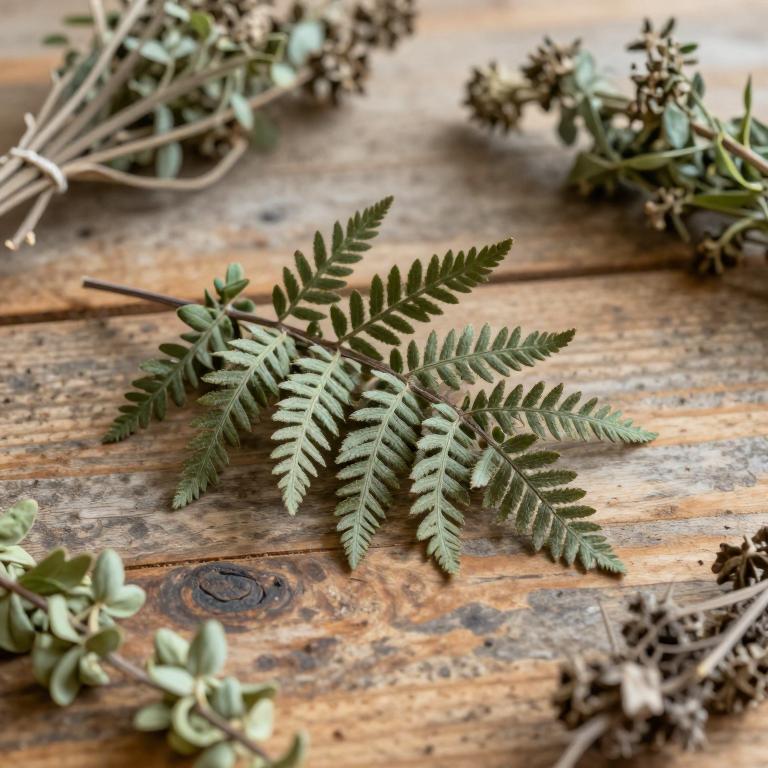
, scientifically known as Polystichum luctuosum, is a resilient fern celebrated for its unique therapeutic potential. Often found in shaded, moist environments, this medicinal plant possesses bioactive compounds used in traditional healing. Understanding its botanical properties offers valuable insights into natural remedies and the diverse world of herbal medicine.
- Family
- Not available
- Native range
- Europe
- Parts used
- Not available
- Common names
- Not available
- Scientific synonyms
- Not available
Names and Synonyms
Scientific Names
Accepted name
Polystichum luctuosumDistribution
This plant exhibits a diverse geographical distribution that spans across multiple continents and climate zones. In Middle Europe, its presence is noted within the borders of Belgium and the Netherlands. Moving toward the southern hemisphere, it can be found in South Tropical Africa, specifically in Zimbabwe. The species also inhabits various regions of Southern Africa, including the Cape Provinces. Finally, its range extends into the mountainous terrain of Lesotho.
| Region | Area |
|---|---|
| Middle Europe | Belgium |
| Middle Europe | Netherlands |
| South Tropical Africa | Zimbabwe |
| Southern Africa | Cape Provinces |
| Southern Africa | Lesotho |
| Southern Africa | KwaZulu-Natal |
| Southern Africa | Free State |
| Southern Africa | Eswatini |
| Southern Africa | Northern Provinces |
| Western Indian Ocean | Madagascar |
Sources: The World Checklist of Vascular Plants (WCVP)
Botanical Identification
Ecology
The ecology of Polystichum luctuosum is characterized by its specific distribution across varying altitudinal gradients, which dictates the environmental conditions and microclimates it inhabits. This species thrives within a distinct elevational range, finding its habitat starting from a minimum altitude of 670 m AMSL and extending up to a maximum altitude of 1740 m AMSL. This vertical distribution suggests an ability to adapt to a variety of montane ecological zones, where it likely interacts with diverse soil compositions, moisture levels, and temperature fluctuations inherent to these shifting elevations.
- Elevational range max:
- 1740 m AMSL
- Elevational range min:
- 670 m AMSL
Life history
The life history of Polystichum lactucum is characterized by a perennial lifecycle, allowing the plant to persist across multiple growing seasons. Its structural development follows a cryptophyte life form, which indicates that its regenerative buds are protected below the soil surface or at the soil level. More specifically, the plant functions as a geophyte, relying on specialized underground organs to survive unfavorable environmental conditions and ensure its long-term survival within its habitat.
- Life form :
- geophyte
- Life form :
- cryptophyte
- Lifecycle :
- perennial
Morphology
The morphology of Polystichum luctuosum is characterized by a low-growing growth form, specifically classified as a non-woody herb and forb. This plant typically reaches a height ranging from a minimum of 0.3 m to a maximum of 0.44 m. It functions as a self-supporting organism, exhibiting a growth habit that does not require climbing or liana-like structures, and it operates as an independent species rather than a parasite. While it displays a terrestrial nature in terms of its epiphytic tendencies, its habitat adaptability spans aquatic, semiaquatic, and terrestrial environments.
- Aquatic :
- terrestrial
- Climber :
- self-supporting
- Epiphyte :
- terrestrial
- Growth form :
- herb
- Growth form :
- forb
- Parasite :
- independent
- Plant height max:
- 0.44 m
- Plant height min:
- 0.3 m
- Woodiness :
- non-woody
Sources: Global Inventory of Floras and Traits (GIFT)
Chemicals
Polystichum luctuosum has 20 reported phytochemicals identified across 0 scientific publications and several other databases. The most consistently reported chemicals include ARSENIC, BARIUM, BROMINE, CALCIUM, CHROMIUM.
| Chemical | Supporting sources | Consensus |
|---|---|---|
| ARSENIC | 1 supporting sources | ★☆☆☆☆ |
| BARIUM | 1 supporting sources | ★☆☆☆☆ |
| BROMINE | 1 supporting sources | ★☆☆☆☆ |
| CALCIUM | 1 supporting sources | ★☆☆☆☆ |
| CHROMIUM | 1 supporting sources | ★☆☆☆☆ |
| COPPER | 1 supporting sources | ★☆☆☆☆ |
| Chlorine- | 1 supporting sources | ★☆☆☆☆ |
| IRON | 1 supporting sources | ★☆☆☆☆ |
| LEAD | 1 supporting sources | ★☆☆☆☆ |
| MANGANESE | 1 supporting sources | ★☆☆☆☆ |
ARSENIC
- Dr. Duke
BARIUM
- Dr. Duke
BROMINE
- Dr. Duke
CALCIUM
- Dr. Duke
CHROMIUM
- Dr. Duke
COPPER
- Dr. Duke
Chlorine-
- Dr. Duke
IRON
- Dr. Duke
LEAD
- Dr. Duke
MANGANESE
- Dr. Duke
Activities
Polystichum luctuosum has 154 reported activities identified across 0 scientific publications and several other databases. The most consistently reported activities include ACE-Inhibitor, Acarifuge, Acnegenic, Amphiglycemic?, Analgesic.
| Activity | Supporting sources | Consensus |
|---|---|---|
| ACE-Inhibitor | 1 supporting sources | ★☆☆☆☆ |
| Acarifuge | 1 supporting sources | ★☆☆☆☆ |
| Acnegenic | 1 supporting sources | ★☆☆☆☆ |
| Amphiglycemic? | 1 supporting sources | ★☆☆☆☆ |
| Analgesic | 1 supporting sources | ★☆☆☆☆ |
| Angiotensin-Receptor-Blocker | 1 supporting sources | ★☆☆☆☆ |
| Anorexic | 1 supporting sources | ★☆☆☆☆ |
| AntiAGE | 1 supporting sources | ★☆☆☆☆ |
| AntiBPH | 1 supporting sources | ★☆☆☆☆ |
| AntiCFS | 1 supporting sources | ★☆☆☆☆ |
ACE-Inhibitor
- Dr. Duke
Acarifuge
- Dr. Duke
Acnegenic
- Dr. Duke
Amphiglycemic?
- Dr. Duke
Analgesic
- Dr. Duke
Angiotensin-Receptor-Blocker
- Dr. Duke
Anorexic
- Dr. Duke
AntiAGE
- Dr. Duke
AntiBPH
- Dr. Duke
AntiCFS
- Dr. Duke