coffeetree
Polyscias guilfoylei · Accepted scientific name
Scientific literature: Very Sparse (10 studies) · ★☆☆☆☆
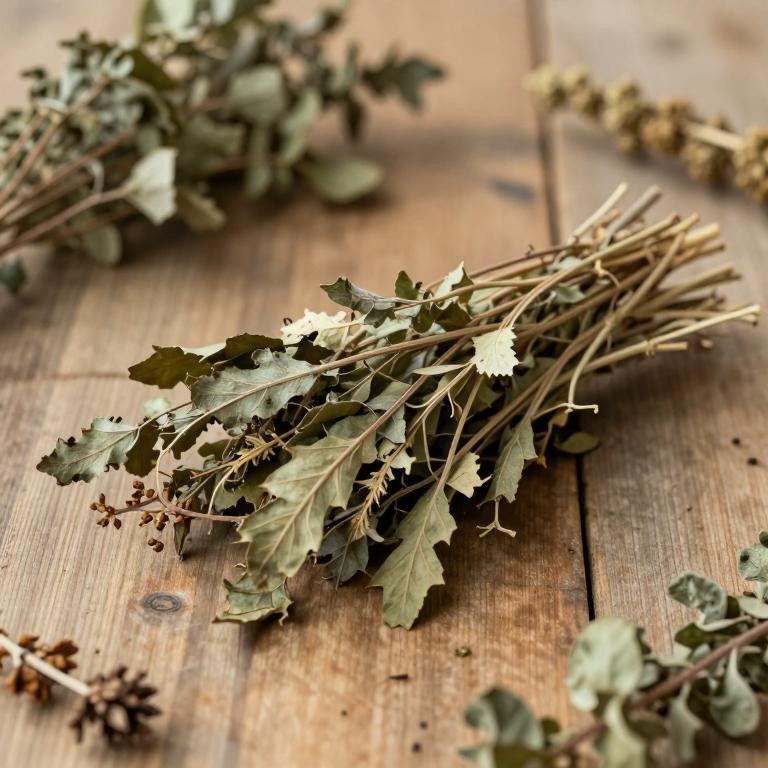
Coffeetree, scientifically known as Polyscias guilfoylei, is a resilient ornamental plant prized for its lush, striking foliage. Beyond its aesthetic appeal in tropical landscapes, it holds significant potential in traditional medicine. This hardy species is often explored for its bioactive properties, offering promising insights into natural therapeutic applications.
Names and Synonyms
Common Names
- coffeetree
- geranium-leaf aralia
- wild coffee
- Lace Aralia
Scientific Names
Accepted name
Polyscias guilfoyleiSynonyms
- Aralia laciniata
- Aralia guilfoylei
- Aralia maculata
- Aralia monstrosa
- Panax laciniatus
- Polyscias guilfoylei var. laciniata
- Polyscias guilfoylei var. monstrosa
- Panax guilfoylei
- Polyscias guilfoylei var. victoriae
- Panax victoriae
- Nothopanax fruticosus var. victoriae
- Nothopanax guilfoylei
Regional and Traditional Names
Spanish:
- Aralia esqueje
German:
- polynesische Fiederaralie
Sources: Wikidata, Catalogue of Life
Taxonomical Classification
This plant belongs to the kingdom Plantae and is classified within the phylum Streptophyta and class Equisetopsida. Its taxonomic lineage continues through the subclass Magnoliidae and the order Apiales, placing it in the family Araliaceae. Finally, it is identified under the specific genus Polyscias.
| Rank | Classification |
|---|---|
| Kingdom | Plantae |
| Phylum | Streptophyta |
| Class | Equisetopsida |
| Subclass | Magnoliidae |
| Order | Apiales |
| Family | Araliaceae |
| Genus | Polyscias |
Sources: The World Checklist of Vascular Plants (WCVP)
Distribution
This plant exhibits a broad geographical distribution that spans multiple continents and diverse climatic zones. In West Tropical Africa, its presence is recorded within the nation of Guinea. Its range extends to South Tropical Africa, specifically documented in Mozambique. Within the Western Indian Ocean, the species can be found in the Comoros. Finally, its distribution reaches East Asia, covering the Hainan region and Southeast China.
| Region | Area |
|---|---|
| West Tropical Africa | Guinea |
| South Tropical Africa | Mozambique |
| Western Indian Ocean | Comoros |
| China | Hainan |
| China | China Southeast |
| Indo-China | Thailand |
| Malesia | Maluku |
| Papuasia | Bismarck Archipelago |
| Papuasia | New Guinea |
| Southwestern Pacific | Gilbert Is. |
Sources: The World Checklist of Vascular Plants (WCVP)
Botanical Identification
Ecology
The ecology of Polyscias guilfoylei is characterized by its adaptability to a diverse range of altitudinal gradients, allowing it to thrive across varied topographical landscapes. This species occupies a broad vertical distribution, spanning from sea level up to an elevation of 2000 m AMSL. This extensive elevational range, stretching from 0 m AMSL to 2000 m AMSL, indicates a high degree of environmental tolerance, enabling the plant to inhabit both lowland coastal or riparian zones and higher montane ecosystems. Such a wide altitudinal breadth suggests that the species can withstand fluctuations in temperature, atmospheric pressure, and varying moisture regimes associated with different mountain zones.
- Elevational range max:
- 2000 m AMSL
- Elevational range min:
- 0 m AMSL
Life history
The life history of Polycias guilfoylei is characterized by its status as a perennial plant, ensuring its long-term presence within its ecological niche. As a phanerophyte, its reproductive and vegetative structures are elevated above the ground, while it also exhibits characteristics consistent with a nanophanerophyte, reflecting its specific growth habit and structural complexity. Throughout its life cycle, the plant maintains an evergreen deciduousness, meaning it retains its foliage continuously rather than shedding it seasonally, which allows for ongoing physiological activity.
- Deciduousness :
- evergreen
- Life form :
- nanophanerophyte
- Life form :
- phanerophyte
- Lifecycle :
- perennial
Morphology
The morphology of Polyscias guilfoylei is characterized by a woody growth form that typically manifests as a shrub. This plant reaches a mean height of approximately 4 meters and exhibits a self-supporting structure, meaning it does not function as an obligatory or facultative climber, liana, or vine. It is a terrestrial species, existing as an independent organism rather than acting as a parasite or an epiphyte.
- Aquatic :
- terrestrial
- Climber :
- self-supporting
- Epiphyte :
- terrestrial
- Growth form :
- shrub
- Parasite :
- independent
- Plant height mean:
- 4 m
- Woodiness :
- woody
Physiology
The physiology of Polyscias guilfoylei is characterized by its efficient metabolic processes and adaptations to tropical or subtropical environments, primarily focusing on photosynthesis and nutrient acquisition. As a member of the Araliaceae family, it utilizes a C3 photosynthetic pathway to convert light energy into chemical energy, facilitating rapid vegetative growth and the development of lush, glossy foliage. Its physiological resource management is geared toward moisture retention and efficient transpiration regulation through its leaf cuticle. Regarding its nitrogen metabolism, the plant does not possess the biological mechanisms required to perform symbiotic nitrogen fixation; therefore, it is not a nitrogen fixer and lacks the specialized root nodules or bacterial associations necessary for converting atmospheric nitrogen into usable forms. Instead, it relies on the uptake of nitrates and ammonium from the soil through its vascular system to support its protein synthesis and overall growth requirements.
- Nitrogen fixer :
- no
Sources: Global Inventory of Floras and Traits (GIFT)
Plant Parts
Polyscias guilfoylei has 1 reported plant parts identified across 1 scientific publications and several other databases that are studied for medicinal purposes. The most consistently reported plant part include stem.
| Plant part | Supporting sources | Consensus |
|---|---|---|
| Stem | 1 supporting sources | ★☆☆☆☆ |
Stem
- Molecular diversity
Chemicals
Polyscias guilfoylei has 9 reported phytochemicals identified across 1 scientific publications and several other databases. The most consistently reported chemicals include (+)-Pinoresinol, (+)-Syringaresinol, 5-O-Caffeoylquinic acid, Androseptoside A, Daucosterol.
| Chemical | Supporting sources | Consensus |
|---|---|---|
| (+)-Pinoresinol | 1 supporting sources | ★☆☆☆☆ |
| (+)-Syringaresinol | 1 supporting sources | ★☆☆☆☆ |
| 5-O-Caffeoylquinic acid | 1 supporting sources | ★☆☆☆☆ |
| Androseptoside A | 1 supporting sources | ★☆☆☆☆ |
| Daucosterol | 1 supporting sources | ★☆☆☆☆ |
| Methyl protocatechuate | 1 supporting sources | ★☆☆☆☆ |
| caffeic acid | 1 supporting sources | ★☆☆☆☆ |
| protocatechuic acid | 1 supporting sources | ★☆☆☆☆ |
| quercitrin | 1 supporting sources | ★☆☆☆☆ |
(+)-Pinoresinol
- Molecular diversity
(+)-Syringaresinol
- Molecular diversity
5-O-Caffeoylquinic acid
- Molecular diversity
Androseptoside A
- Molecular diversity
Daucosterol
- Molecular diversity
Methyl protocatechuate
- Molecular diversity
caffeic acid
- Molecular diversity
protocatechuic acid
- Molecular diversity
quercitrin
- Molecular diversity