Polyscias fulva
Polyscias fulva · Accepted scientific name
Scientific literature: Very Sparse (7 studies) · ★☆☆☆☆
Polycias fulva, scientifically known as Polycias fulva, is a versatile medicinal plant native to tropical regions. Renowned for its bioactive properties, it is traditionally utilized in various cultures to treat inflammatory conditions and skin ailments. Exploring its phytochemical profile offers promising insights into developing new natural therapeutic treatments.
- Family
- Araliaceae
- Native range
- Africa
- Parts used
- Leaf · Stem
- Common names
- Not available
- Scientific synonyms
- Botryopanax Fulvus · Polyscias Ferruginea · 13 more
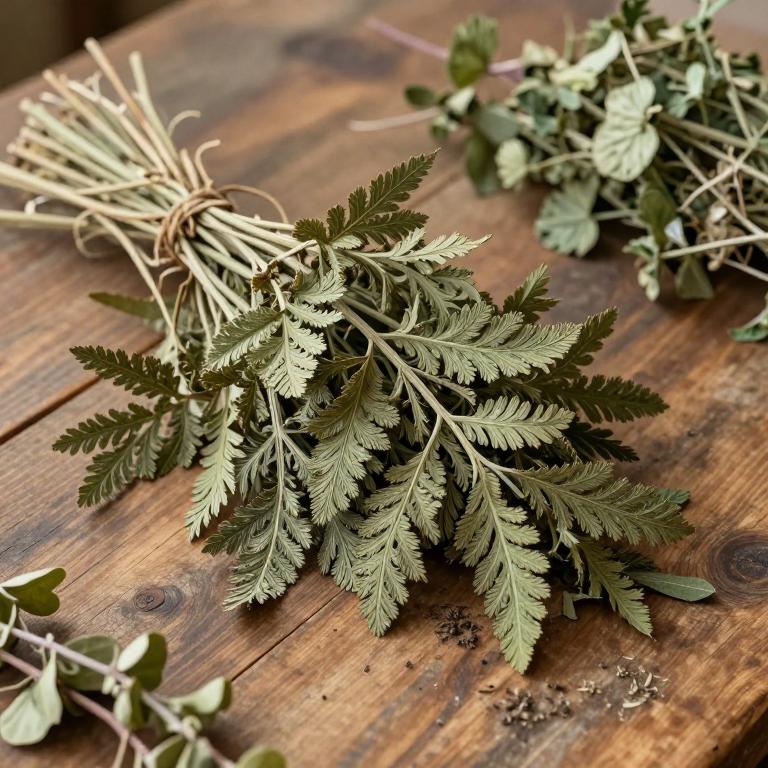
Names and Synonyms
Scientific Names
Accepted name
Polyscias fulvaSynonyms
- Botryopanax fulvus
- Polyscias ferruginea
- Panax nigericus
- Polyscias elliotii
- Panax ferrugineus
- Polyscias polybotrya
- Panax fulvus
- Polyscias preussii
- Sciadopanax fulvus
- Polyscias malosana
- Sciadopanax malosanus
- Sciadopanax polybotrya
- Sciadopanax preussii
- Sciadopanax ferrugineus
- Sciadopanax elliotii
Sources: Wikidata
Taxonomical Classification
This plant belongs to the kingdom Plantae and the phylum Streptophyta, falling under the class Equisetopsida and subclass Magnoliidae. Within the order Apiales, it is classified under the family Araliaceae. Finally, it is identified by the genus Polyscias.
| Rank | Classification |
|---|---|
| Kingdom | Plantae |
| Phylum | Streptophyta |
| Class | Equisetopsida |
| Subclass | Magnoliidae |
| Order | Apiales |
| Family | Araliaceae |
| Genus | Polyscias |
Sources: The World Checklist of Vascular Plants (WCVP)
Distribution
This plant is found across several countries located within the West Tropical Africa region. Its geographical range specifically includes the nation of Benin. It also grows within the territories of Ghana and Guinea. Furthermore, the species can be identified in Liberia. Finally, its distribution extends into Nigeria.
| Region | Area |
|---|---|
| West Tropical Africa | Benin |
| West Tropical Africa | Ghana |
| West Tropical Africa | Guinea |
| West Tropical Africa | Liberia |
| West Tropical Africa | Nigeria |
| West Tropical Africa | Sierra Leone |
| West Tropical Africa | Togo |
| West-Central Tropical Africa | Burundi |
| West-Central Tropical Africa | Cabinda |
| West-Central Tropical Africa | Central African Republic |
Sources: The World Checklist of Vascular Plants (WCVP)
Botanical Identification
Life history
The life history of Polycias fulva is characterized by its status as a perennial plant, ensuring its presence across multiple growing seasons. As a phanerophyte, its reproductive and vegetative structures are elevated above the ground level, a trait reflected in both its classification as a phanerophyte and its specific life form designation. Furthermore, the plant maintains a consistent appearance through its evergreen deciduousness, retaining its foliage throughout the year rather than shedding it seasonally.
- Deciduousness :
- evergreen
- Life form :
- phanerophyte
- Lifecycle :
- perennial
Morphology
The morphology of Polyscias fulva is characterized by its robust growth form, primarily manifesting as a large tree. This woody species exhibits a significant stature, with a height ranging from a minimum of approximately 6.10 meters to a maximum of about 30.48 meters, maintaining an average height of 25 meters. As a self-supporting organism, it does not function as a climber, liana, or vine, nor does it exhibit epiphytic or parasitic tendencies, remaining an independent terrestrial plant. Its structural integrity is defined by its woody nature, supporting its substantial vertical development within its natural habitat.
- Aquatic :
- terrestrial
- Climber :
- self-supporting
- Epiphyte :
- terrestrial
- Growth form :
- tree
- Parasite :
- independent
- Plant height max:
- 30.48037064 m
- Plant height mean:
- 25 m
- Plant height min:
- 6.096074128 m
- Woodiness :
- woody
Physiology
The physiology of Polycias fulva is characterized by a C3 photosynthetic pathway, which dictates its carbon fixation processes and metabolic efficiency within its ecological niche. Morphologically, the plant exhibits specific foliar dimensions, with an average leaf length of 11 cm and an average leaf width of 5.2 cm. These leaves are notably delicate, possessing a mean leaf thickness of only 0.039 mm, a trait that influences its transpiration rates and gas exchange capabilities. Furthermore, the plant does not function as a nitrogen fixer, meaning it relies on the availability of nitrogen within the soil substrate rather than through symbiotic nitrogen-fixing mechanisms.
- Leaf length mean:
- 11 cm
- Leaf thickness mean:
- 0.039 mm
- Leaf width mean:
- 5.2 cm
- Nitrogen fixer :
- no
- Photosynthetic pathway :
- C3
Reproduction
The reproduction of Polycias fulva is characterized by a biotic pollination syndrome, primarily driven by insects, with a specific emphasis on bees as key pollinators. The plant produces fleshy fruits classified as drupes, which are indehiscent in nature. These fruits facilitate zoochorous dispersal, relying on animals to spread the seeds throughout the environment. The seeds themselves are relatively small and consistent in size, with a mean seed mass of 0.004 g and a mean seed length of 4.6 mm. Morphologically, the seeds exhibit a uniform volume of 1.8 mm³, as both the minimum and maximum recorded volumes, as well as the mean volume, are 1.8 mm³. Furthermore, the seeds possess a maximum height and width of 1.8 mm.
- Dehiscence :
- indehiscent
- Dispersal syndrome :
- zoochorous
- Fruit dryness :
- fleshy
- Fruit type :
- drupe
- Pollination syndrome :
- insect
- Pollination syndrome :
- bee
- Pollination syndrome :
- biotic
- Seed height max:
- 1.8 mm
- Seed length mean:
- 4.6 mm
- Seed mass mean:
- 0.004 g
- Seed volume max:
- 1.8 mm³
- Seed width max:
- 1.8 mm
Sources: Global Inventory of Floras and Traits (GIFT)
Plant Parts
Polyscias fulva has 2 reported plant parts identified across 2 scientific publications and several other databases that are studied for medicinal purposes. The most consistently reported plant part include leaf, stem.
| Plant part | Supporting sources | Consensus |
|---|---|---|
| Leaf | 1 supporting sources | ★☆☆☆☆ |
| Stem | 1 supporting sources | ★☆☆☆☆ |
Leaf
- Journal of natural products
Stem
- PloS one
Chemicals
Polyscias fulva has 2 reported phytochemicals identified across 2 scientific publications and several other databases. The most consistently reported chemicals include PFR, alpha-Hederin.
| Chemical | Supporting sources | Consensus |
|---|---|---|
| PFR | 1 supporting sources | ★☆☆☆☆ |
| alpha-Hederin | 1 supporting sources | ★☆☆☆☆ |
PFR
- Journal of ethnopharmacology
alpha-Hederin
- Journal of ethnopharmacology
Activities
Polyscias fulva has 2 reported activities identified across 2 scientific publications and several other databases. The most consistently reported activities include Antioxidant, Cytotoxic.
| Activity | Supporting sources | Consensus |
|---|---|---|
| Antioxidant | 1 supporting sources | ★☆☆☆☆ |
| Cytotoxic | 1 supporting sources | ★☆☆☆☆ |
Antioxidant
- PloS one
Cytotoxic
- Frontiers in pharmacology
Conditions
Polyscias fulva has 1 reported investigations on conditions identified across 2 scientific publications and several other databases. The most consistently reported conditions include Cancer.
| Condition | Supporting sources | Consensus |
|---|---|---|
| Cancer | 1 supporting sources | ★☆☆☆☆ |
Cancer
- Frontiers in pharmacology
Preparations
Polyscias fulva has 4 reported preparations identified across 2 scientific publications and several other databases. The most consistently reported preparations include PF, PFAL, PFR, ethanol extracts of the stem bark.
| Preparation | Supporting sources | Consensus |
|---|---|---|
| Pf | 1 supporting sources | ★☆☆☆☆ |
| Pfal | 1 supporting sources | ★☆☆☆☆ |
| Pfr | 1 supporting sources | ★☆☆☆☆ |
| Ethanol extracts of the stem bark | 1 supporting sources | ★☆☆☆☆ |
Pf
- Journal of ethnopharmacology
Pfal
- Journal of ethnopharmacology
Pfr
- Journal of ethnopharmacology
Ethanol extracts of the stem bark
- PloS one