Polyscias filicifolia
Polyscias filicifolia · Accepted scientific name
Scientific literature: Very Sparse (34 studies) · ★☆☆☆☆
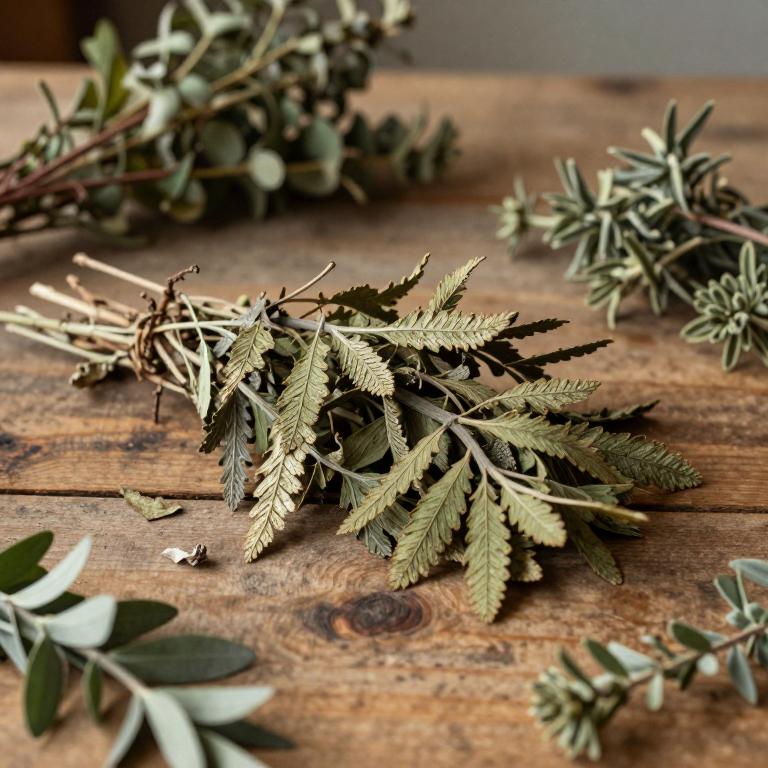
Polyscias filiciifolia, scientifically known as Polyscias filiciifolia, is a versatile medicinal plant celebrated for its diverse therapeutic properties. Often used in traditional herbal medicine, this species offers potential benefits in treating various ailments. Understanding its botanical characteristics and healing applications provides valuable insights into its role in natural wellness.
- Family
- Araliaceae
- Native range
- Asia-Tropical
- Parts used
- Leaf · Root
- Common names
- Not available
- Scientific synonyms
- Aralia Filicifolia · Aralia Spectabilis · 2 more
Names and Synonyms
Scientific Names
Accepted name
Polyscias filicifoliaSynonyms
- Aralia filicifolia
- Aralia spectabilis
- Panax ornatus
- Nothopanax ornatus
Sources: Wikidata, Catalogue of Life
Taxonomical Classification
This plant belongs to the kingdom Plantae and is classified within the phylum Streptophyta and the class Equisetopsida. Following the subclass Magnoliidae, it is further organized under the order Apiales and the family Araliaceae. Finally, its specific taxonomic identification is placed within the genus Polyscias.
| Rank | Classification |
|---|---|
| Kingdom | Plantae |
| Phylum | Streptophyta |
| Class | Equisetopsida |
| Subclass | Magnoliidae |
| Order | Apiales |
| Family | Araliaceae |
| Genus | Polyscias |
Sources: The World Checklist of Vascular Plants (WCVP)
Distribution
This plant is primarily distributed across the diverse landscapes of Papuasia, specifically within New Guinea. Its presence extends significantly into the Southwestern Pacific region, where it can be found in Fiji. Additionally, this medicinal species inhabits the Gilbert Islands located in the same oceanic area. The geographical range further encompasses the islands of New Caledonia. Finally, the distribution of this plant includes the Wallis-Futuna Islands within the Southwestern Pacific.
| Region | Area |
|---|---|
| Papuasia | New Guinea |
| Southwestern Pacific | Fiji |
| Southwestern Pacific | Gilbert Is. |
| Southwestern Pacific | New Caledonia |
| Southwestern Pacific | Wallis-Futuna Is. |
| South-Central Pacific | Tuamotu |
| Northwestern Pacific | Marshall Is. |
| Caribbean | Dominican Republic |
| Caribbean | Haiti |
| Caribbean | Leeward Is. |
Sources: The World Checklist of Vascular Plants (WCVP)
Botanical Identification
Life history
The life history of Polycias filiciifolia is characterized by its nature as a perennial plant, ensuring its continued existence across multiple growing seasons. In terms of its structural growth habit, it is classified as a phanerophyte, maintaining its visible photosynthetic organs above the ground, while also exhibiting traits consistent with a nanophanerophyte due to its specific stature and growth patterns. Throughout its life cycle, the plant maintains an evergreen status, retaining its foliage year-round rather than undergoing seasonal shedding.
- Deciduousness :
- evergreen
- Life form :
- nanophanerophyte
- Life form :
- phanerophyte
- Lifecycle :
- perennial
Morphology
The morphology of Polyscias filiciifolia is characterized by a woody growth form, specifically presenting as a shrub. The plant typically reaches a mean height of approximately 4 m. In terms of its structural habit, it is classified as a self-supporting climber, maintaining its stature without the need for external support. As an independent organism, it does not function as a parasite, and its ecological positioning is terrestrial, establishing itself directly in the soil rather than as an epiphyte.
- Climber :
- self-supporting
- Epiphyte :
- terrestrial
- Growth form :
- shrub
- Parasite :
- independent
- Plant height mean:
- 4 m
- Woodiness :
- woody
Physiology
The physiology of Polyscias filiciifolia is characterized by its specialized metabolic processes adapted to tropical and subtropical environments, focusing primarily on efficient photosynthetic pathways and nutrient acquisition. As a member of the Araliaceae family, the plant exhibits robust vegetative growth driven by a complex system of carbon assimilation and water regulation within its pinnate foliage. Regarding its interaction with soil nutrients, the species does not function as a nitrogen fixer; it lacks the specialized symbiotic relationship with nitrogen-fixing bacteria, such as Rhizobium or Frankia, required to convert atmospheric nitrogen into bioavailable forms. Consequently, its physiological reliance on nitrogen is strictly dependent on the uptake of nitrates and ammonium from the surrounding soil substrate through its root system. This nutritional dependency dictates its growth patterns, as the plant must optimize root exudates and mycorrhizal associations to enhance the bioavailability of soil nitrogen to support its structural development and enzymatic functions.
- Nitrogen fixer :
- no
Sources: Global Inventory of Floras and Traits (GIFT)
Plant Parts
Polyscias filicifolia has 2 reported plant parts identified across 2 scientific publications and several other databases that are studied for medicinal purposes. The most consistently reported plant part include leaf, root.
| Plant part | Supporting sources | Consensus |
|---|---|---|
| Leaf | 1 supporting sources | ★☆☆☆☆ |
| Root | 1 supporting sources | ★☆☆☆☆ |
Leaf
- Acta poloniae pharmaceutica
Root
- Molecules (Basel, Switzerland)
Chemicals
Polyscias filicifolia has 10 reported phytochemicals identified across 2 scientific publications and several other databases. The most consistently reported chemicals include CHLOROGENIC ACID, OLEANOLIC ACID, Hederagenin, Methyl jasmonate, OA.
| Chemical | Supporting sources | Consensus |
|---|---|---|
| CHLOROGENIC ACID | 2 supporting sources | ★☆☆☆☆ |
| OLEANOLIC ACID | 2 supporting sources | ★☆☆☆☆ |
| Hederagenin | 1 supporting sources | ★☆☆☆☆ |
| Methyl jasmonate | 1 supporting sources | ★☆☆☆☆ |
| OA | 1 supporting sources | ★☆☆☆☆ |
| Phenolic acid | 1 supporting sources | ★☆☆☆☆ |
| SAPONIN | 1 supporting sources | ★☆☆☆☆ |
| Ursolic acid | 1 supporting sources | ★☆☆☆☆ |
| caffeic acid | 1 supporting sources | ★☆☆☆☆ |
| salicylic acid | 1 supporting sources | ★☆☆☆☆ |
CHLOROGENIC ACID
- Cells
- Molecules (Basel, Switzerland)
OLEANOLIC ACID
- International journal of molecular sciences
- Cells
Hederagenin
- International journal of molecular sciences
Methyl jasmonate
- Cells
OA
- Cells
Phenolic acid
- Cells
SAPONIN
- Acta poloniae pharmaceutica
Ursolic acid
- International journal of molecular sciences
caffeic acid
- Cells
salicylic acid
- Cells
Activities
Polyscias filicifolia has 5 reported activities identified across 2 scientific publications and several other databases. The most consistently reported activities include Adaptogenic, Antigenotoxic, Antimicrobial, Antioxidant, Cytotoxic.
| Activity | Supporting sources | Consensus |
|---|---|---|
| Adaptogenic | 2 supporting sources | ★☆☆☆☆ |
| Antigenotoxic | 1 supporting sources | ★☆☆☆☆ |
| Antimicrobial | 1 supporting sources | ★☆☆☆☆ |
| Antioxidant | 1 supporting sources | ★☆☆☆☆ |
| Cytotoxic | 1 supporting sources | ★☆☆☆☆ |
Adaptogenic
- Molecules (Basel, Switzerland)
- Acta poloniae pharmaceutica
Antigenotoxic
- Molecules (Basel, Switzerland)
Antimicrobial
- International journal of molecular sciences
Antioxidant
- Molecules (Basel, Switzerland)
Cytotoxic
- International journal of molecular sciences
Conditions
Polyscias filicifolia has 2 reported investigations on conditions identified across 2 scientific publications and several other databases. The most consistently reported conditions include anoxia, endocrine system.
| Condition | Supporting sources | Consensus |
|---|---|---|
| Anoxia | 1 supporting sources | ★☆☆☆☆ |
| Endocrine system | 1 supporting sources | ★☆☆☆☆ |
Anoxia
- Acta poloniae pharmaceutica
Endocrine system
- Acta poloniae pharmaceutica
Preparations
Polyscias filicifolia has 10 reported preparations identified across 2 scientific publications and several other databases. The most consistently reported preparations include Extracts, Saponin fraction from dried shoots, cell biomass from suspension culture, ethanol extracts, ethanol extracts from Polyscias filicifolia dry shoots and leaves.
| Preparation | Supporting sources | Consensus |
|---|---|---|
| Extracts | 1 supporting sources | ★☆☆☆☆ |
| Saponin fraction from dried shoots | 1 supporting sources | ★☆☆☆☆ |
| Cell biomass from suspension culture | 1 supporting sources | ★☆☆☆☆ |
| Ethanol extracts | 1 supporting sources | ★☆☆☆☆ |
| Ethanol extracts from polyscias filicifolia dry shoots and leaves | 1 supporting sources | ★☆☆☆☆ |
| Extracts derived from the biomass of cultured polyscias filicifolia cells | 1 supporting sources | ★☆☆☆☆ |
| Extracts of p. filicifolia biomass from a bioreactor | 1 supporting sources | ★☆☆☆☆ |
| Extracts of polyscias filicifolia biomass from bioreactor | 1 supporting sources | ★☆☆☆☆ |
| Hairy root cultures | 1 supporting sources | ★☆☆☆☆ |
| Hairy roots extracts | 1 supporting sources | ★☆☆☆☆ |
Extracts
- Molecules (Basel, Switzerland)
Saponin fraction from dried shoots
- Acta poloniae pharmaceutica
Cell biomass from suspension culture
- Acta poloniae pharmaceutica
Ethanol extracts
- TSitologiia i genetika
Ethanol extracts from polyscias filicifolia dry shoots and leaves
- Acta poloniae pharmaceutica
Extracts derived from the biomass of cultured polyscias filicifolia cells
- TSitologiia i genetika
Extracts of p. filicifolia biomass from a bioreactor
- Die Pharmazie
Extracts of polyscias filicifolia biomass from bioreactor
- Die Pharmazie
Hairy root cultures
- Molecules (Basel, Switzerland)
Hairy roots extracts
- Molecules (Basel, Switzerland)