Polygonum cognatum subsp. cognatum
Polygonum cognatum subsp. cognatum · Accepted scientific name
Scientific literature: Very Sparse (7 studies) · ★☆☆☆☆
, scientifically known as Polygonum cognatum subsp. cognatum, is a resilient perennial herb belonging to the Polygonaceae family. Often found in disturbed habitats and grasslands, this subspecies is valued for its distinct morphology. While less common in modern pharmacology, it holds traditional significance in various ethnobotanical studies and ecological research.
- Family
- Polygonaceae
- Native range
- Europe
- Parts used
- Not available
- Common names
- Not available
- Scientific synonyms
- Polygonum Cognatum Var. Alpestre · Polygonum Alpestre Var. Ammannioides · 5 more
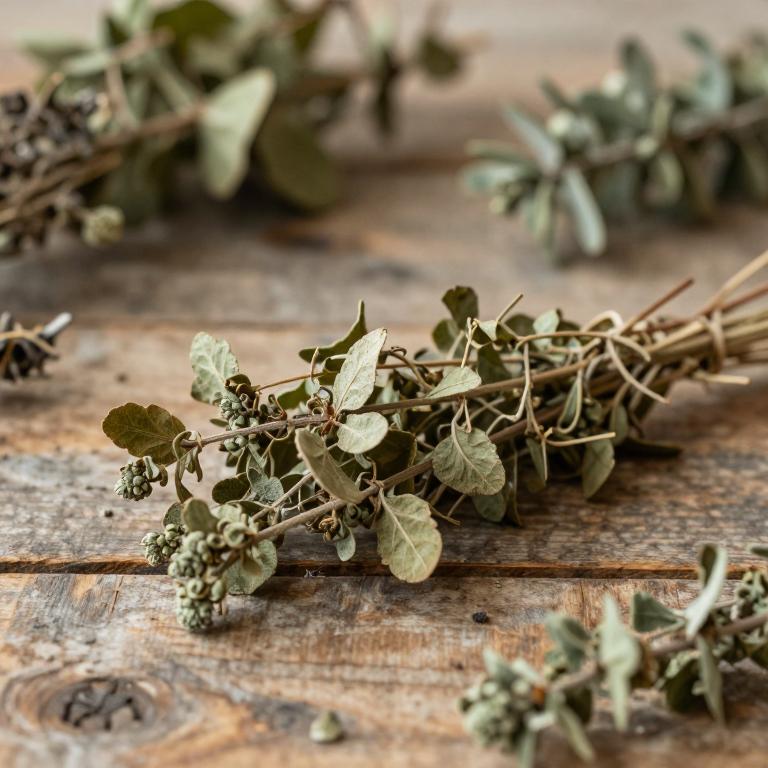
Names and Synonyms
Scientific Names
Accepted name
Polygonum cognatum subsp. cognatumSynonyms
- Polygonum cognatum var. alpestre
- Polygonum alpestre var. ammannioides
- Polygonum cognatum var. ammannioides
- Polygonum myriophyllum
- Polygonum pluriflorum
- Polygonum confertum
- Polygonum ammannioides
Sources: Wikidata
Taxonomical Classification
This plant belongs to the kingdom Plantae and the phylum Streptophyta, falling under the class Equisetopsida and subclass Magnoliidae. Within the order Caryophyllales, it is classified under the family Polygonaceae. Specifically, it is identified by the genus Polygonum as the subspecies Polygonum cognatum subsp. cognatum.
| Rank | Classification |
|---|---|
| Kingdom | Plantae |
| Phylum | Streptophyta |
| Class | Equisetopsida |
| Subclass | Magnoliidae |
| Order | Caryophyllales |
| Family | Polygonaceae |
| Genus | Polygonum |
Sources: The World Checklist of Vascular Plants (WCVP)
Distribution
This plant exhibits a broad geographical distribution across several distinct regions of the Eurasian continent. In Northern Europe, its presence can be identified within the borders of Great Britain. Moving toward the south, it is also found throughout Southwestern Europe, specifically in France. The species extends into Southeastern Europe, where it inhabits areas such as Bulgaria, and reaches Eastern Europe within the Baltic States. Finally, its range stretches deep into Siberia, specifically located in the Altay region.
| Region | Area |
|---|---|
| Northern Europe | Great Britain |
| Southwestern Europe | France |
| Southeastern Europe | Bulgaria |
| Eastern Europe | Baltic States |
| Siberia | Altay |
| Central Asia | Turkmenistan |
| Caucasus | North Caucasus |
| Caucasus | Transcaucasus |
| Western Asia | Iran |
| Western Asia | Iraq |
Sources: The World Checklist of Vascular Plants (WCVP)
Chemicals
Polygonum cognatum subsp. cognatum has 6 reported phytochemicals identified across 0 scientific publications and several other databases. The most consistently reported chemicals include Antioxidants, Gallic acid, Myricetin 3-O-rhamnoside, Myricitrin, flavonols.
| Chemical | Supporting sources | Consensus |
|---|---|---|
| Antioxidants | 1 supporting sources | ★☆☆☆☆ |
| Gallic acid | 1 supporting sources | ★☆☆☆☆ |
| Myricetin 3-O-rhamnoside | 1 supporting sources | ★☆☆☆☆ |
| Myricitrin | 1 supporting sources | ★☆☆☆☆ |
| flavonols | 1 supporting sources | ★☆☆☆☆ |
| myricetin | 1 supporting sources | ★☆☆☆☆ |
Antioxidants
- Molecules (Basel, Switzerland)
Gallic acid
- Molecules (Basel, Switzerland)
Myricetin 3-O-rhamnoside
- Frontiers in plant science
Myricitrin
- Molecules (Basel, Switzerland)
flavonols
- Molecules (Basel, Switzerland)
myricetin
- Frontiers in plant science
Activities
Polygonum cognatum subsp. cognatum has 1 reported activities identified across 0 scientific publications and several other databases. The most consistently reported activities include Antioxidant.
| Activity | Supporting sources | Consensus |
|---|---|---|
| Antioxidant | 1 supporting sources | ★☆☆☆☆ |
Antioxidant
- Plants (Basel, Switzerland)