Solomon's-seal
Polygonatum · Accepted scientific name
Scientific literature: Sparse (52 studies) · ★★☆☆☆
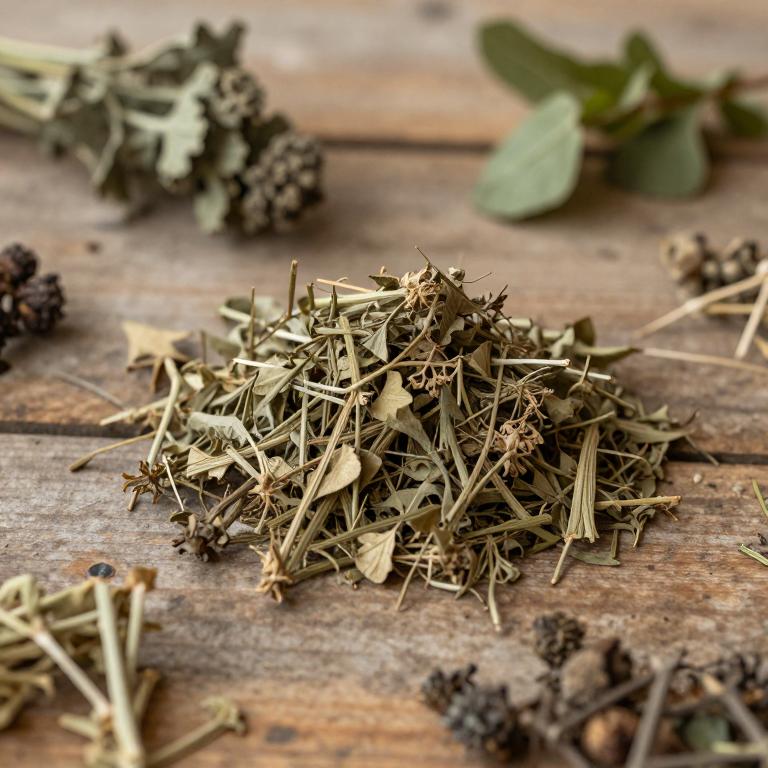
Solomon's-seal, scientifically known as Polygonatum, is a perennial herb revered in traditional medicine for centuries. Characterized by its graceful, arching stems and bell-shaped flowers, this plant offers diverse therapeutic benefits. Often used to nourish Yin and soothe dryness, it remains a vital botanical staple in various holistic healing practices.
Names and Synonyms
Common Names
- Solomon's-seal
- Solomon's seals
- Solomon's-seals
- Solomon's Seal
Scientific Names
Accepted name
PolygonatumSynonyms
- Codomale
- Periballanthus
- Siphyalis
- Sigillum
- Troxilanthes
- Campydorum
Regional and Traditional Names
Spanish:
- Siphyalis
- Codomale
- Evallaria
- Sigillum
- Axillaria
- Periballanthus
- Salomonia
- Troxilanthes
- Campydorum
German:
- Weißwurzen
- Weisswurz
- Weisswurzen
- Gelenkwurz
- Weißwurz
- Gelenkwurze
- Weißwurz
- Salomonssiegel
- Weißwurzen
French:
- Sceau de Salomon
Sources: Wikidata, Catalogue of Life
Taxonomical Classification
This plant belongs to the kingdom Plantae and the phylum Streptophyta, falling under the class Equisetopsida and subclass Magnoliidae. Within the order Asparagales and the family Asparagaceae, it is classified under the genus Polygonatum.
| Rank | Classification |
|---|---|
| Kingdom | Plantae |
| Phylum | Streptophyta |
| Class | Equisetopsida |
| Subclass | Magnoliidae |
| Order | Asparagales |
| Family | Asparagaceae |
| Genus | Polygonatum |
Sources: The World Checklist of Vascular Plants (WCVP)
Distribution
This plant exhibits a specific distribution pattern across the northern regions of Europe. Within Northern Europe, it can be found growing in the landscapes of Denmark and Finland. Its presence also extends to the islands of Great Britain and Ireland. Furthermore, the species is documented inhabiting the terrain of Norway. Together, these locations define its regional range within the northern part of the continent.
| Region | Area |
|---|---|
| Northern Europe | Denmark |
| Northern Europe | Finland |
| Northern Europe | Great Britain |
| Northern Europe | Ireland |
| Northern Europe | Norway |
| Northern Europe | Sweden |
| Middle Europe | Austria |
| Middle Europe | Belgium |
| Middle Europe | Czechia-Slovakia |
| Middle Europe | Germany |
Sources: The World Checklist of Vascular Plants (WCVP)
Plant Parts
Polygonatum has 5 reported plant parts identified across 6 scientific publications and several other databases that are studied for medicinal purposes. The most consistently reported plant part include rhizome, flower, leaf, seed, stem.
| Plant part | Supporting sources | Consensus |
|---|---|---|
| Rhizome | 2 supporting sources | ★☆☆☆☆ |
| Flower | 1 supporting sources | ★☆☆☆☆ |
| Leaf | 1 supporting sources | ★☆☆☆☆ |
| Seed | 1 supporting sources | ★☆☆☆☆ |
| Stem | 1 supporting sources | ★☆☆☆☆ |
Rhizome
- Frontiers in plant science
- International journal of molecular sciences
Flower
- PloS one
Leaf
- PloS one
Seed
- Molecules (Basel, Switzerland)
Stem
- PloS one
Chemicals
Polygonatum has 8 reported phytochemicals identified across 6 scientific publications and several other databases. The most consistently reported chemicals include Flavonoids, Saponins, 5-HMF, Lignins, Pyroglutamic acid.
| Chemical | Supporting sources | Consensus |
|---|---|---|
| Flavonoids | 4 supporting sources | ★★☆☆☆ |
| Saponins | 2 supporting sources | ★☆☆☆☆ |
| 5-HMF | 1 supporting sources | ★☆☆☆☆ |
| Lignins | 1 supporting sources | ★☆☆☆☆ |
| Pyroglutamic acid | 1 supporting sources | ★☆☆☆☆ |
| adenosine | 1 supporting sources | ★☆☆☆☆ |
| sucrose | 1 supporting sources | ★☆☆☆☆ |
| vitamin C | 1 supporting sources | ★☆☆☆☆ |
Flavonoids
- Zhongguo Zhong yao za zhi = Zhongguo zhongyao zazhi = China journal of Chinese materia medica
- Journal of ethnopharmacology
- Natural product communications
- Frontiers in nutrition
Saponins
- Journal of ethnopharmacology
- Frontiers in nutrition
5-HMF
- Zhong yao cai = Zhongyaocai = Journal of Chinese medicinal materials
Lignins
- Natural product communications
Pyroglutamic acid
- Frontiers in plant science
adenosine
- Frontiers in plant science
sucrose
- Frontiers in plant science
vitamin C
- Foods (Basel, Switzerland)
Activities
Polygonatum has 9 reported activities identified across 6 scientific publications and several other databases. The most consistently reported activities include Hypoglycemic, Antibacterial, Anticancer, Antioxidant, Antiviral.
| Activity | Supporting sources | Consensus |
|---|---|---|
| Hypoglycemic | 3 supporting sources | ★★☆☆☆ |
| Antibacterial | 2 supporting sources | ★☆☆☆☆ |
| Anticancer | 2 supporting sources | ★☆☆☆☆ |
| Antioxidant | 2 supporting sources | ★☆☆☆☆ |
| Antiviral | 2 supporting sources | ★☆☆☆☆ |
| Antitumor | 1 supporting sources | ★☆☆☆☆ |
| Hypolipidemic | 1 supporting sources | ★☆☆☆☆ |
| Neuroprotective | 1 supporting sources | ★☆☆☆☆ |
| Tonic | 1 supporting sources | ★☆☆☆☆ |
Hypoglycemic
- Zhongguo Zhong yao za zhi = Zhongguo zhongyao zazhi = China journal of Chinese materia medica
- Journal of ethnopharmacology
- Frontiers in nutrition
Antibacterial
- Zhongguo Zhong yao za zhi = Zhongguo zhongyao zazhi = China journal of Chinese materia medica
- Frontiers in nutrition
Anticancer
- Journal of ethnopharmacology
- PloS one
Antioxidant
- Frontiers in nutrition
- Journal of ethnopharmacology
Antiviral
- Zhongguo Zhong yao za zhi = Zhongguo zhongyao zazhi = China journal of Chinese materia medica
- Natural product communications
Antitumor
- Frontiers in nutrition
Hypolipidemic
- Journal of ethnopharmacology
Neuroprotective
- Journal of ethnopharmacology
Tonic
- Zhongguo Zhong yao za zhi = Zhongguo zhongyao zazhi = China journal of Chinese materia medica
Conditions
Polygonatum has 16 reported investigations on conditions identified across 6 scientific publications and several other databases. The most consistently reported conditions include Alzheimer's disease, Diabetes mellitus, Parkinson's disease, antiviral, depression.
| Condition | Supporting sources | Consensus |
|---|---|---|
| Alzheimer's disease | 1 supporting sources | ★☆☆☆☆ |
| Diabetes mellitus | 1 supporting sources | ★☆☆☆☆ |
| Parkinson's disease | 1 supporting sources | ★☆☆☆☆ |
| Antiviral | 1 supporting sources | ★☆☆☆☆ |
| Depression | 1 supporting sources | ★☆☆☆☆ |
| Fatigue | 1 supporting sources | ★☆☆☆☆ |
| Hypoglycemia | 1 supporting sources | ★☆☆☆☆ |
| Hypoglycemic | 1 supporting sources | ★☆☆☆☆ |
| Immunomodulation | 1 supporting sources | ★☆☆☆☆ |
| Indigestion | 1 supporting sources | ★☆☆☆☆ |
Alzheimer's disease
- Journal of ethnopharmacology
Diabetes mellitus
- Food chemistry
Parkinson's disease
- Journal of ethnopharmacology
Antiviral
- Zhongguo Zhong yao za zhi = Zhongguo zhongyao zazhi = China journal of Chinese materia medica
Depression
- Journal of ethnopharmacology
Fatigue
- Journal of ethnopharmacology
Hypoglycemia
- Phytochemical analysis : PCA
Hypoglycemic
- Zhongguo Zhong yao za zhi = Zhongguo zhongyao zazhi = China journal of Chinese materia medica
Immunomodulation
- Zhongguo Zhong yao za zhi = Zhongguo zhongyao zazhi = China journal of Chinese materia medica
Indigestion
- Journal of ethnopharmacology
Preparations
Polygonatum has 9 reported preparations identified across 6 scientific publications and several other databases. The most consistently reported preparations include Polygonatum polysaccharide, concoction of Polygonatum, honey-processed, nine steaming and nine drying, polygonatum derivatives.
| Preparation | Supporting sources | Consensus |
|---|---|---|
| Polygonatum polysaccharide | 1 supporting sources | ★☆☆☆☆ |
| Concoction of polygonatum | 1 supporting sources | ★☆☆☆☆ |
| Honey-processed | 1 supporting sources | ★☆☆☆☆ |
| Nine steaming and nine drying | 1 supporting sources | ★☆☆☆☆ |
| Polygonatum derivatives | 1 supporting sources | ★☆☆☆☆ |
| Prepared pieces | 1 supporting sources | ★☆☆☆☆ |
| Rhizomes | 1 supporting sources | ★☆☆☆☆ |
| Steaming it with ingredients like yellow rice wine and black beans | 1 supporting sources | ★☆☆☆☆ |
| Wine-processed | 1 supporting sources | ★☆☆☆☆ |
Polygonatum polysaccharide
- Journal of ethnopharmacology
Concoction of polygonatum
- Journal of ethnopharmacology
Honey-processed
- International journal of biological macromolecules
Nine steaming and nine drying
- International journal of biological macromolecules
Polygonatum derivatives
- Journal of ethnopharmacology
Prepared pieces
- Zhong yao cai = Zhongyaocai = Journal of Chinese medicinal materials
Rhizomes
- International journal of molecular sciences
Steaming it with ingredients like yellow rice wine and black beans
- Frontiers in nutrition
Wine-processed
- International journal of biological macromolecules