milkwort
Polygala · Accepted scientific name
Scientific literature: Very Sparse (12 studies) · ★☆☆☆☆
Milkwort, scientifically known as Polygala, is a diverse genus of flowering plants valued in traditional medicine for centuries. Renowned for its neuroprotective and adaptogenic properties, it is frequently used to support cognitive function, soothe the nervous system, and alleviate respiratory issues, offering a rich botanical resource for holistic wellness.
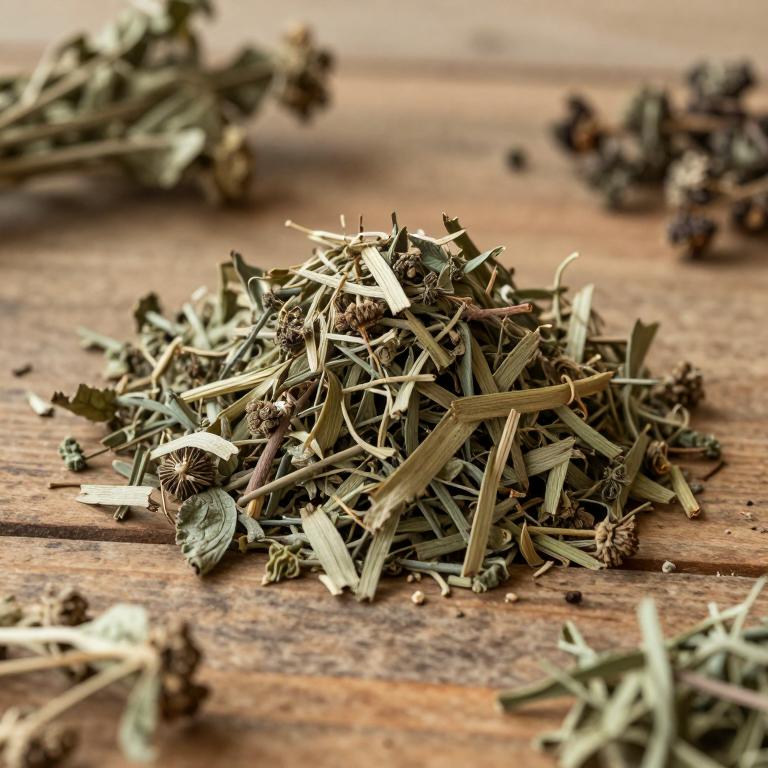
Names and Synonyms
Common Names
- milkwort
- Butterflybushes
- Falsepeas
Scientific Names
Accepted name
PolygalaSynonyms
- Tricholophus
- Psychanthus
- Isolophus
- Brachytropis
- Microlophium
Regional and Traditional Names
Spanish:
- Hierbas lecheras
German:
- Kreuzblümchen
- Kreuzblumen
- Kreuzblume
- Kreuzblumen
French:
- Polygales
Sources: Wikidata, Catalogue of Life
Taxonomical Classification
This plant belongs to the kingdom Plantae and the phylum Streptophyta, falling under the class Equisetopsida and subclass Magnoliidae. Within the order Fabales, it is classified under the family Polygalaeacee and specifically belongs to the genus Polygala.
| Rank | Classification |
|---|---|
| Kingdom | Plantae |
| Phylum | Streptophyta |
| Class | Equisetopsida |
| Subclass | Magnoliidae |
| Order | Fabales |
| Family | Polygalaceae |
| Genus | Polygala |
Sources: The World Checklist of Vascular Plants (WCVP)
Distribution
This plant exhibits a specific geographical distribution concentrated within the regions of Northern Europe. It can be found growing in the coastal and inland areas of Denmark. Its presence is also documented across the island of Great Britain and throughout Ireland. Furthermore, the species extends to the northern territories of Finland. Finally, the plant is known to inhabit the Faroe Islands, also referred to as Føroyaar.
| Region | Area |
|---|---|
| Northern Europe | Denmark |
| Northern Europe | Finland |
| Northern Europe | Føroyar |
| Northern Europe | Great Britain |
| Northern Europe | Ireland |
| Northern Europe | Norway |
| Northern Europe | Sweden |
| Middle Europe | Austria |
| Middle Europe | Belgium |
| Middle Europe | Czechia-Slovakia |
Sources: The World Checklist of Vascular Plants (WCVP)
Plant Parts
Polygala has 3 reported plant parts identified across 5 scientific publications and several other databases that are studied for medicinal purposes. The most consistently reported plant part include root, leaf, stem.
| Plant part | Supporting sources | Consensus |
|---|---|---|
| Root | 3 supporting sources | ★★☆☆☆ |
| Leaf | 1 supporting sources | ★☆☆☆☆ |
| Stem | 1 supporting sources | ★☆☆☆☆ |
Root
- Journal of natural medicines
- Scientific reports
- Journal of food protection
Leaf
- Scientific reports
Stem
- Scientific reports
Activities
Polygala has 6 reported activities identified across 5 scientific publications and several other databases. The most consistently reported activities include Analgesic, Antidepressant, Antiischemic, Antitumor, Neuroprotective.
| Activity | Supporting sources | Consensus |
|---|---|---|
| Analgesic | 1 supporting sources | ★☆☆☆☆ |
| Antidepressant | 1 supporting sources | ★☆☆☆☆ |
| Antiischemic | 1 supporting sources | ★☆☆☆☆ |
| Antitumor | 1 supporting sources | ★☆☆☆☆ |
| Neuroprotective | 1 supporting sources | ★☆☆☆☆ |
| Sedative | 1 supporting sources | ★☆☆☆☆ |
Analgesic
- Journal of ethnopharmacology
Antidepressant
- Journal of ethnopharmacology
Antiischemic
- Journal of ethnopharmacology
Antitumor
- Journal of ethnopharmacology
Neuroprotective
- Journal of ethnopharmacology
Sedative
- Journal of ethnopharmacology
Conditions
Polygala has 1 reported investigations on conditions identified across 5 scientific publications and several other databases. The most consistently reported conditions include cognitive impairments.
| Condition | Supporting sources | Consensus |
|---|---|---|
| Cognitive impairments | 1 supporting sources | ★☆☆☆☆ |
Cognitive impairments
- Pharmacology, biochemistry, and behavior