Polygala supina subsp. supina
Polygala supina subsp. supina · Accepted scientific name
Scientific literature: Very Sparse (2 studies) · ★☆☆☆☆
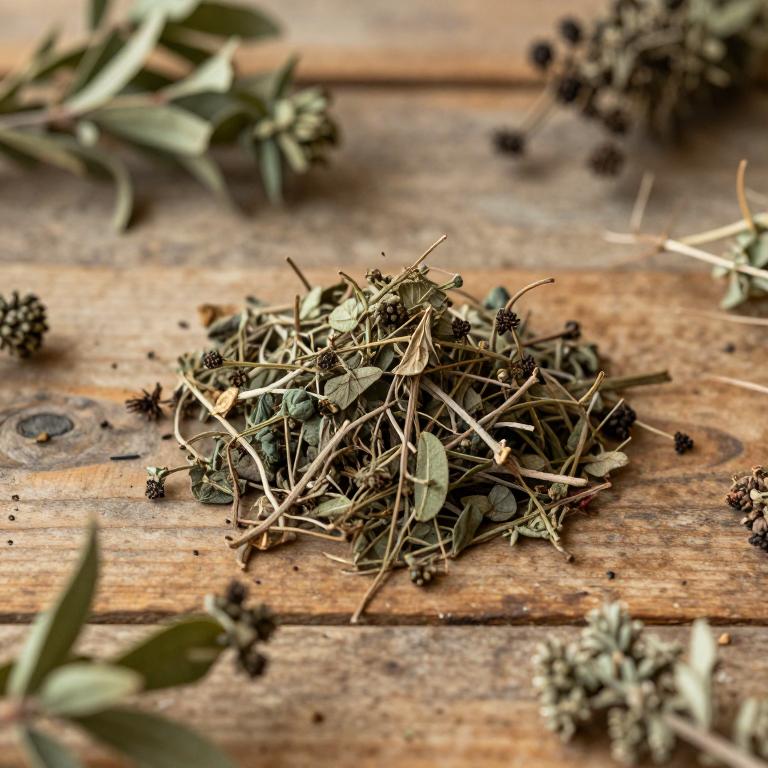
, scientifically known as Polygala supina subsp. supina, is a versatile medicinal herb frequently found in tropical regions. Renowned for its diverse therapeutic properties, this plant is traditionally used to treat inflammatory conditions, respiratory issues, and skin ailments, offering a natural remedy rooted in centuries of ethnomedicinal wisdom.
- Family
- Polygalaceae
- Native range
- Europe
- Parts used
- Not available
- Common names
- Not available
- Scientific synonyms
- Polygala Hospita Subsp. Bosniaca · Polygala Murbeckii · 9 more
Names and Synonyms
Scientific Names
Accepted name
Polygala supina subsp. supinaSynonyms
- Polygala hospita subsp. bosniaca
- Polygala murbeckii
- Polygala vulgaris var. andrachnoides
- Polygala supina subsp. murbeckii
- Polygala supina subsp. bosniaca
- Polygala recurvata
- Polygala schreberi
- Polygala gundelsheimeri
- Polygala bosniaca
- Polygala andrachnoides
- Polygala supina f. alba
Sources: Catalogue of Life
Taxonomical Classification
This plant belongs to the kingdom Plantae and is classified under the phylum Streptophyta within the class Equisetopsida. As a member of the subclass Magnoliidae and the order Fabales, it falls under the family Polygalaceae. Ultimately, its taxonomic identity is defined by the genus Polygala, specifically as the subspecies Polygala supina subsp. supina.
| Rank | Classification |
|---|---|
| Kingdom | Plantae |
| Phylum | Streptophyta |
| Class | Equisetopsida |
| Subclass | Magnoliidae |
| Order | Fabales |
| Family | Polygalaceae |
| Genus | Polygala |
Sources: The World Checklist of Vascular Plants (WCVP)
Distribution
This plant is primarily distributed throughout various regions of Southeastern Europe, including Albania and the European portion of Türkiye. Its presence is also documented across the Northwestern Balkan Peninsula. Moving further east, the species can be found in the Eastern European region of Krym. Finally, its range extends into the Caucasus, specifically within the North Caucasus area.
| Region | Area |
|---|---|
| Southeastern Europe | Albania |
| Southeastern Europe | Türkiye-in-Europe |
| Southeastern Europe | NW. Balkan Pen. |
| Eastern Europe | Krym |
| Caucasus | North Caucasus |
| Western Asia | Lebanon-Syria |
| Western Asia | Türkiye |
Sources: The World Checklist of Vascular Plants (WCVP)
Chemicals
Polygala supina subsp. supina has 1 reported phytochemicals identified across 0 scientific publications and several other databases. The most consistently reported chemicals include 4'-C-beta-D-Glucopyranosyl-2',3',5',6',3-pentahydroxybenzophenone.
| Chemical | Supporting sources | Consensus |
|---|---|---|
| 4'-C-beta-D-Glucopyranosyl-2',3',5',6',3-pentahydroxybenzophenone | 1 supporting sources | ★☆☆☆☆ |
4'-C-beta-D-Glucopyranosyl-2',3',5',6',3-pentahydroxybenzophenone
- Chemical & pharmaceutical bulletin
Preparations
Polygala supina subsp. supina has 1 reported preparations identified across 0 scientific publications and several other databases. The most consistently reported preparations include whole plants.
| Preparation | Supporting sources | Consensus |
|---|---|---|
| Whole plants | 1 supporting sources | ★☆☆☆☆ |
Whole plants
- Zhongguo Zhong yao za zhi = Zhongguo zhongyao zazhi = China journal of Chinese materia medica