Polygala flavescens
Polygala flavescens · Accepted scientific name
Scientific literature: Very Sparse (6 studies) · ★☆☆☆☆
Polygala flavescens, scientifically known as Polygala flavescens, is a perennial herb native to specific East Asian regions. Valued in traditional medicine, this plant contains bioactive compounds often used to support respiratory health and calm the nervous system. It remains a significant subject of study for modern pharmacological research.
- Family
- Polygalaceae
- Native range
- Europe
- Parts used
- Not available
- Common names
- Not available
- Scientific synonyms
- Polygala Vulgaris Var. Flavescens
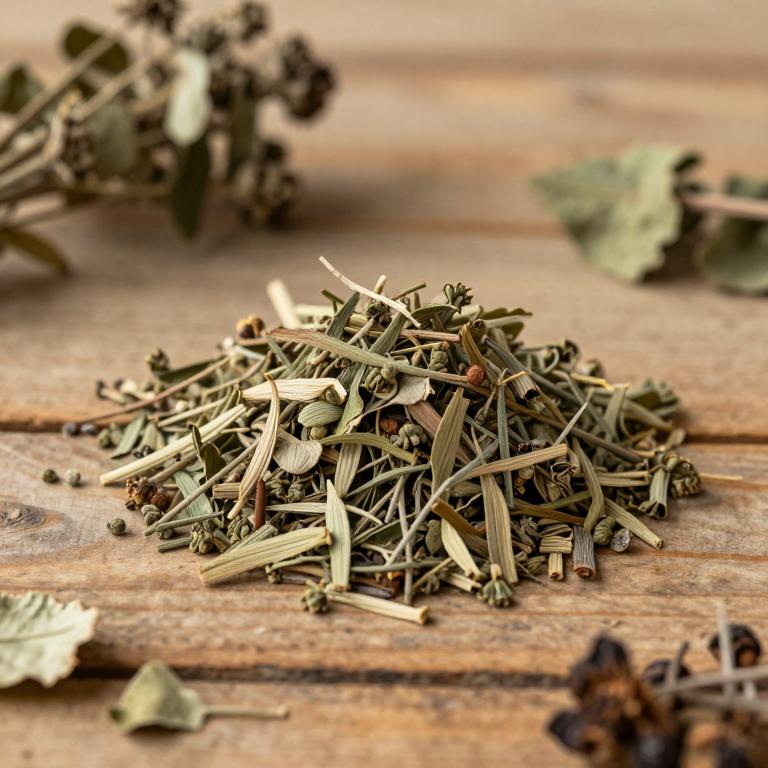
Names and Synonyms
Scientific Names
Accepted name
Polygala flavescensSynonyms
- Polygala vulgaris var. flavescens
Regional and Traditional Names
German:
- Gelbes Kreuzblümchen
Sources: Wikidata, Catalogue of Life
Taxonomical Classification
This plant belongs to the kingdom Plantae and is classified within the phylum Streptophyta and class Equisetopsida. It falls under the subclass Magnoliidae and the order Fabales, eventually placing it in the family Polygalaceae. Ultimately, its scientific identity is defined by its membership in the genus Polygala.
| Rank | Classification |
|---|---|
| Kingdom | Plantae |
| Phylum | Streptophyta |
| Class | Equisetopsida |
| Subclass | Magnoliidae |
| Order | Fabales |
| Family | Polygalaceae |
| Genus | Polygala |
Sources: The World Checklist of Vascular Plants (WCVP)
Distribution
This plant exhibits a specific and somewhat limited geographical distribution within the European continent. It is primarily found in the southwestern regions of Europe, specifically on the island of Corse. Additionally, its presence extends into southeastern Europe, where it can be located in Italy. These two areas represent the key habitats where the species naturally occurs. Consequently, its range is characterized by these distinct Mediterranean and southern territories.
| Region | Area |
|---|---|
| Southwestern Europe | Corse |
| Southeastern Europe | Italy |
Sources: The World Checklist of Vascular Plants (WCVP)
Botanical Identification
Life history
The life history of Polygala flavescens is characterized by its classification as a perennial plant, allowing it to persist through multiple growing seasons. In terms of its structural growth strategy and survival mechanism, the species is categorized as a hemicryptophyte. This life form indicates that its perennimal survival is supported by buds located at or just below the soil surface, which remain protected during unfavorable environmental conditions.
- Life form :
- hemicryptophyte
- Lifecycle :
- perennial
Morphology
The morphology of Polygala flavescens is characterized by its growth habit as a self-supporting climber, utilizing its structural integrity to ascend without requiring external hosts for physical stability. It functions as an independent organism, showing no parasitic tendencies and maintaining its own metabolic processes without relying on other plants for nutrients. Furthermore, it is strictly a terrestrial plant, establishing its root systems and biological functions within the soil rather than growing as an epiphyte on other vegetation.
- Climber :
- self-supporting
- Epiphyte :
- terrestrial
- Parasite :
- independent
Sources: Global Inventory of Floras and Traits (GIFT)
Chemicals
Polygala flavescens has 3 reported phytochemicals identified across 0 scientific publications and several other databases. The most consistently reported chemicals include Flavonoids, Terpenoids, triterpene.
| Chemical | Supporting sources | Consensus |
|---|---|---|
| Flavonoids | 1 supporting sources | ★☆☆☆☆ |
| Terpenoids | 1 supporting sources | ★☆☆☆☆ |
| triterpene | 1 supporting sources | ★☆☆☆☆ |
Flavonoids
- Journal of ethnopharmacology
Terpenoids
- Journal of ethnopharmacology
triterpene
- Journal of ethnopharmacology
Conditions
Polygala flavescens has 3 reported investigations on conditions identified across 0 scientific publications and several other databases. The most consistently reported conditions include central nervous system disorders, inflammation, wounds.
| Condition | Supporting sources | Consensus |
|---|---|---|
| Central nervous system disorders | 1 supporting sources | ★☆☆☆☆ |
| Inflammation | 1 supporting sources | ★☆☆☆☆ |
| Wounds | 1 supporting sources | ★☆☆☆☆ |
Central nervous system disorders
- Journal of ethnopharmacology
Inflammation
- Journal of ethnopharmacology
Wounds
- Journal of ethnopharmacology