Polyalthia debilis
Polyalthia debilis · Accepted scientific name
Scientific literature: Very Sparse (11 studies) · ★☆☆☆☆
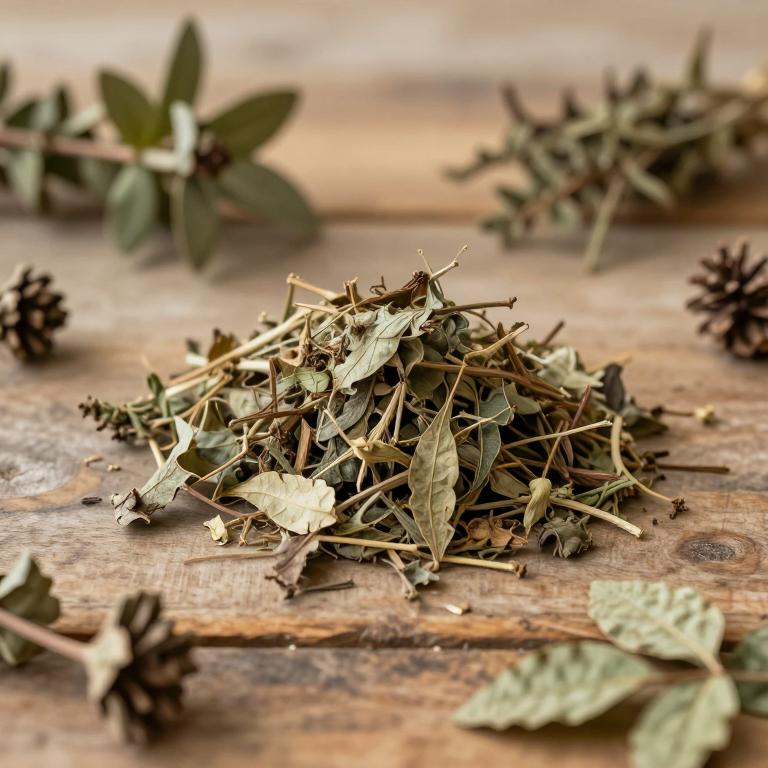
Polyalthia debilis, scientifically known as Polyalthia debilis, is a versatile medicinal shrub valued in traditional herbal medicine. Often found in tropical regions, this plant possesses significant therapeutic properties, including anti-inflammatory and antioxidant activities. Its various parts are utilized to treat diverse ailments, offering promising potential for pharmacological research.
- Family
- Annonaceae
- Native range
- Asia-Tropical
- Parts used
- Root
- Common names
- Not available
- Scientific synonyms
- Unona Debilis
Names and Synonyms
Scientific Names
Accepted name
Polyalthia debilisSynonyms
- Unona debilis
Sources: Wikidata, Catalogue of Life
Taxonomical Classification
This plant belongs to the kingdom Plantae and is classified under the phylum Streptophyta within the class Equisetopsida. As a member of the subclass Magnoliidae and the order Magnoliales, it is specifically categorized under the family Annonaceae. Finally, its taxonomic identity is defined by the genus Polyalthia.
| Rank | Classification |
|---|---|
| Kingdom | Plantae |
| Phylum | Streptophyta |
| Class | Equisetopsida |
| Subclass | Magnoliidae |
| Order | Magnoliales |
| Family | Annonaceae |
| Genus | Polyalthia |
Sources: The World Checklist of Vascular Plants (WCVP)
Distribution
This plant exhibits a specific geographical distribution concentrated within the Indo-China region. It can be found growing naturally across the diverse landscapes of Cambodia. Furthermore, its presence extends into the territories of Laos. The species is also documented to inhabit various parts of Thailand. Finally, its range includes the forested areas of Vietnam.
| Region | Area |
|---|---|
| Indo-China | Cambodia |
| Indo-China | Laos |
| Indo-China | Thailand |
| Indo-China | Vietnam |
Sources: The World Checklist of Vascular Plants (WCVP)
Botanical Identification
Morphology
The morphology of Polyalthia debilis is characterized by its distinctly woody habit, forming a perennial structure that provides significant physical stability. The plant features a robust, woody stem system that supports its growth pattern, distinguishing it from non-woody or herbaceous species. The foliage typically consists of simple, alternate leaves with an elliptical to oblong shape, possessing an entire margin and a prominent midrib. The texture of the leaves is often coriaceous, contributing to the overall structural integrity of the plant. The reproductive structures include small, inconspicuous flowers that are borne in axillary clusters, eventually developing into fleshy, aggregate fruits that are characteristic of the Annonaceae family. The combination of its woody constitution and specific leaf arrangement defines its physical presence within its natural habitat.
- Woodiness :
- woody
Sources: Global Inventory of Floras and Traits (GIFT)
Plant Parts
Polyalthia debilis has 1 reported plant parts identified across 1 scientific publications and several other databases that are studied for medicinal purposes. The most consistently reported plant part include root.
| Plant part | Supporting sources | Consensus |
|---|---|---|
| Root | 1 supporting sources | ★☆☆☆☆ |
Root
- Journal of natural products
Chemicals
Polyalthia debilis has 6 reported phytochemicals identified across 1 scientific publications and several other databases. The most consistently reported chemicals include BETA-SITOSTEROL, Onychine, STIGMASTEROL, bis-7,7'-dehydro-10,10'-dimethoxyanonaine, bis-7,7'-dehydro-8,8'-dimethoxyanonaine.
| Chemical | Supporting sources | Consensus |
|---|---|---|
| BETA-SITOSTEROL | 1 supporting sources | ★☆☆☆☆ |
| Onychine | 1 supporting sources | ★☆☆☆☆ |
| STIGMASTEROL | 1 supporting sources | ★☆☆☆☆ |
| bis-7,7'-dehydro-10,10'-dimethoxyanonaine | 1 supporting sources | ★☆☆☆☆ |
| bis-7,7'-dehydro-8,8'-dimethoxyanonaine | 1 supporting sources | ★☆☆☆☆ |
| triterpenoids | 1 supporting sources | ★☆☆☆☆ |
BETA-SITOSTEROL
- Molecules (Basel, Switzerland)
Onychine
- Molecules (Basel, Switzerland)
STIGMASTEROL
- Molecules (Basel, Switzerland)
bis-7,7'-dehydro-10,10'-dimethoxyanonaine
- Journal of natural products
bis-7,7'-dehydro-8,8'-dimethoxyanonaine
- Journal of natural products
triterpenoids
- Molecules (Basel, Switzerland)
Activities
Polyalthia debilis has 3 reported activities identified across 1 scientific publications and several other databases. The most consistently reported activities include Antimalarial, Antimicrobial, Cytotoxic.
| Activity | Supporting sources | Consensus |
|---|---|---|
| Antimalarial | 1 supporting sources | ★☆☆☆☆ |
| Antimicrobial | 1 supporting sources | ★☆☆☆☆ |
| Cytotoxic | 1 supporting sources | ★☆☆☆☆ |
Antimalarial
- Molecules (Basel, Switzerland)
Antimicrobial
- Molecules (Basel, Switzerland)
Cytotoxic
- Molecules (Basel, Switzerland)
Conditions
Polyalthia debilis has 1 reported investigations on conditions identified across 1 scientific publications and several other databases. The most consistently reported conditions include malaria.
| Condition | Supporting sources | Consensus |
|---|---|---|
| Malaria | 1 supporting sources | ★☆☆☆☆ |
Malaria
- Journal of natural products