Mexican Oregano
Poliomintha longiflora · Accepted scientific name
Scientific literature: Very Sparse (2 studies) · ★☆☆☆☆
Mexican Oregano, scientifically known as Poliomintha longiflora, is a fragrant perennial herb native to Mexico. Unlike true oregano, it offers a distinct, earthy aroma and pungent flavor. Highly valued in culinary traditions, this versatile plant also boasts significant medicinal properties, often used for its soothing antimicrobial and digestive benefits.
- Family
- Lamiaceae
- Native range
- Northern America
- Parts used
- Leaf
- Common names
- Mexican Oregano · Red Poliomintha · 1 more
- Scientific synonyms
- Hedeoma Longiflora
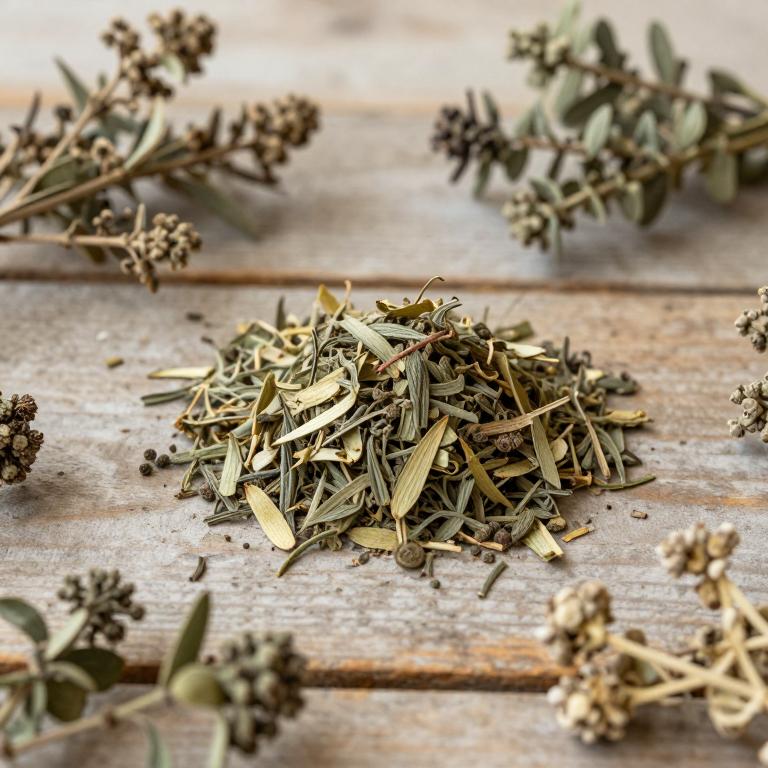
Names and Synonyms
Common Names
- Mexican Oregano
- Red Poliomintha
- Rosemary Mint
Scientific Names
Accepted name
Poliomintha longifloraSynonyms
- Hedeoma longiflora
Regional and Traditional Names
Spanish:
- Orégano mexicano
Sources: Wikidata, Catalogue of Life
Taxonomical Classification
This plant belongs to the kingdom Plantae and is classified under the phylum Streptophyta within the class Equisetopsida. As a member of the subclass Magnoliidae and the order Lamiales, it falls into the family Lamiaceae. Specifically, it is identified by the genus Poliomintha.
| Rank | Classification |
|---|---|
| Kingdom | Plantae |
| Phylum | Streptophyta |
| Class | Equisetopsida |
| Subclass | Magnoliidae |
| Order | Lamiales |
| Family | Lamiaceae |
| Genus | Poliomintha |
Sources: The World Checklist of Vascular Plants (WCVP)
Distribution
This plant exhibits a specific geographical distribution across parts of North America and the Caribbean. Within the country of Mexico, it can be found primarily in the northeastern regions. Its range also extends southward into the Caribbean islands. Specifically, the species has been documented growing in Haiti. These locations define the known natural habitats where this medicinal species resides.
| Region | Area |
|---|---|
| Mexico | Mexico Northeast |
| Caribbean | Haiti |
Sources: The World Checklist of Vascular Plants (WCVP)
Botanical Identification
Life history
The life history of Poliomintha longiflora is characterized by its classification as a chamaephyte, a growth form that dictates its survival strategy within its specific ecological niche. Specifically, it functions as a chamaephyte in both its broader life form categorization and its structural development, meaning that its perennating buds are located close to the soil surface, protected by the substrate or low-lying vegetation. This life strategy allows the plant to endure seasonal environmental fluctuations by maintaining its regenerative organs just above or at the ground level, facilitating a perennial existence that balances seasonal growth with resilience against climatic stressors.
- Life form :
- chamaephyte
Morphology
The morphology of Poliomintha longiflora is characterized by its growth habit as a self-supporting climber, utilizing its structural development to ascend without the need for external host support. It functions as an independent organism, exhibiting no parasitic tendencies toward other plants. In terms of its ecological niche and positioning, the species is strictly terrestrial rather than epiphytic. Furthermore, the plant displays a woody constitution, possessing a lignified stem structure that contributes to its overall physical integrity and climbing capability.
- Climber :
- self-supporting
- Epiphyte :
- terrestrial
- Parasite :
- independent
- Woodiness :
- woody
Sources: Global Inventory of Floras and Traits (GIFT)
Plant Parts
Poliomintha longiflora has 1 reported plant parts identified across 1 scientific publications and several other databases that are studied for medicinal purposes. The most consistently reported plant part include leaf.
| Plant part | Supporting sources | Consensus |
|---|---|---|
| Leaf | 1 supporting sources | ★☆☆☆☆ |
Leaf
- Journal of food science
Chemicals
Poliomintha longiflora has 1 reported phytochemicals identified across 1 scientific publications and several other databases. The most consistently reported chemicals include rosmarinic acid.
| Chemical | Supporting sources | Consensus |
|---|---|---|
| rosmarinic acid | 1 supporting sources | ★☆☆☆☆ |
rosmarinic acid
- Journal of agricultural and food chemistry
Preparations
Poliomintha longiflora has 2 reported preparations identified across 1 scientific publications and several other databases. The most consistently reported preparations include Solvent extraction, essential oils.
| Preparation | Supporting sources | Consensus |
|---|---|---|
| Solvent extraction | 1 supporting sources | ★☆☆☆☆ |
| Essential oils | 1 supporting sources | ★☆☆☆☆ |
Solvent extraction
- Journal of medicinal food
Essential oils
- Journal of food science