Poikilacanthus glandulosus
Poikilacanthus glandulosus · Accepted scientific name
Scientific literature: Very Sparse (9 studies) · ★☆☆☆☆
Poikilacanthus glandulosus, is a medicinal shrub native to tropical regions, valued for its unique bioactive properties. Often utilized in traditional healing practices, this plant contains specific phytochemicals believed to offer therapeutic benefits. Understanding its botanical characteristics and medicinal potential is essential for exploring its role in natural pharmacology.
- Family
- Acanthaceae
- Native range
- Southern America
- Parts used
- Not available
- Common names
- Not available
- Scientific synonyms
- Beloperone Spathulata · Ecbolium Umbrosum · 7 more
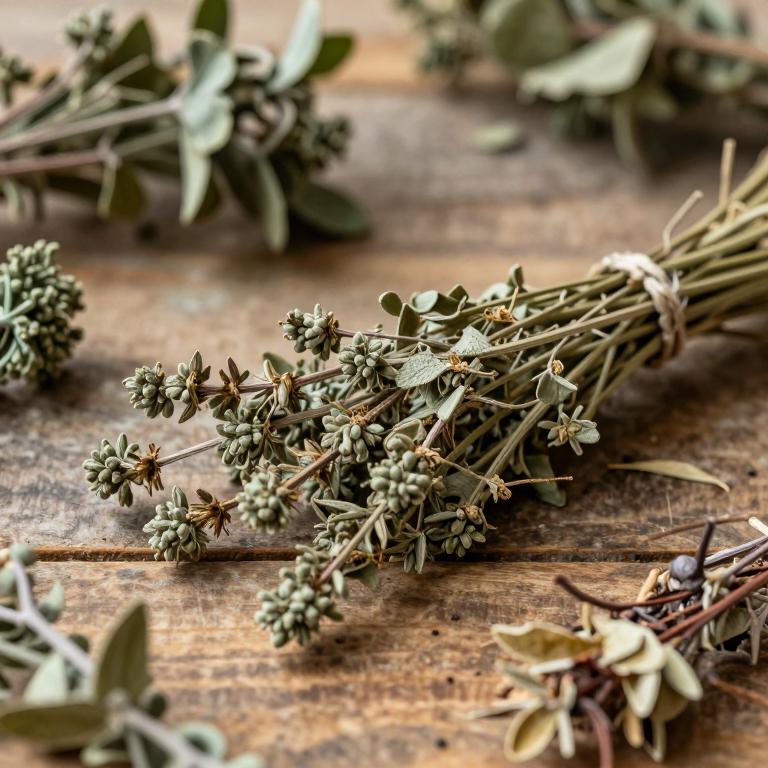
Names and Synonyms
Scientific Names
Accepted name
Poikilacanthus glandulosusSynonyms
- Beloperone spathulata
- Ecbolium umbrosum
- Adhatoda umbrosa
- Adhatoda flexuosa
- Ecbolium flexuosum
- Tyloglossa flexuosa
- Orthotactus glandulosus
- Justicia flexuosa
- Poikilacanthus flexuosus
Sources: Wikidata
Taxonomical Classification
This plant belongs to the kingdom Plantae and the phylum Streptophyta, falling under the class Equisetopsida and subclass Magnoliidae. Within the order Lamiales, it is classified under the family Acanthaceae. Finally, its specific taxonomic identity is defined by the genus Poikilacanthus.
| Rank | Classification |
|---|---|
| Kingdom | Plantae |
| Phylum | Streptophyta |
| Class | Equisetopsida |
| Subclass | Magnoliidae |
| Order | Lamiales |
| Family | Acanthaceae |
| Genus | Poikilacanthus |
Sources: The World Checklist of Vascular Plants (WCVP)
Distribution
This plant is widely distributed across several key regions of South America. In Brazil, its presence is documented specifically in the Southeast and South regions. Moving into the southern part of the continent, it can be found in the Northeast of Argentina. The species also inhabits the territory of Paraguay. Finally, its geographical range extends into Uruguay.
| Region | Area |
|---|---|
| Brazil | Brazil Southeast |
| Brazil | Brazil South |
| Southern South America | Argentina Northeast |
| Southern South America | Paraguay |
| Southern South America | Uruguay |
Sources: The World Checklist of Vascular Plants (WCVP)
Botanical Identification
Ecology
The ecology of Poikilacanthus glandulosus is characterized by its specific niche within high-altitude forest ecosystems, specifically inhabiting the "Bosque alto" habitat. This species is distributed across a distinct altitudinal gradient, ranging from sea level up to a maximum elevation of 500 m AMSL. Its presence in these high forests indicates an adaptation to the particular microclimates, moisture levels, and light availability found within these specific forest structures at low to mid-elevation ranges.
- Elevational range max:
- 500 m AMSL
- Elevational range min:
- 0 m AMSL
- Habitat :
- Bosque alto
Life history
The life history of Poikilacanthus glandulosus is characterized by its status as a perennial plant, meaning it persists through multiple growing seasons rather than completing its cycle in a single year. As a long-lived species, it maintains a continuous presence in its natural habitat, undergoing cyclical periods of vegetative growth and reproductive development. This perennial nature allows the plant to establish a stable foundation, investing energy into robust structural development that supports its survival over several years, enabling it to weather seasonal fluctuations and reproduce multiple times throughout its lifespan.
- Lifecycle :
- perennial
Morphology
The morphology of Poikilacanthus glandulosus is characterized by its distinct growth habit and structural composition. It presents as a woody subshrub that maintains an independent existence, functioning as a non-parasitic organism. Although its ecological niche can vary across aquatic, semiaquatic, and terrestrial habitats, it primarily manifests as a terrestrial species. In terms of its physical support and climbing mechanisms, the plant is categorized as a self-supporting entity rather than an obligatory or facultative climber, meaning it does not rely on other structures like lianas or vines to ascend. Furthermore, it does not exhibit epiphytic behavior, remaining strictly terrestrial in its growth form.
- Aquatic :
- terrestrial
- Climber :
- self-supporting
- Epiphyte :
- terrestrial
- Growth form :
- herb
- Growth form :
- subshrub
- Parasite :
- independent
- Woodiness :
- woody
Sources: Global Inventory of Floras and Traits (GIFT)
Chemicals
Poikilacanthus glandulosus has 3 reported phytochemicals identified across 0 scientific publications and several other databases. The most consistently reported chemicals include Maslinic acid, Sitosterol, Uvaol.
| Chemical | Supporting sources | Consensus |
|---|---|---|
| Maslinic acid | 1 supporting sources | ★☆☆☆☆ |
| Sitosterol | 1 supporting sources | ★☆☆☆☆ |
| Uvaol | 1 supporting sources | ★☆☆☆☆ |
Maslinic acid
- Journal of ethnopharmacology
Sitosterol
- Journal of ethnopharmacology
Uvaol
- Journal of ethnopharmacology
Conditions
Poikilacanthus glandulosus has 3 reported investigations on conditions identified across 0 scientific publications and several other databases. The most consistently reported conditions include cicatrization, inflammation, insect bites.
| Condition | Supporting sources | Consensus |
|---|---|---|
| Cicatrization | 1 supporting sources | ★☆☆☆☆ |
| Inflammation | 1 supporting sources | ★☆☆☆☆ |
| Insect bites | 1 supporting sources | ★☆☆☆☆ |
Cicatrization
- Journal of ethnopharmacology
Inflammation
- Journal of ethnopharmacology
Insect bites
- Journal of ethnopharmacology
Preparations
Poikilacanthus glandulosus has 2 reported preparations identified across 0 scientific publications and several other databases. The most consistently reported preparations include macerated leaves and branches prepared with alcohol, macerated leaves and branches prepared with sugarcane liquor.
| Preparation | Supporting sources | Consensus |
|---|---|---|
| Macerated leaves and branches prepared with alcohol | 1 supporting sources | ★☆☆☆☆ |
| Macerated leaves and branches prepared with sugarcane liquor | 1 supporting sources | ★☆☆☆☆ |
Macerated leaves and branches prepared with alcohol
- Journal of ethnopharmacology
Macerated leaves and branches prepared with sugarcane liquor
- Journal of ethnopharmacology