Pogostemon parviflorus
Pogostemon parviflorus · Accepted scientific name
Scientific literature: Very Sparse (9 studies) · ★☆☆☆☆
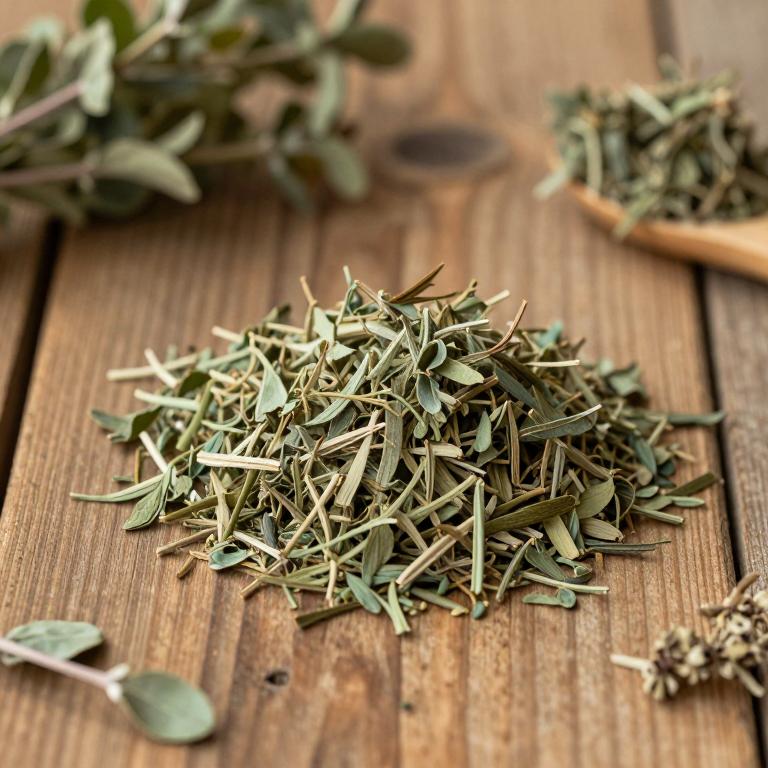
Pogostemon parviflorus, scientifically known as Pogostemon parviflorus, is a cherished medicinal shrub native to the Caribbean. Renowned for its aromatic leaves, it is widely utilized in traditional folk medicine to treat respiratory ailments, skin irritations, and digestive issues, serving as a vital natural remedy in many coastal communities.
- Family
- Lamiaceae
- Native range
- Asia-Temperate
- Parts used
- Leaf
- Common names
- Not available
- Scientific synonyms
- Pogostemon Championii
Names and Synonyms
Scientific Names
Accepted name
Pogostemon parviflorusSynonyms
- Pogostemon championii
Sources: Wikidata, Catalogue of Life
Taxonomical Classification
This plant belongs to the kingdom Plantae and is classified under the phylum Streptophyta and the class Equisetopsida. Within the subclass Magnoliidae, it is organized under the order Lamiales and the family Lamiaceae. Finally, it is identified by the genus Pogostemon, specifically as the species Pogostemon parviflorus.
| Rank | Classification |
|---|---|
| Kingdom | Plantae |
| Phylum | Streptophyta |
| Class | Equisetopsida |
| Subclass | Magnoliidae |
| Order | Lamiales |
| Family | Lamiaceae |
| Genus | Pogostemon |
Sources: The World Checklist of Vascular Plants (WCVP)
Distribution
This plant is widely distributed across several distinct regions in Asia. In China, its presence is noted in both the South-Central and Southeast territories. Moving toward the Indian Subcontinent, it can be found growing in both Bangladesh and India. Additionally, the species extends into the Indo-China region, specifically within Cambodia. These diverse locations highlight the broad geographical range of Pogostemon parviflorus.
| Region | Area |
|---|---|
| China | China South-Central |
| China | China Southeast |
| Indian Subcontinent | Bangladesh |
| Indian Subcontinent | India |
| Indo-China | Cambodia |
| Indo-China | Myanmar |
| Indo-China | Vietnam |
Sources: The World Checklist of Vascular Plants (WCVP)
Botanical Identification
Life history
The life history of Pogostemon parviflorus is characterized by its classification as a chamaephyte, a growth form where the permanent buds are located close to the soil surface, often just above it. Within the broader spectrum of plant life strategies, it specifically functions as a chamaephyte, allowing it to persist in its environment by protecting its regenerative tissues near the ground level. This life form enables the plant to withstand varying environmental stressors while maintaining a relatively low stature, distinguishing it from phanerophytes that grow much taller or therophytes that exist only as ephemeral annuals.
- Life form :
- chamaephyte
Morphology
The morphology of Pogostemon parviflorus is characterized by a woody growth form, specifically classified as a subshrub. As a terrestrial plant, it functions as an independent organism, meaning it is not a parasite and grows directly in the soil rather than as an epiphyte. Its structural development includes a self-supporting climbing habit, allowing it to maintain its position within its habitat through its own physical integrity.
- Climber :
- self-supporting
- Epiphyte :
- terrestrial
- Growth form :
- subshrub
- Parasite :
- independent
- Woodiness :
- woody
Reproduction
Reproduction in Pogostemon parviflorus is characterized by the production of minute seeds that exhibit significant variation in weight. The seed mass within this species is highly specialized, with a calculated mean mass of approximately 0.0005465 g. Individual seeds demonstrate a range of sizes, with the smallest recorded seed mass reaching a minimum of 0.0002 g (2e-04 g) and the largest recorded seed mass peaking at a maximum of 0.000893 g.
- Seed mass max:
- 0.000893 g
- Seed mass mean:
- 0.0005465 g
- Seed mass min:
- 2e-04 g
Sources: Global Inventory of Floras and Traits (GIFT)
Plant Parts
Pogostemon parviflorus has 1 reported plant parts identified across 1 scientific publications and several other databases that are studied for medicinal purposes. The most consistently reported plant part include leaf.
| Plant part | Supporting sources | Consensus |
|---|---|---|
| Leaf | 1 supporting sources | ★☆☆☆☆ |
Leaf
- Iranian journal of pharmaceutical research : IJPR
Chemicals
Pogostemon parviflorus has 4 reported phytochemicals identified across 1 scientific publications and several other databases. The most consistently reported chemicals include Phenols, Saponins, Tannins, Triterpenes.
| Chemical | Supporting sources | Consensus |
|---|---|---|
| Phenols | 1 supporting sources | ★☆☆☆☆ |
| Saponins | 1 supporting sources | ★☆☆☆☆ |
| Tannins | 1 supporting sources | ★☆☆☆☆ |
| Triterpenes | 1 supporting sources | ★☆☆☆☆ |
Phenols
- Iranian journal of pharmaceutical research : IJPR
Saponins
- Iranian journal of pharmaceutical research : IJPR
Tannins
- Iranian journal of pharmaceutical research : IJPR
Triterpenes
- Iranian journal of pharmaceutical research : IJPR
Conditions
Pogostemon parviflorus has 3 reported investigations on conditions identified across 1 scientific publications and several other databases. The most consistently reported conditions include dermatophytes, dermatophytosis, skin diseases.
| Condition | Supporting sources | Consensus |
|---|---|---|
| Dermatophytes | 1 supporting sources | ★☆☆☆☆ |
| Dermatophytosis | 1 supporting sources | ★☆☆☆☆ |
| Skin diseases | 1 supporting sources | ★☆☆☆☆ |
Dermatophytes
- Iranian journal of pharmaceutical research : IJPR
Dermatophytosis
- Iranian journal of pharmaceutical research : IJPR
Skin diseases
- Iranian journal of pharmaceutical research : IJPR