Bengal Pogostemon
Pogostemon benghalensis · Accepted scientific name
Scientific literature: Very Sparse (4 studies) · ★☆☆☆☆
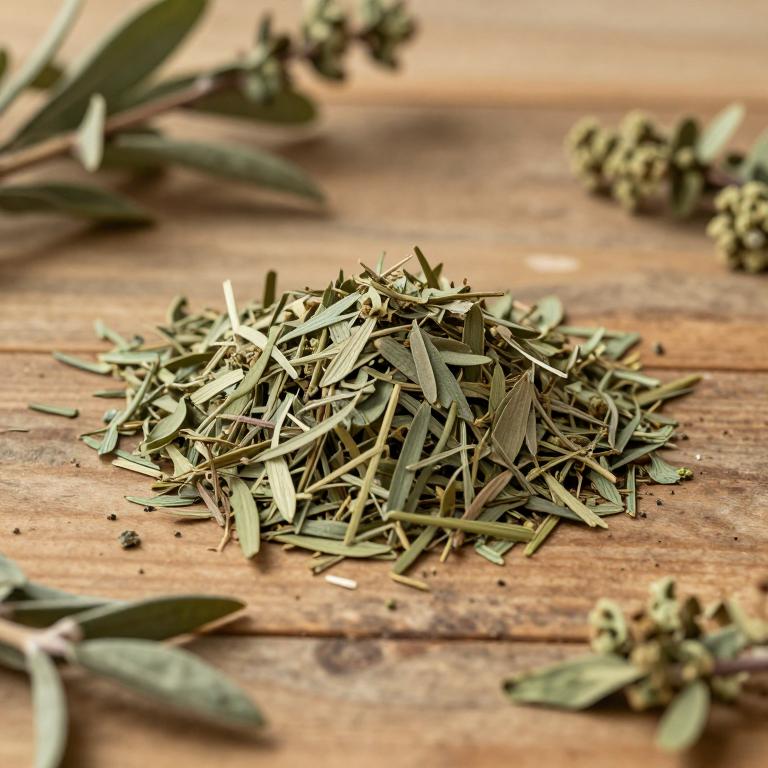
Bengal Pogostemon, scientifically known as Pogostemon benghalensis, is a significant medicinal shrub native to South Asia. Renowned for its diverse therapeutic properties, it is traditionally used in Ayurvedic medicine to treat skin ailments, inflammatory conditions, and digestive issues. Its bioactive compounds offer promising potential for modern pharmacological research and development.
Names and Synonyms
Common Names
- Bengal Pogostemon
- Bengalese Patchouli
- Cockspur Patchouli
Scientific Names
Accepted name
Pogostemon benghalensisSynonyms
- Pogostemon indicus
- Origanum indicum
- Origanum benghalense
- Mentha integra
- Pogostemon frutescens
- Pogostemon purpuricaulis
Sources: Wikidata, Catalogue of Life
Taxonomical Classification
This plant belongs to the kingdom Plantae and is classified under the phylum Streptophyta within the class Equisetopsida. It is further categorized under the subclass Magnoliidae and the order Lamiales, belonging to the family Lamiaceae. Finally, its specific taxonomic designation is within the genus Pogostemon.
| Rank | Classification |
|---|---|
| Kingdom | Plantae |
| Phylum | Streptophyta |
| Class | Equisetopsida |
| Subclass | Magnoliidae |
| Order | Lamiales |
| Family | Lamiaceae |
| Genus | Pogostemon |
Sources: The World Checklist of Vascular Plants (WCVP)
Distribution
This plant is primarily distributed throughout the Indian Subcontinent. Within this region, its presence is documented in various parts of India, including the state of Assam. It can also be found growing across the landscapes of Bangladesh. Furthermore, the species extends its range into the mountainous regions of Nepal and the East Himalaya. These diverse locations highlight its specific ecological niche within South Asian territories.
| Region | Area |
|---|---|
| Indian Subcontinent | Assam |
| Indian Subcontinent | Bangladesh |
| Indian Subcontinent | East Himalaya |
| Indian Subcontinent | India |
| Indian Subcontinent | Nepal |
| Indian Subcontinent | Pakistan |
| Indian Subcontinent | West Himalaya |
| Indo-China | Andaman Is. |
| Indo-China | Myanmar |
| Indo-China | Thailand |
Sources: The World Checklist of Vascular Plants (WCVP)
Botanical Identification
Ecology
The ecology of Pogostemon benghalenis is characterized by its specific distribution across varying altitudinal gradients, typically thriving within a defined vertical range. This species is found occupying habitats ranging from a minimum elevation of 200 m AMSL to a maximum elevation of 1500 m AMSL. Within this altitudinal span, the plant adapts to the distinct environmental shifts associated with montane and sub-montane ecosystems, where fluctuations in temperature, humidity, and atmospheric pressure influence its growth patterns and distribution.
- Elevational range max:
- 1500 m AMSL
- Elevational range min:
- 200 m AMSL
Life history
The life history of Pogostemon benghalenis is characterized by a perennial lifecycle, allowing the plant to persist through multiple growing seasons and establish a stable presence in its ecological niche. In terms of its structural growth habit and life form, the species is classified as a chamaephyte, indicating that its permanent buds are located close to the soil surface, which often provides a survival advantage against environmental stressors. This chamaephyte classification is consistently observed across its developmental stages, distinguishing its growth strategy from other life forms such as phanerophytes or therophytes.
- Life form :
- chamaephyte
- Lifecycle :
- perennial
Morphology
The morphology of Pogostemon benghalenensis is characterized by a woody structure, functioning primarily as a self-supporting shrub. As a terrestrial species, it does not exhibit aquatic or semiaquatic tendencies, nor does it function as an epiphyte. The plant maintains an independent lifestyle, lacking any parasitic behavior, and its growth form is strictly self-supporting rather than acting as a liana, vine, or climbing habit.
- Aquatic :
- terrestrial
- Climber :
- self-supporting
- Epiphyte :
- terrestrial
- Growth form :
- shrub
- Parasite :
- independent
- Woodiness :
- woody
Reproduction
The reproduction of Pogostemon benghalenis is characterized by a distinct seasonal flowering cycle that facilitates its reproductive processes. The flowering period for this species is variable, typically initiating in January and extending through the early months of the year. This reproductive phase continues until it reaches its conclusion in August, marking a specific window for pollination and subsequent seed development.
- Flowering time :
- Jan
- Flowering time :
- Aug
Sources: Global Inventory of Floras and Traits (GIFT)
Plant Parts
Pogostemon benghalensis has 1 reported plant parts identified across 1 scientific publications and several other databases that are studied for medicinal purposes. The most consistently reported plant part include leaf.
| Plant part | Supporting sources | Consensus |
|---|---|---|
| Leaf | 1 supporting sources | ★☆☆☆☆ |
Leaf
- Medicines (Basel, Switzerland)
Activities
Pogostemon benghalensis has 2 reported activities identified across 1 scientific publications and several other databases. The most consistently reported activities include Antinociceptive, Antipyretic.
| Activity | Supporting sources | Consensus |
|---|---|---|
| Antinociceptive | 1 supporting sources | ★☆☆☆☆ |
| Antipyretic | 1 supporting sources | ★☆☆☆☆ |
Antinociceptive
- Medicines (Basel, Switzerland)
Antipyretic
- Medicines (Basel, Switzerland)
Conditions
Pogostemon benghalensis has 1 reported investigations on conditions identified across 1 scientific publications and several other databases. The most consistently reported conditions include infectious diseases.
| Condition | Supporting sources | Consensus |
|---|---|---|
| Infectious diseases | 1 supporting sources | ★☆☆☆☆ |
Infectious diseases
- TheScientificWorldJournal
Preparations
Pogostemon benghalensis has 1 reported preparations identified across 1 scientific publications and several other databases. The most consistently reported preparations include methanol extracts.
| Preparation | Supporting sources | Consensus |
|---|---|---|
| Methanol extracts | 1 supporting sources | ★☆☆☆☆ |
Methanol extracts
- TheScientificWorldJournal