Wingstem Camphorweed
Pluchea sagittalis · Accepted scientific name
Scientific literature: Very Sparse (8 studies) · ★☆☆☆☆
Wingstem Camphorweed, scientifically known as Pluchea sagittalis, is a versatile medicinal herb found in tropical regions. Renowned for its potent therapeutic properties, this plant is frequently utilized in traditional medicine to treat digestive issues, skin ailments, and inflammation. Its aromatic leaves offer significant bioactive compounds for holistic healing.
- Family
- Asteraceae
- Native range
- Asia-Temperate
- Parts used
- Not available
- Common names
- Wingstem Camphorweed
- Scientific synonyms
- Gnaphalium Suaveolens · Pluchea Tweediei · 6 more
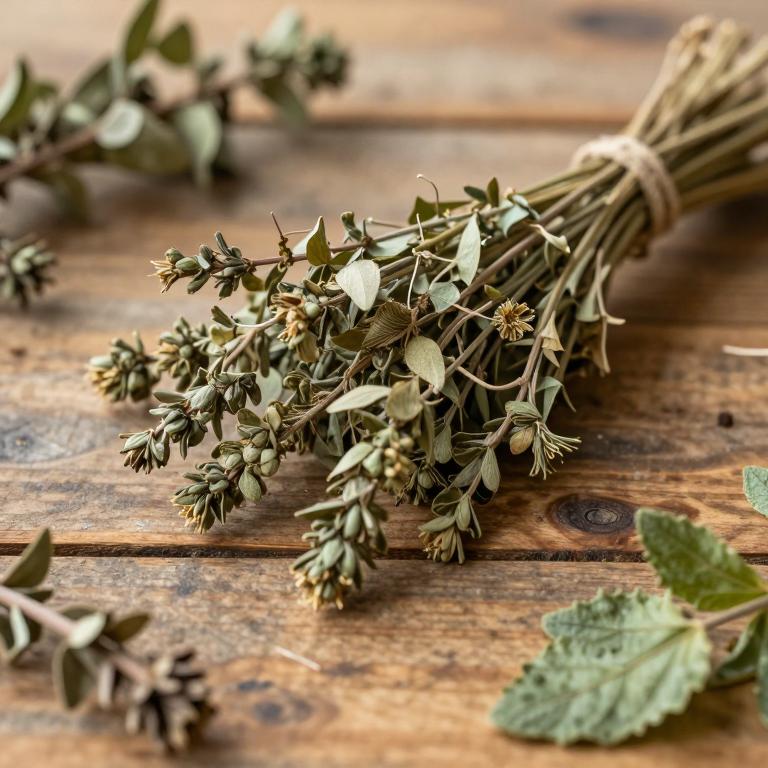
Names and Synonyms
Common Names
- Wingstem Camphorweed
Scientific Names
Accepted name
Pluchea sagittalisSynonyms
- Gnaphalium suaveolens
- Pluchea tweediei
- Conyza quitoc
- Pluchea suaveolens
- Placus suaveolens
- Pluchea quitoc
- Conyza sagittalis
- Conyza brasiliensis
Regional and Traditional Names
Spanish:
- Yerba lucera
Sources: Wikidata, Catalogue of Life
Taxonomical Classification
This plant, Pluchea sagittalis, belongs to the kingdom Plantae and the phylum Streptophyta. Within the class Equisetopsida and subclass Magnoliidae, it is classified under the order Asterales. Finally, it is a member of the family Asteraceae and falls under the genus Pluchea.
| Rank | Classification |
|---|---|
| Kingdom | Plantae |
| Phylum | Streptophyta |
| Class | Equisetopsida |
| Subclass | Magnoliidae |
| Order | Asterales |
| Family | Asteraceae |
| Genus | Pluchea |
Sources: The World Checklist of Vascular Plants (WCVP)
Distribution
This plant exhibits a diverse geographical distribution spanning several different continents and regions. In Eastern Asia, its presence is specifically noted in Taiwan. Moving toward the Indian Subcontinent, the species can be found growing in India. Its range extends into the Southeastern United States, specifically within the states of Alabama and Florida. Finally, the plant is also distributed throughout the Caribbean, including Trinidad and Tobago.
| Region | Area |
|---|---|
| Eastern Asia | Taiwan |
| Indian Subcontinent | India |
| Southeastern U.S.A. | Alabama |
| Southeastern U.S.A. | Florida |
| Caribbean | Trinidad-Tobago |
| Northern South America | Venezuela |
| Western South America | Bolivia |
| Western South America | Colombia |
| Brazil | Brazil West-Central |
| Brazil | Brazil Northeast |
Sources: The World Checklist of Vascular Plants (WCVP)
Botanical Identification
Ecology
The ecology of Pluchea sagittalis is characterized by its adaptability to diverse environments across a broad altitudinal gradient, ranging from sea level (0 m AMSL) up to a maximum elevation of 1100 m AMSL. This species demonstrates significant ecological plasticity, thriving in varied habitats including anthropogenic areas (Área Antrópica), high-altitude grasslands (Campo de Altitude), open grasslands (Campo Limpo), and coastal restinga ecosystems. This distribution allows the plant to occupy a wide range of ecological niches, from disturbed human-impacted landscapes to specialized natural formations.
- Elevational range max:
- 1100 m AMSL
- Elevational range min:
- 0 m AMSL
- Habitat :
- Área Antrópica, Campo de Altitude, Campo Limpo, Restinga
Life history
The life history of Pluchea sagittalis is characterized by its status as a perennial species, allowing it to persist in its environment over multiple growing seasons. In terms of its structural classification and survival strategy, the plant is categorized as a phanerophyte, specifically manifesting as a phanerophyte in its overall life form. This classification indicates that its perennating buds are borne on aerial shoots above the ground, ensuring its continued existence through various seasonal cycles.
- Life form :
- phanerophyte
- Lifecycle :
- perennial
Morphology
The morphology of Pluchea sagittalis is characterized by a growth form primarily classified as a non-woody herb or forb. As a self-supporting plant, it does not exhibit climbing tendencies, functioning neither as a liana nor a vine, and it maintains a stable structure without the need for external support. In terms of its ecological habit, the species is terrestrial in nature, rather than being an epiphyte (whether holoepiphyte, hemiepiphyte, or facultative) or an aquatic plant, though it can exist in various moisture gradients. Furthermore, it is an independent organism that does not function as a parasite, maintaining its own nutritional processes without being obligatory or facultative upon a host.
- Aquatic :
- terrestrial
- Climber :
- self-supporting
- Epiphyte :
- terrestrial
- Growth form :
- herb
- Growth form :
- forb
- Parasite :
- independent
- Woodiness :
- non-woody
Sources: Global Inventory of Floras and Traits (GIFT)
Chemicals
Pluchea sagittalis has 3 reported phytochemicals identified across 0 scientific publications and several other databases. The most consistently reported chemicals include Flavonoids, Taraxasterol, pseudo-Taraxasterol.
| Chemical | Supporting sources | Consensus |
|---|---|---|
| Flavonoids | 1 supporting sources | ★☆☆☆☆ |
| Taraxasterol | 1 supporting sources | ★☆☆☆☆ |
| pseudo-Taraxasterol | 1 supporting sources | ★☆☆☆☆ |
Flavonoids
- Phytomedicine : international journal of phytotherapy and phytopharmacology
Taraxasterol
- Pharmacognosy research
pseudo-Taraxasterol
- Pharmacognosy research
Activities
Pluchea sagittalis has 4 reported activities identified across 0 scientific publications and several other databases. The most consistently reported activities include Analgesic, Antiinflammatory, Antinociceptive, Antioxidant.
| Activity | Supporting sources | Consensus |
|---|---|---|
| Analgesic | 1 supporting sources | ★☆☆☆☆ |
| Antiinflammatory | 1 supporting sources | ★☆☆☆☆ |
| Antinociceptive | 1 supporting sources | ★☆☆☆☆ |
| Antioxidant | 1 supporting sources | ★☆☆☆☆ |
Analgesic
- Pharmacognosy research
Antiinflammatory
- Phytomedicine : international journal of phytotherapy and phytopharmacology
Antinociceptive
- Pharmacognosy research
Antioxidant
- Life sciences
Conditions
Pluchea sagittalis has 1 reported investigations on conditions identified across 0 scientific publications and several other databases. The most consistently reported conditions include inflammation.
| Condition | Supporting sources | Consensus |
|---|---|---|
| Inflammation | 1 supporting sources | ★☆☆☆☆ |
Inflammation
- Life sciences
Preparations
Pluchea sagittalis has 6 reported preparations identified across 0 scientific publications and several other databases. The most consistently reported preparations include aqueous extract, crude methanol extract, dichloromethane extract, dichloromethane extracts, ethanolic extract.
| Preparation | Supporting sources | Consensus |
|---|---|---|
| Aqueous extract | 2 supporting sources | ★☆☆☆☆ |
| Crude methanol extract | 1 supporting sources | ★☆☆☆☆ |
| Dichloromethane extract | 1 supporting sources | ★☆☆☆☆ |
| Dichloromethane extracts | 1 supporting sources | ★☆☆☆☆ |
| Ethanolic extract | 1 supporting sources | ★☆☆☆☆ |
| Organic (oe) and aqueous extracts (ae) | 1 supporting sources | ★☆☆☆☆ |
Aqueous extract
- Life sciences
- Phytomedicine : international journal of phytotherapy and phytopharmacology
Crude methanol extract
- Journal of ethnopharmacology
Dichloromethane extract
- Phytomedicine : international journal of phytotherapy and phytopharmacology
Dichloromethane extracts
- Phytomedicine : international journal of phytotherapy and phytopharmacology
Ethanolic extract
- Immunopharmacology and immunotoxicology
Organic (oe) and aqueous extracts (ae)
- Virology journal