shrubby camphorweed
Pluchea odorata · Accepted scientific name
Scientific literature: Very Sparse (5 studies) · ★☆☆☆☆
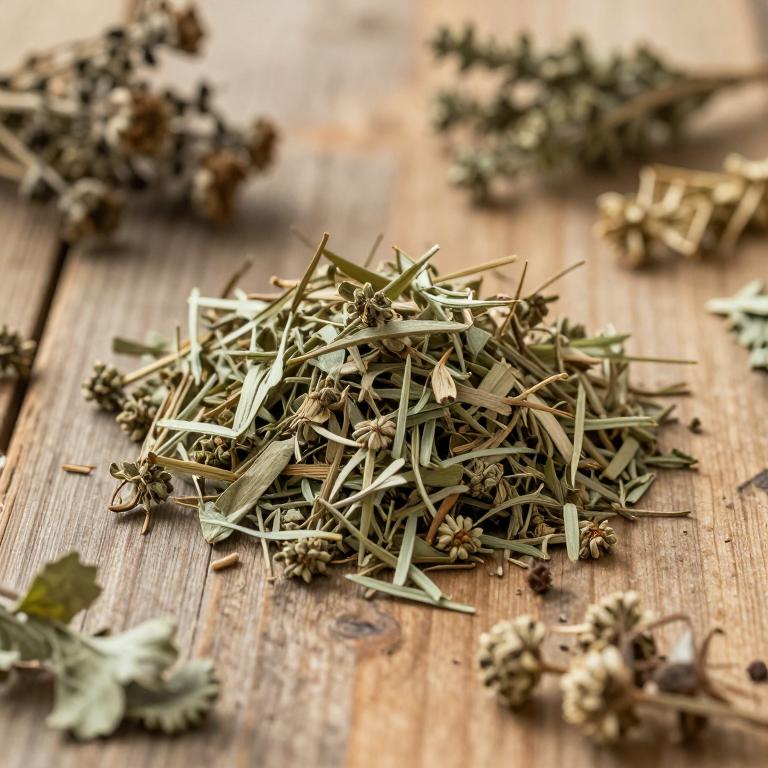
Shrubby camphorweed, scientifically known as Pluchea odorata, is a versatile medicinal shrub widely distributed across tropical regions. Renowned for its aromatic foliage, it is extensively utilized in traditional medicine to treat respiratory ailments, skin inflammations, and digestive issues, offering significant therapeutic potential through its diverse bioactive compounds.
Names and Synonyms
Common Names
- shrubby camphorweed
- saltmarsh fleabane
- sweet-scent
- marsh fleabane
- sweetscent Kreyòl
Scientific Names
Accepted name
Pluchea odorataSynonyms
- Pluchea purpurascens var. succulenta
- Placus purpurascens var. glabratum
- Pluchea odorata var. succulenta
- Pluchea amorifera
- Pluchea purpurascens var. glabrata
- Conyza odorata
- Pluchea senegalensis
- Conyza purpurascens
- Placus purpurascens
- Pluchea petiolata
- Pluchea purpurascens
- Pluchea glabrata
- Conyza marilandica
- Pluchea marilandica
- Placus odoratus
- Pluchea purpurascens f. obovata
- Gymnostyles marilandica
- Pluchea camphorata var. angustifolia
Regional and Traditional Names
Spanish:
- Santa María
- hierba de Santa María
French:
- pluchée odorante
Sources: Wikidata, Catalogue of Life
Taxonomical Classification
This plant, known scientifically as Pluchea odorata, belongs to the kingdom Plantae and the phylum Streptophyta. It is classified within the class Equisetopsida and the subclass Magnoliidae, falling under the order Asterales. Ultimately, it is a member of the family Asteraceae and is situated within the genus Pluchea.
| Rank | Classification |
|---|---|
| Kingdom | Plantae |
| Phylum | Streptophyta |
| Class | Equisetopsida |
| Subclass | Magnoliidae |
| Order | Asterales |
| Family | Asteraceae |
| Genus | Pluchea |
Sources: The World Checklist of Vascular Plants (WCVP)
Distribution
This plant exhibits a broad geographical distribution across several regions of North America. In Eastern Canada, its presence can be documented within the province of Ontario. Moving into the North-Central United States, it is found in Illinois, Kansas, and Oklahoma. Additionally, the species extends into the Northeastern United States, specifically in Connecticut. Together, these locations illustrate the wide range inhabited by Pluchea odorata.
| Region | Area |
|---|---|
| Eastern Canada | Ontario |
| North-Central U.S.A. | Illinois |
| North-Central U.S.A. | Kansas |
| North-Central U.S.A. | Oklahoma |
| Northeastern U.S.A. | Connecticut |
| Northeastern U.S.A. | Indiana |
| Northeastern U.S.A. | Maine |
| Northeastern U.S.A. | Massachusetts |
| Northeastern U.S.A. | Michigan |
| Northeastern U.S.A. | New Jersey |
Sources: The World Checklist of Vascular Plants (WCVP)
Botanical Identification
Ecology
The ecology of Pluchea odorata is characterized by its ability to inhabit a broad altitudinal gradient, spanning from sea level up to an elevation of 1300 m AMSL. This wide elevational range suggests a high degree of adaptability to varying environmental conditions and microclimates within its natural habitat. Typically found in wetland ecosystems, such as marshes, swamps, and the margins of water bodies, the species thrives in hydric soils and moist environments where it can exploit available sunlight and moisture. Its distribution across such a significant vertical range indicates that it can tolerate a variety of temperature regimes and atmospheric pressures, facilitating its presence in both lowland coastal regions and higher-altitude riparian zones.
- Elevational range max:
- 1300 m AMSL
- Elevational range min:
- 0 m AMSL
Life history
The life history of Pluchea odorata is characterized by a perennial lifecycle, allowing the plant to persist through multiple growing seasons. As a long-lived species, it establishes a robust presence in its natural habitat, typically developing a woody or semi-woody structure that supports continuous growth and seasonal cycles. Throughout its existence, the plant undergoes distinct stages of development, from initial seedling establishment to mature reproductive phases where it produces flowering structures to facilitate propagation. This perennial nature enables it to withstand environmental fluctuations and maintain a stable population within its ecosystem over extended periods.
- Lifecycle :
- annual
Morphology
The morphology of Pluchea odorata is characterized by a growth form categorized as both a herb and a forb, typically reaching an average plant height of approximately 1.5 m. This species is a non-woody, self-supporting plant that does not exhibit climbing behavior, such as being a liana or vine, nor does it function as an epiphyte or a parasite, existing instead as an independent terrestrial organism. It is strictly terrestrial in its habitat rather than being aquatic or semiaquatic.
- Aquatic :
- terrestrial
- Climber :
- self-supporting
- Epiphyte :
- terrestrial
- Growth form :
- herb
- Growth form :
- forb
- Parasite :
- independent
- Plant height mean:
- 1.5 m
- Woodiness :
- non-woody
Reproduction
Reproduction in Pluchea odorata is driven by the production of specialized seeds that exhibit specific morphological and mass characteristics essential for its dispersal and germination. The reproductive output is characterized by a relatively small seed size, with a recorded mean seed mass of 4.32e-05 g. Within the population, there is measurable variation in these reproductive units, as the seed mass ranges from a minimum of 2e-05 g to a maximum of 1e-04 g. This variation in seed mass plays a critical role in the plant's ability to colonize various substrates and manage resource allocation during the seedling establishment phase.
- Seed mass max:
- 1e-04 g
- Seed mass mean:
- 4.32e-05 g
- Seed mass min:
- 2e-05 g
Sources: Global Inventory of Floras and Traits (GIFT)
Chemicals
Pluchea odorata has 1 reported phytochemicals identified across 0 scientific publications and several other databases. The most consistently reported chemicals include PO-1.
| Chemical | Supporting sources | Consensus |
|---|---|---|
| PO-1 | 1 supporting sources | ★☆☆☆☆ |
PO-1
- Mutation research
Conditions
Pluchea odorata has 3 reported investigations on conditions identified across 0 scientific publications and several other databases. The most consistently reported conditions include inflammation, Malaria, metastasis.
| Condition | Supporting sources | Consensus |
|---|---|---|
| Inflammation | 2 supporting sources | ★☆☆☆☆ |
| Malaria | 1 supporting sources | ★☆☆☆☆ |
| Metastasis | 1 supporting sources | ★☆☆☆☆ |
Inflammation
- Phytochemistry
- Mutation research
Malaria
- Revista cubana de medicina tropical
Metastasis
- Mutation research
Preparations
Pluchea odorata has 1 reported preparations identified across 0 scientific publications and several other databases. The most consistently reported preparations include dichloromethane extract.
| Preparation | Supporting sources | Consensus |
|---|---|---|
| Dichloromethane extract | 1 supporting sources | ★☆☆☆☆ |
Dichloromethane extract
- Frontiers in bioscience (Elite edition)