Stinking Madder
Plocama calabrica · Accepted scientific name
Scientific literature: Very Sparse (31 studies) · ★☆☆☆☆
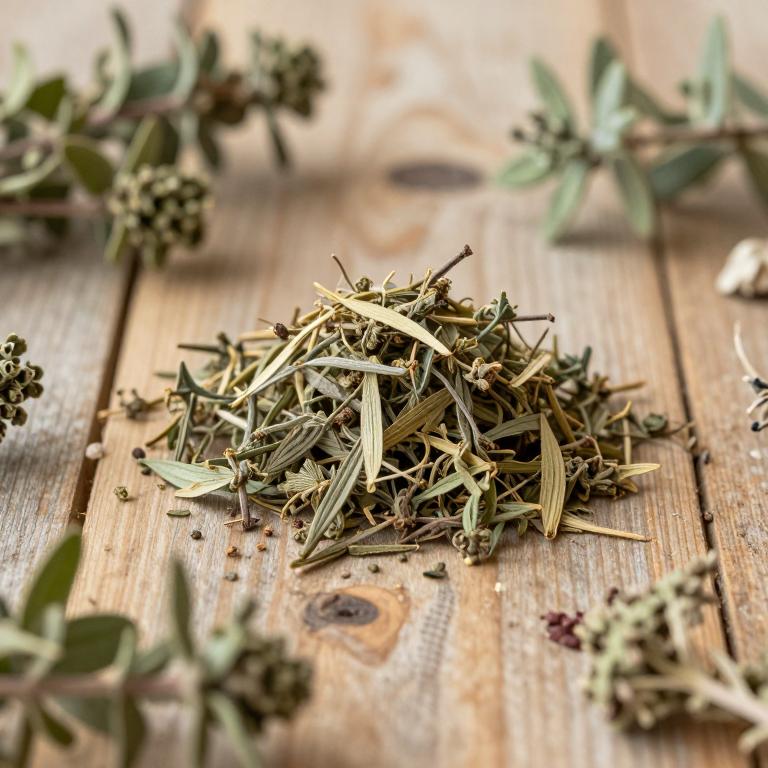
Stinking Madder, scientifically known as Plocama calabrica, is a distinctive medicinal shrub native to Mediterranean regions. Renowned for its pungent aroma, this plant contains bioactive compounds utilized in traditional healing. It serves as a vital subject in ethnobotany, offering potential therapeutic benefits for skin conditions and inflammatory ailments.
- Family
- Rubiaceae
- Native range
- Europe
- Parts used
- Leaf · Root
- Common names
- Stinking Madder
- Scientific synonyms
- Putoria Calabrica · Putoria Calabrica Var. Hispanica · 15 more
Names and Synonyms
Common Names
- Stinking Madder
Scientific Names
Accepted name
Plocama calabricaSynonyms
- Putoria calabrica
- Putoria calabrica var. hispanica
- Putoria balearica
- Ernodea calabrica
- Pavetta foetidissima
- Plocama calabrica var. alba
- Putoria calabrica var. pubescens
- Sherardia foetidissima
- Asperula calabrica
- Asperula ciliata
- Putoria cymosa
- Putoria hispanica
- Putoria calabrica var. atlantis
- Putoria calabrica var. gypsacea
- Putoria calabrica subsp. hispanica
- Lonicera sicula
- Daphne skipetarum
Regional and Traditional Names
German:
- Stinkender Krapp
Sources: Wikidata, Catalogue of Life
Taxonomical Classification
This plant belongs to the kingdom Plantae and is classified within the phylum Streptophyta and class Equisetopsida. Further taxonomic details place it in the subclass Magnoliidae and the order Gentianales. Finally, it is a member of the family Rubiaceae and is specifically identified under the genus Plocama.
| Rank | Classification |
|---|---|
| Kingdom | Plantae |
| Phylum | Streptophyta |
| Class | Equisetopsida |
| Subclass | Magnoliidae |
| Order | Gentianales |
| Family | Rubiaceae |
| Genus | Plocama |
Sources: The World Checklist of Vascular Plants (WCVP)
Distribution
This plant exhibits a specific distribution across the Mediterranean regions of Southern and Southeastern Europe. In Southwestern Europe, its presence is noted within the borders of Spain. Moving toward Southeastern Europe, the species can be found growing in Albania and Greece. It also extends its range to include the territory of Italy. Finally, the plant is documented inhabiting the island of Kriti.
| Region | Area |
|---|---|
| Southwestern Europe | Spain |
| Southeastern Europe | Albania |
| Southeastern Europe | Greece |
| Southeastern Europe | Italy |
| Southeastern Europe | Kriti |
| Southeastern Europe | Sicilia |
| Southeastern Europe | NW. Balkan Pen. |
| Northern Africa | Algeria |
| Northern Africa | Libya |
| Northern Africa | Morocco |
Sources: The World Checklist of Vascular Plants (WCVP)
Botanical Identification
Life history
The life history of Plocama calabrica is characterized by its specialized survival strategy as a chamaphyte, a classification that reflects its growth habit and ability to endure environmental fluctuations. In terms of its specific life form categorization, it is identified as a chamaphyte, meaning its perennating buds are located close to the soil surface, often protected by the surrounding substrate or low-lying vegetation. This life form strategy allows the plant to maintain a low profile, which is essential for navigating its specific ecological niche. Furthermore, when analyzed through a broader structural lens, its life form is consistently defined as a chamaphyte, distinguishing it from taller phanerophytes or ephemeral therophytes. This physiological positioning enables Plocama calabrica to persist through seasonal changes by keeping its vital reproductive and vegetative structures near the ground level, ensuring resilience against wind and temperature extremes.
- Life form :
- chamaephyte
Morphology
The morphology of Plocama calabrica is characterized by a woody structure, exhibiting a growth form that transitions between a shrub and a subshrub. It is a self-supporting plant, lacking any climbing or parasitic tendencies, and functions as an independent organism rather than an epiphyte or parasite. In terms of its habitat preference, the species is terrestrial, distinguishing it from aquatic or semiaquatic life forms.
- Aquatic :
- terrestrial
- Climber :
- self-supporting
- Epiphyte :
- terrestrial
- Growth form :
- shrub
- Growth form :
- subshrub
- Parasite :
- independent
- Woodiness :
- woody
Reproduction
The reproduction of Plocama calabrica is characterized by the production of drupe-type fruits that are fundamentally indehiscent, meaning they do not split open at maturity to release their contents. These fruits possess average dimensions of 0.54 cm in length and 0.37 cm in width. Within these fruits, the seeds exhibit a specialized mass profile, with a mean seed mass of approximately 0.00554 g, ranging from a minimum of 0.00546 g to a maximum of 0.01047 g. The dispersal of the species follows a zoochorous syndrome, indicating that the plant relies on animals to facilitate the movement and distribution of its reproductive units.
- Dehiscence :
- indehiscent
- Dispersal syndrome :
- zoochorous
- Fruit length mean:
- 0.54 cm
- Fruit type :
- drupe
- Fruit width mean:
- 0.37 cm
- Seed mass max:
- 0.01047 g
- Seed mass mean:
- 0.0055416665 g
- Seed mass min:
- 0.00546 g
Sources: Global Inventory of Floras and Traits (GIFT)
Plant Parts
Plocama calabrica has 2 reported plant parts identified across 2 scientific publications and several other databases that are studied for medicinal purposes. The most consistently reported plant part include leaf, root.
| Plant part | Supporting sources | Consensus |
|---|---|---|
| Leaf | 1 supporting sources | ★☆☆☆☆ |
| Root | 1 supporting sources | ★☆☆☆☆ |
Leaf
- The Journal of pharmacy and pharmacology
Root
- Phytotherapy research : PTR
Chemicals
Plocama calabrica has 9 reported phytochemicals identified across 2 scientific publications and several other databases. The most consistently reported chemicals include CHLOROGENIC ACID, Calabricoside A, Calabricoside B, LUCIDIN-3-O-PRIMEVEROSIDE, Putorinoside A.
| Chemical | Supporting sources | Consensus |
|---|---|---|
| CHLOROGENIC ACID | 1 supporting sources | ★☆☆☆☆ |
| Calabricoside A | 1 supporting sources | ★☆☆☆☆ |
| Calabricoside B | 1 supporting sources | ★☆☆☆☆ |
| LUCIDIN-3-O-PRIMEVEROSIDE | 1 supporting sources | ★☆☆☆☆ |
| Putorinoside A | 1 supporting sources | ★☆☆☆☆ |
| RUTIN | 1 supporting sources | ★☆☆☆☆ |
| Vitexin | 1 supporting sources | ★☆☆☆☆ |
| betulinic acid | 1 supporting sources | ★☆☆☆☆ |
| quercetin-3-O-[alpha-L-rhamnopyranosyl-(1->2)-alpha-L-arabinopyranoside]-7-O-beta-D-glucopyranoside | 1 supporting sources | ★☆☆☆☆ |
CHLOROGENIC ACID
- The Journal of pharmacy and pharmacology
Calabricoside A
- Journal of natural products
Calabricoside B
- Journal of natural products
LUCIDIN-3-O-PRIMEVEROSIDE
- Chemical & pharmaceutical bulletin
Putorinoside A
- Chemical & pharmaceutical bulletin
RUTIN
- The Journal of pharmacy and pharmacology
Vitexin
- The Journal of pharmacy and pharmacology
betulinic acid
- Dr. Duke
quercetin-3-O-[alpha-L-rhamnopyranosyl-(1->2)-alpha-L-arabinopyranoside]-7-O-beta-D-glucopyranoside
- Journal of natural products
Activities
Plocama calabrica has 19 reported activities identified across 2 scientific publications and several other databases. The most consistently reported activities include Anthelmintic, AntiHIV, Antibacterial, Anticancer, Anticarcinomic.
| Activity | Supporting sources | Consensus |
|---|---|---|
| Anthelmintic | 1 supporting sources | ★☆☆☆☆ |
| AntiHIV | 1 supporting sources | ★☆☆☆☆ |
| Antibacterial | 1 supporting sources | ★☆☆☆☆ |
| Anticancer | 1 supporting sources | ★☆☆☆☆ |
| Anticarcinomic | 1 supporting sources | ★☆☆☆☆ |
| Antiedemic | 1 supporting sources | ★☆☆☆☆ |
| Antiinflammatory | 1 supporting sources | ★☆☆☆☆ |
| Antileukemic | 1 supporting sources | ★☆☆☆☆ |
| Antimalarial | 1 supporting sources | ★☆☆☆☆ |
| Antimelanomic | 1 supporting sources | ★☆☆☆☆ |
Anthelmintic
- Dr. Duke
AntiHIV
- Dr. Duke
Antibacterial
- Dr. Duke
Anticancer
- Dr. Duke
Anticarcinomic
- Dr. Duke
Antiedemic
- Dr. Duke
Antiinflammatory
- Dr. Duke
Antileukemic
- Dr. Duke
Antimalarial
- Dr. Duke
Antimelanomic
- Dr. Duke
Preparations
Plocama calabrica has 1 reported preparations identified across 2 scientific publications and several other databases. The most consistently reported preparations include aerial parts.
| Preparation | Supporting sources | Consensus |
|---|---|---|
| Aerial parts | 1 supporting sources | ★☆☆☆☆ |
Aerial parts
- Journal of natural products